



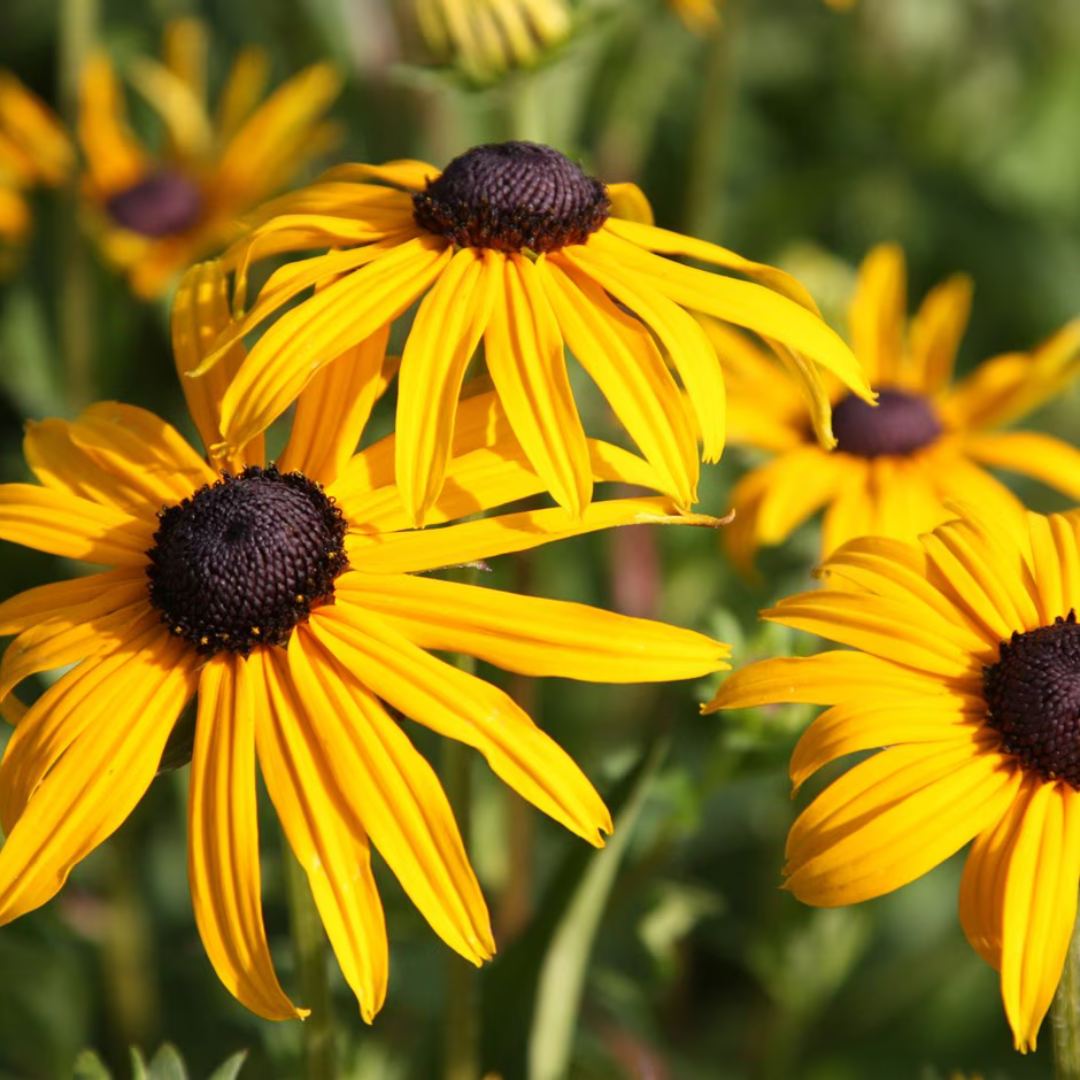
Rudbeckia 'Goldsturm'
Add to Wishlist Full Sun
 Partial Sun
 Drought Tolerant
 Deer Resistant
 Pollinator Friendly
 Low Maintenance
- In stock, ready to ship
Rudbeckia 'Goldsturm': The Gold Storm Every Border Needs
The black-eyed Susan every garden has, and for good reason. 'Goldsturm' pumps out golden daisies in such numbers the bees need a spreadsheet. HOLDS ITS GROUND. NEVER QUITS.
Plant Characteristics:
- Botanical Name: Rudbeckia fulgida var. sullivantii 'Goldsturm'
- Common Name: Black-eyed Susan, orange coneflower
- Height: 60–70 cm (24–28 in)
- Spread: 45–60 cm (18–24 in), slowly spreading
- Flowers: Golden-yellow daisies with dark brown to black cones, held in great numbers
- Bloom Time: Midsummer to fall (July to September)
- Foliage: Deep green, coarse, lance-shaped leaves
- Features: Seed heads feed songbirds, long-lived, 1999 Perennial Plant of the Year
Where to Plant: 'Goldsturm' is made for massing in drifts through sunny borders, meadow plantings, slopes and pollinator gardens. It handles city conditions well and performs through hot, humid summers and cold winters.
Companion Plants: Eupatorium 'Atropurpureum' rises behind with pink flower heads at 150 to 210 cm from August to October. Echinacea pallida adds pale pink coneflowers in June and July, before 'Goldsturm' opens. Calamintha nepeta 'Blue Cloud' edges the bed with blue flowers from June into fall. It's a classic prairie-style planting for sun or part sun.
Plant Care: Plant in full sun to part sun, in average, well-drained soil. Water regularly through the first season. Once established it handles dry spells, though it flowers best with occasional deep watering in drought. Leave the seed heads standing for birds and winter interest, then cut back in early spring. If you see dark spots on the lower leaves in a wet summer, that is Septoria leaf spot. Clean up the old foliage and give the plants a bit more air circulation. The clump spreads slowly by rhizomes. Divide every three to four years in spring to keep it vigorous.
History: Heinrich Hagemann, head gardener at Karl Foerster's nursery near Potsdam, Germany, spotted this plant at the Gebrüder Schütz nursery, which had received American seed by way of the botanical garden in Graz, Austria, and brought it back in 1937. Foerster named it 'Goldsturm', meaning "gold storm," and in 1999 it was named Perennial Plant of the Year.
Final Thoughts: Long-lived, drought tolerant and deer resistant, with seed heads for the songbirds. If you only own one, MAKE IT THIS ONE.



