



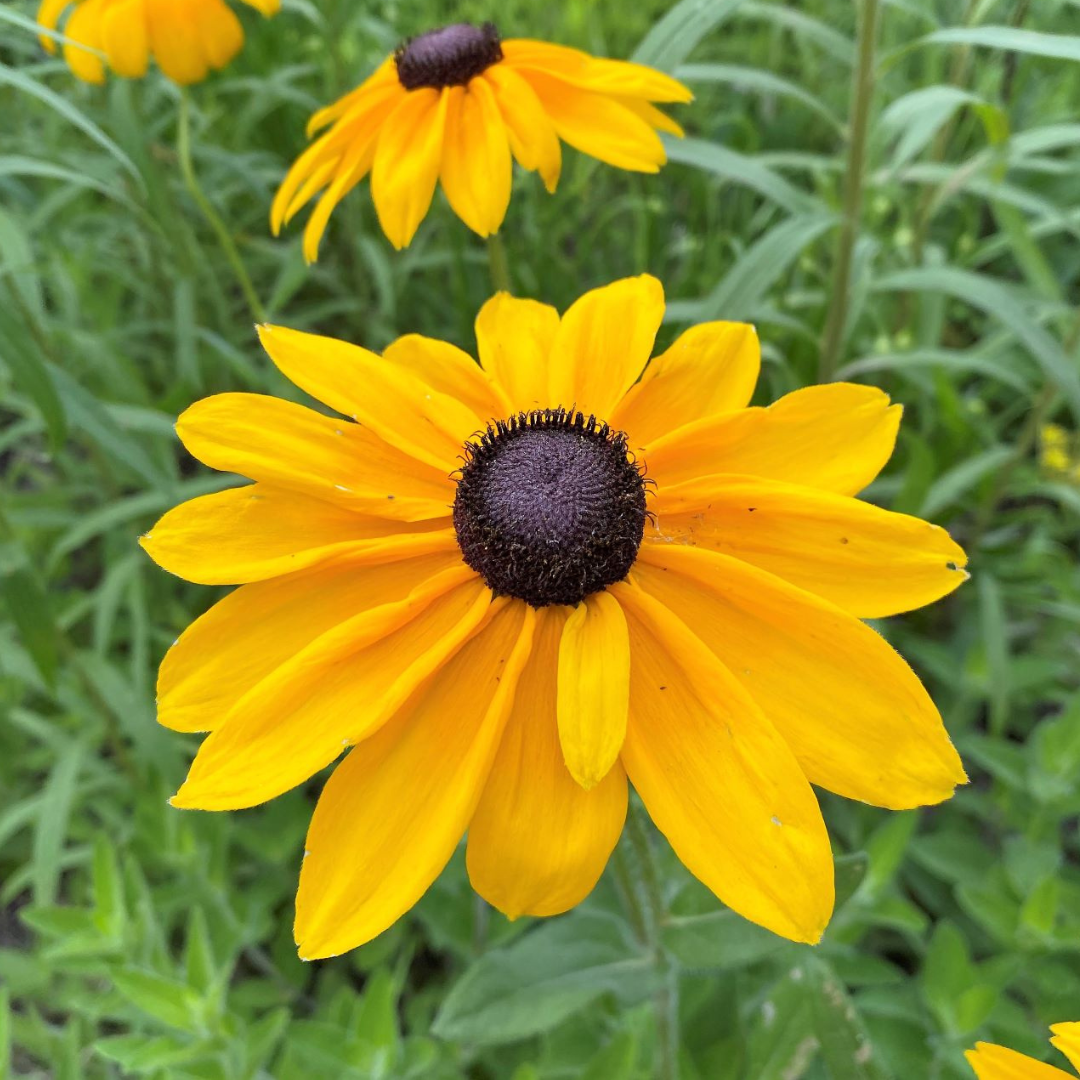
Rudbeckia 'Indian Summer'
Add to Wishlist Full Sun
 Partial Sun
 Deer Resistant
 Pollinator Friendly
 Low Maintenance
- In stock, ready to ship
Rudbeckia 'Indian Summer': Salad-Plate Gold Towering Over the Border
Golden daisies as big as a saucer, with dark brown cones and absolutely no sense of proportion. This black-eyed Susan treats every single bloom like a SUPERSIZE ORDER.
Plant Characteristics:
- Botanical Name: Rudbeckia hirta 'Indian Summer'
- Common Name: Black-eyed Susan, gloriosa daisy
- Height: 80–90 cm (31–36 in)
- Spread: 30–45 cm (12–18 in)
- Flowers: Very large single to semi-double golden-yellow daisies, 15–23 cm (6–9 in) across, with dark brown cones
- Bloom Time: Midsummer to fall (July to October)
- Foliage: Coarse, hairy, medium green leaves
- Features: Excellent cut flower, heat tolerant, short-lived but self-seeds
Where to Plant: Plant it in the middle or back of a sunny border, in cottage and cutting gardens or in prairie-style plantings, where the big flowers can rise above shorter neighbours. Cut a few stems for the kitchen table, since they hold up well in a vase.
Companion Plants: Baptisia Decadence® Deluxe 'Pink Truffles' flowers pink in June and July on a 120 to 140 cm plant, before the rudbeckia opens. Stachys 'Hummelo' adds purple spikes at 45 to 60 cm from June to August. Platycodon 'Astra Blue' brings blue balloon flowers at the front from June to August. The big yellow rudbeckia blooms then carry the bed from July to October.
Plant Care: Plant in full sun to part sun, in average, well-drained soil. It tolerates poor soil and summer heat, but blooms best with regular water during dry spells. It rarely needs staking. Deadhead regularly to keep the flowers coming. Toward the end of the season, leave some seed heads standing for winter interest, for the birds, and to let the plant reseed. Rudbeckia hirta is a short-lived perennial that often acts as a biennial. Letting a few seedlings grow on keeps it in your garden year after year. Cut back in late fall or early spring.
History: 'Indian Summer' won an All-America Selections award in 1995 and later received the Royal Horticultural Society's Award of Garden Merit. Its parent species, Rudbeckia hirta, is native across much of North America, from the prairies to southern Canada, including Ontario.
Final Thoughts: Cut a few for the kitchen and you won't need a second vase. It handles heat and self-seeds. SIZE DOES MATTER.



