



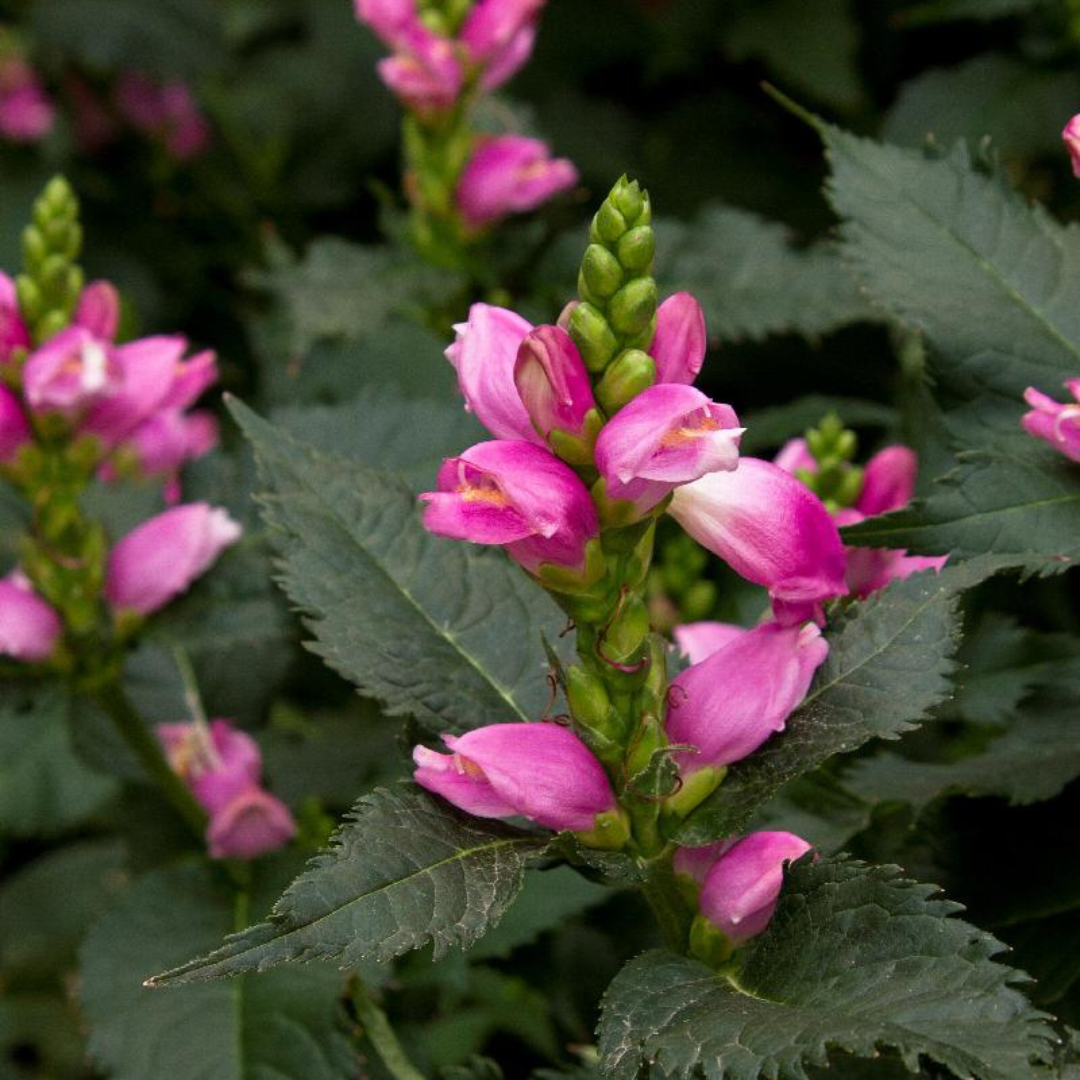
Chelone 'Hot Lips'
Add to Wishlist Full Sun
 Partial Sun
 Deer Resistant
 Pollinator Friendly
- In stock, ready to ship
Chelone 'Hot Lips': Puckered Blooms Bringing August Heat
With a name like 'Hot Lips', this turtlehead was always going to cause talk at the garden club. Rose-pink hooded blooms pucker up for the bumblebees, who crawl right in without asking. NO PDA IN THE BORDER, PLEASE.
Plant Characteristics:
- Botanical Name: Chelone lyonii 'Hot Lips'
- Common Name: Pink Turtlehead
- Height: 60–90 cm (2–3 ft)
- Spread: 60–75 cm (24–30 in)
- Flowers: Rose-pink, hooded blooms shaped like a turtle's head, in dense clusters at the stem tips
- Bloom Time: Late summer to early fall (August to September)
- Foliage: Glossy, dark green leaves that emerge bronze-tinted, on reddish stems
- Features: Selection of a southern Appalachian species, usually ignored by rabbits, tolerates clay
Where to Plant: Plant it where the soil stays damp: rain gardens, pond edges, low spots and moist borders. It tolerates heavy clay, which is good news for a lot of Toronto and Ottawa gardens. Its tidy, upright clump fits the middle of a border and brings colour when most summer perennials are done.
Companion Plants: Persicaria polymorpha makes a big, shrubby backdrop at 120 to 180 cm with cream plumes from June to August. Leucanthemum 'Snowcap' adds crisp white daisies at the front. Stachys 'Hummelo' brings purple spikes from June to August. The pink turtleheads then carry the show into September.
Plant Care: Plant in rich, moist soil in part shade, or in full sun if the soil never dries out. Water regularly through the first season and during dry spells. A layer of mulch keeps the roots cool and damp. For shorter, bushier plants with more flower heads, pinch back the stem tips in late spring. Staking is rarely needed. Cut the stems back in late fall or early spring. The clump spreads slowly by rhizomes. Divide it in spring every few years if you want more plants or it outgrows its space.
History: 'Hot Lips' is a selection of Chelone lyonii, a turtlehead native to stream banks and rich woods in the southern Appalachian Mountains, named for early American botanist John Lyon. The selection is credited to Pennsylvania nurseryman Dale Hendricks.
Final Thoughts: It handles clay, the deer usually skip it, and the late show is pure flirt. Plant it and pretend to be scandalized. THE BUMBLEBEES CERTAINLY AREN'T.



