



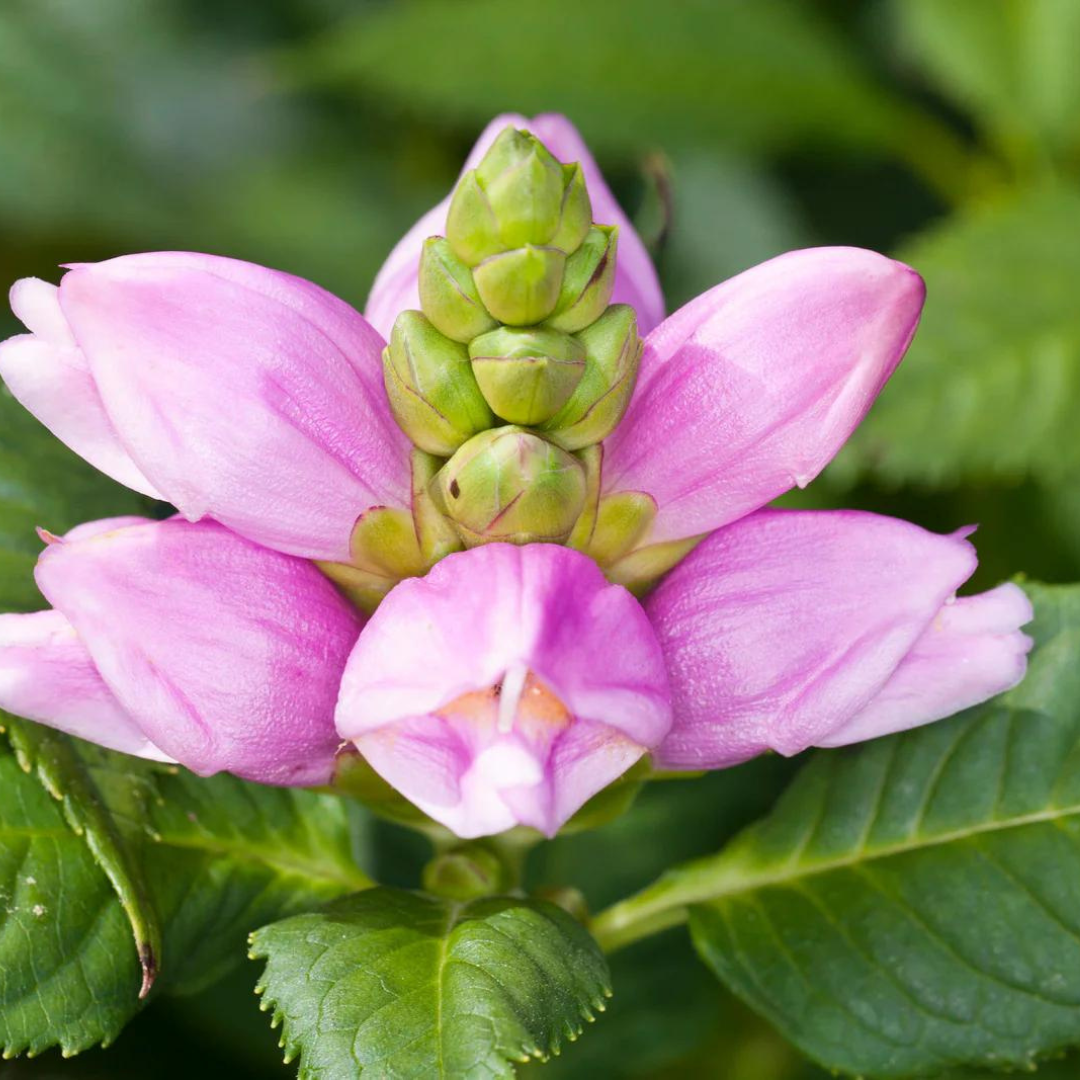
Chelone obliqua
Add to Wishlist Full Sun
 Partial Sun
 Deer Resistant
 Pollinator Friendly
- In stock, ready to ship
Chelone obliqua: Rose Spikes Worth the Wait
Rose Turtlehead thinks clay soil is a challenge worth accepting. Rose-pink hooded blooms on sturdy stems draw bumblebees and hummingbirds like the bar just announced free appetizers. THE SNAPPIEST TURTLE IN TOWN.
Plant Characteristics:
- Botanical Name: Chelone obliqua
- Common Name: Rose Turtlehead
- Height: 60–90 cm (2–3 ft)
- Spread: 45–60 cm (18–24 in)
- Flowers: Rose-pink, hooded blooms shaped like a turtle's head, in dense terminal spikes
- Bloom Time: Late summer to early fall (August to September)
- Foliage: Glossy, dark green, toothed leaves on sturdy upright stems
- Features: Tolerates wet and clay soils
Where to Plant: Rose turtlehead is right at home beside ponds and streams, in rain gardens and in low, damp spots that stay wet for much of the summer. It's also fine in a moist mixed border, where its upright form adds structure late in the season.
Companion Plants: Calamagrostis canadensis is a native grass that likes the same moist soil, rising to 90 to 150 cm in flower. Echinacea Sombrero® Granada Gold adds yellow coneflowers from June to August. Veronica Magic Show® 'White Wands' brings white spikes in June and July, often again into September. The pink turtlehead flowers then take over in August and September.
Plant Care: Plant in moist to wet, humus-rich soil. It tolerates clay and a wide range of pH. In full sun the soil must stay consistently moist; in part shade it's more forgiving. Water through the first season and mulch to hold moisture. Pinch the stem tips in late spring for a bushier plant, though it usually stands up well without help. Cut back in late fall or early spring. Divide the slowly spreading clump in spring when it gets crowded.
History: Chelone obliqua is native to moist woods, swamps and stream banks in the eastern and midwestern United States and is rare in the wild, listed as threatened or endangered in several states. Chelone comes from the Greek for tortoise, and obliqua means slanting, describing the lopsided flowers.
Final Thoughts: Wet spot, heavy clay, curious deer: it handles the lot. PLANT IT AND LET THE HUMMINGBIRDS FIGHT OVER IT.



