



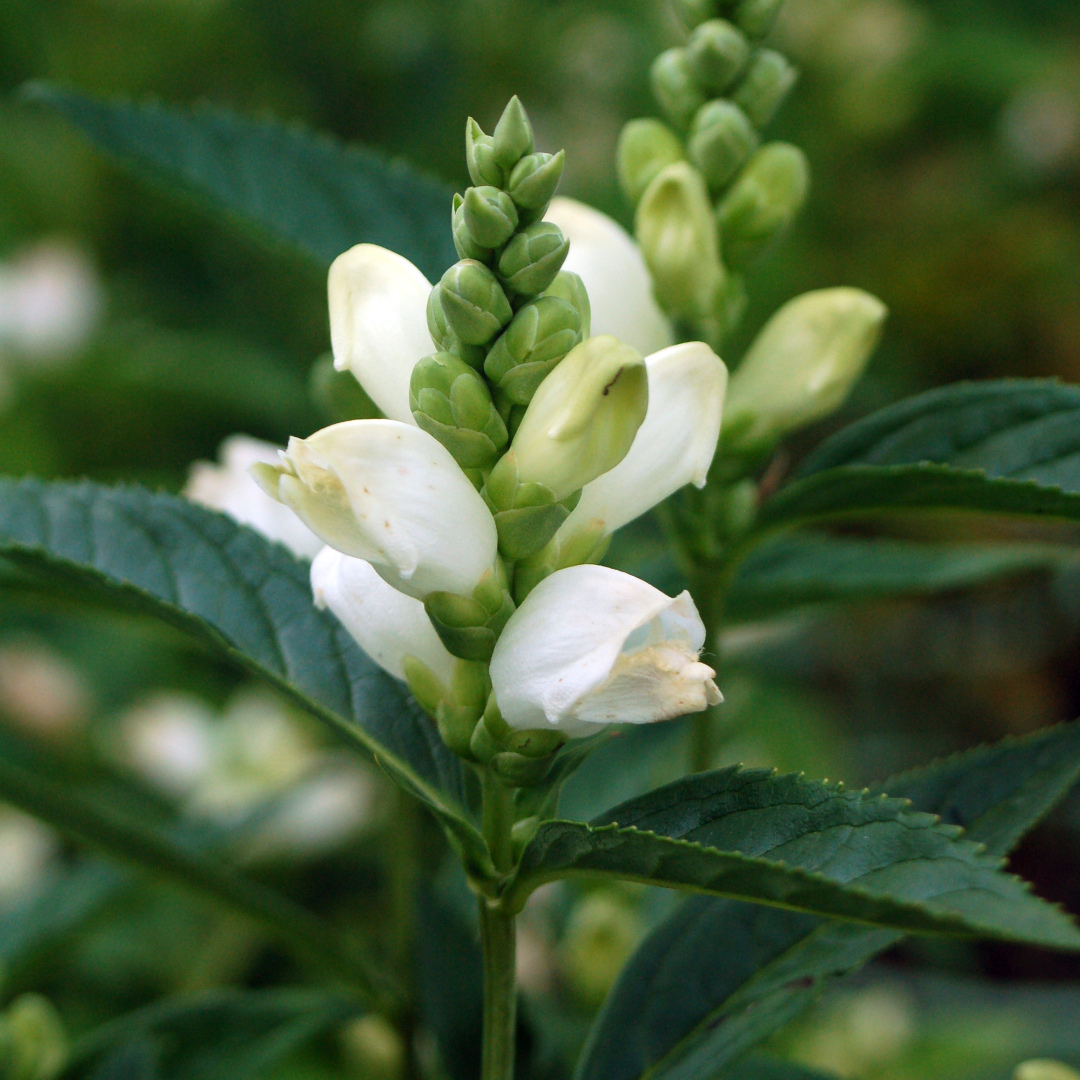
Chelone 'Black Ace'
Add to Wishlist Full Sun
 Partial Sun
 Pollinator Friendly
- In stock, ready to ship
Chelone 'Black Ace': Dark Leaves First, Hooded Blooms Later
'Black Ace' shows up in spring with almost black leaves, like it's playing poker and doesn't want you reading its face. Then it fades to green and lays down a winning hand of white hooded blooms. CALL THE BLUFF.
Plant Characteristics:
- Botanical Name: Chelone glabra 'Black Ace'
- Common Name: White Turtlehead
- Height: 120–150 cm (4–5 ft)
- Spread: 60 cm (2 ft)
- Flowers: White, hooded, snapdragon-like blooms in tight clusters at the tops of the stems
- Bloom Time: Late summer to fall (August to October)
- Foliage: Emerges very dark, almost black, and turns deep green as the summer heats up
- Features: Loves moist to wet soil
Where to Plant: Give it the damp spots other perennials sulk in: rain gardens, pond and stream edges, low corners where water sits after a storm, and heavy clay that stays moist. Its height suits the middle or back of a border, and its late flowers keep a wet garden busy after summer bloomers finish.
Companion Plants: Lilium 'Stargazer' opens big pink lilies in July and August, just before the turtlehead flowers. Deschampsia cespitosa adds fine, airy grass that holds its seed heads into fall. Hibiscus Summerific® 'Edge of Night' brings huge pink blooms from July to September. The dark leaves of 'Black Ace' make a strong backdrop for all three.
Plant Care: Plant in moist to wet, rich soil in full sun to part shade. The more sun it gets, the more water it needs. Don't let it dry out, especially in its first year. A layer of mulch helps hold moisture in. Tall stems usually stand on their own. If you'd like a shorter, bushier plant, pinch the stem tips back in late spring. Cut it down in late fall, or leave the stems for winter and clear them in early spring. The clump spreads slowly. Divide it in spring every few years if it outgrows its spot.
History: Plant Delights Nursery in North Carolina introduced 'Black Ace' in 2001 after acquiring it from North Carolina plantsman Dr. Craig Moretz. The species, Chelone glabra, grows wild in wet meadows and stream banks from Newfoundland west to Minnesota, including Ontario and Quebec.
Final Thoughts: Give it wet soil and a back-of-the-border seat. The bumblebees will crawl right into the flowers. THE HOUSE PAYS OUT LATE.



