



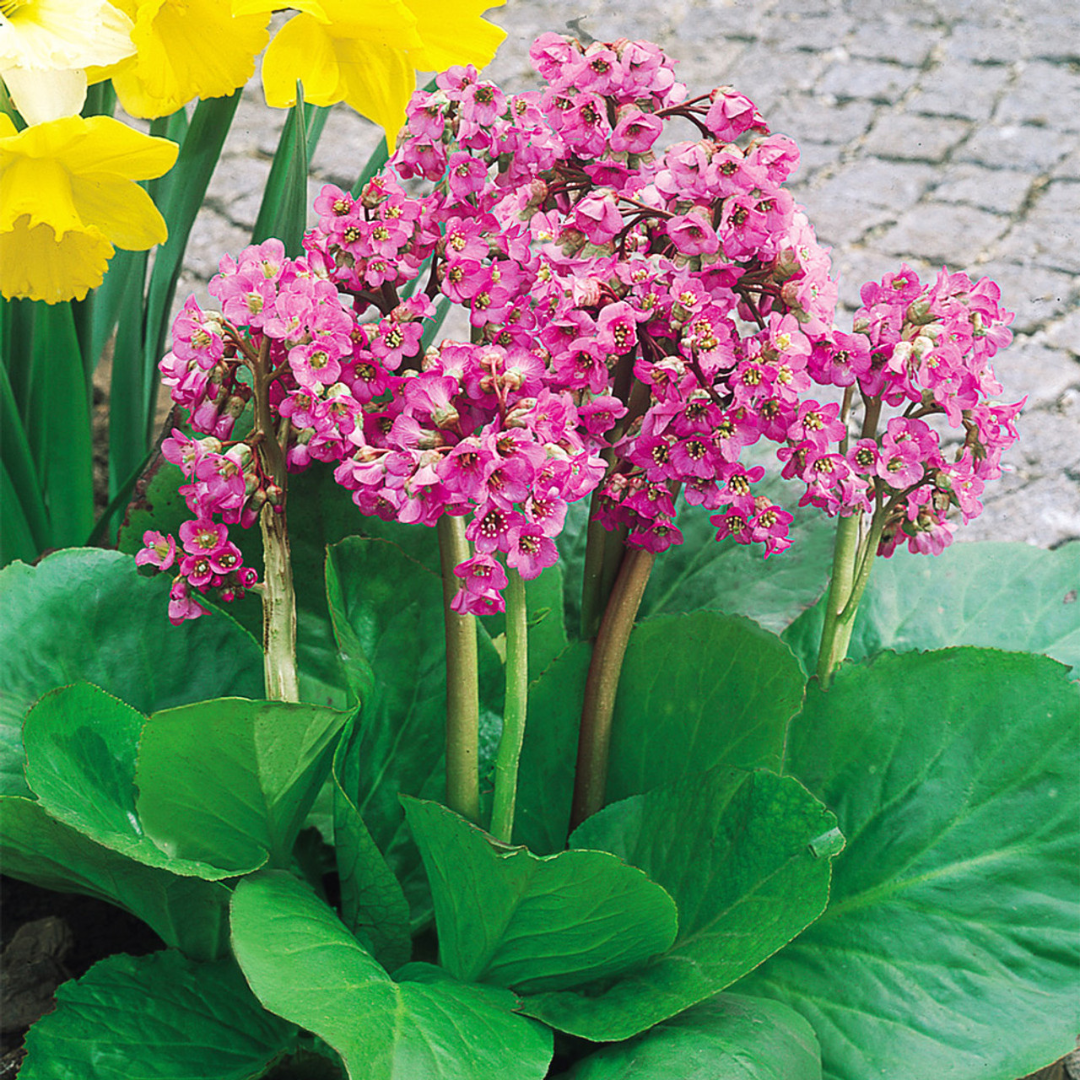
Bergenia cordifolia
Add to Wishlist Full Sun
 Partial Sun
 Deer Resistant
 Pollinator Friendly
- In stock, ready to ship
Bergenia cordifolia: Big Glossy Leaves That Laugh at Winter
Yes, it's called Pigsqueak, and no, it's not embarrassed. Big glossy heart-shaped leaves go bronze-red in winter, and pink spring bells send the early bees into a frenzy. THE NAME IS SILLY, THE PLANT IS NOT.
Plant Characteristics:
- Botanical Name: Bergenia cordifolia
- Common Name: Heartleaf Bergenia, Pigsqueak, Elephant's Ears
- Height: 35–45 cm (14–18 in) in flower
- Spread: 45–60 cm (18–24 in)
- Flowers: Pink, bell-shaped clusters on upright reddish stems
- Bloom Time: Spring (April to May)
- Foliage: Large, glossy, rounded to heart-shaped evergreen leaves, turning bronze-red to purplish in fall and winter
- Features: Evergreen, good groundcover
Where to Plant: Use it for edging beds and paths, covering ground under trees and shrubs, or adding bold texture to a shady border. Planted in groups, the leaves knit together and keep weeds down. It handles clay soil and, once settled, a bit of dryness, so it's useful in tough city beds.
Companion Plants: Trollius 'Lemon Supreme' opens yellow globes in May and June, right after the pink bergenia flowers. Behind it, Amsonia 'Storm Cloud' adds blue stars in May and June at 61 to 76 cm. Astrantia 'Star of Billion' carries white blooms from June to August. The big, glossy bergenia leaves anchor the front all season.
Plant Care: Plant in moist, well-drained soil with some compost mixed in. It grows in sun or shade, but in full sun the soil should stay evenly moist. Water through the first growing season while the rhizomes establish. Leave the leaves alone in fall; they protect the plant and give winter colour. In spring, remove any that are torn or browned. Cut off flower stems after bloom. Divide in spring or early fall when clumps get crowded or bare in the middle, replanting healthy pieces with leaves attached. Watch for slugs in wet shade.
History: Heartleaf bergenia grows wild in damp, rocky woodland and meadows of Siberia and Mongolia, and the genus was named in 1794 to honour the German botanist and physician Karl August von Bergen. Its common name, pigsqueak, comes from the squeaky sound two leaves make when rubbed together.
Final Thoughts: Use it as a groundcover under trees and let the deer walk right past. SQUEAL-WORTHY ALL YEAR.



