



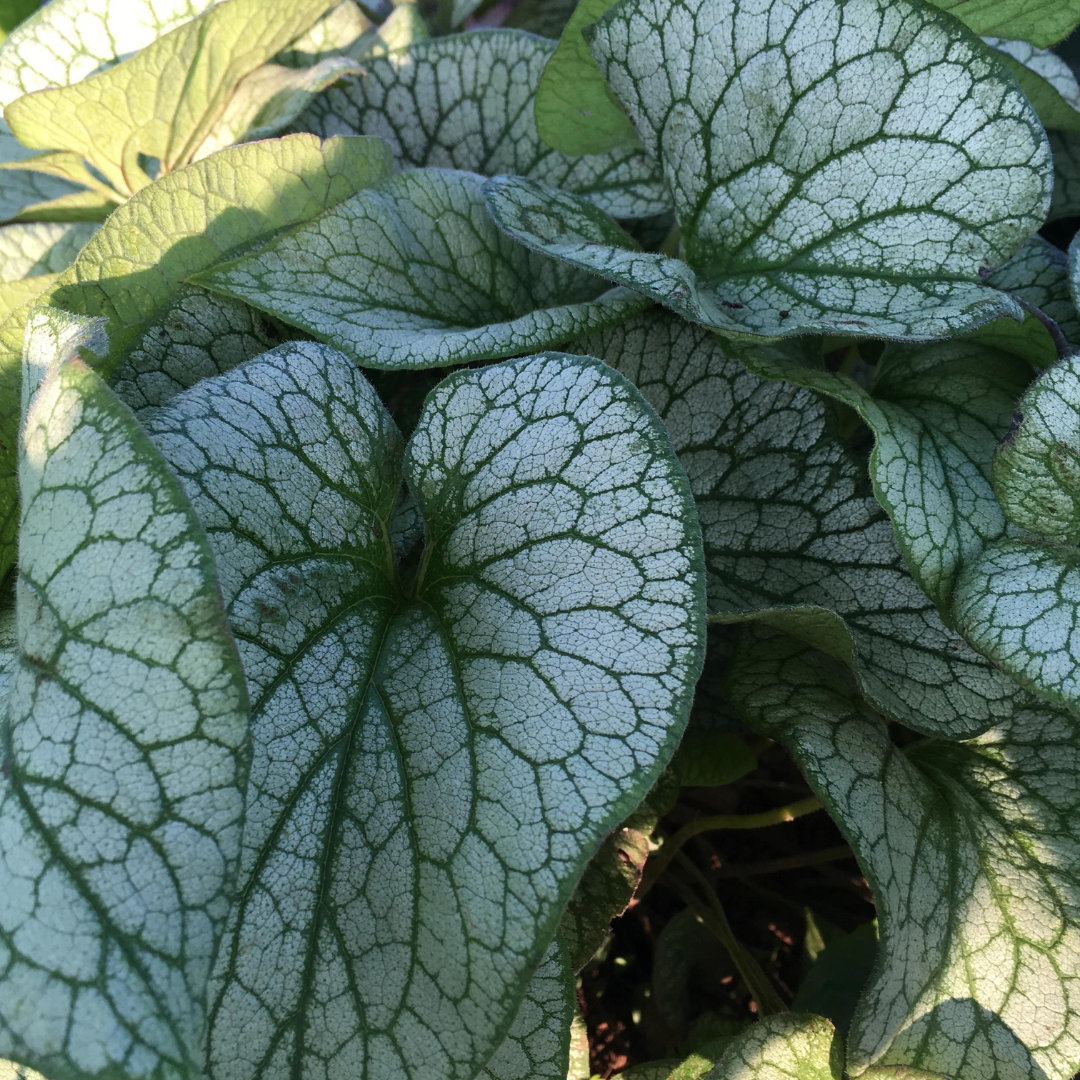
Brunnera 'Jack Frost'
Add to Wishlist Partial Sun
 Full Shade
 Deer Resistant
 Pollinator Friendly
- In stock, ready to ship
Brunnera 'Jack Frost': Frost-Painted Hearts for Dim Corners
Jack Frost was supposed to nip at your nose. Instead he moved into your shade garden and silvered every leaf he could find. Tiny baby-blue flowers float above like he brought snacks. COLD NAME, WARM WELCOME.
Plant Characteristics:
- Botanical Name: Brunnera macrophylla 'Jack Frost'
- Common Name: Siberian Bugloss, Heartleaf Brunnera
- Series: A Proven Winners® perennial
- Height: 30–38 cm (12–15 in)
- Spread: 30–38 cm (12–15 in)
- Flowers: Tiny baby-blue, forget-me-not-like flowers in airy sprays
- Bloom Time: Mid to late spring (April to May)
- Foliage: Heart-shaped leaves with a heavy silver overlay and green veining
- Features: 2012 Perennial Plant of the Year®
- Plant Patent: USPP 13,859 / Can 1,799
Where to Plant: It's a natural for shade borders, woodland gardens and the edges of shady paths, and it works as a filler in shady containers. Plant it in groups for a silver groundcover that lights up dim spots, especially on the north side of the house.
Companion Plants: Tiarella 'Spring Symphony' adds frothy pink flowers in May and June beside the silvery leaves. Behind them, Astilbe 'Amethyst' brings purple plumes in June and July at 90 to 100 cm. Weave Asarum europaeum through the front as a low, glossy groundcover. It is a cool, calm planting for a shady spot.
Plant Care: Plant in part to full shade, in moist, well-drained soil rich in organic matter. Morning sun is fine if the soil stays moist; hot afternoon sun or dry soil will brown the leaf edges. Water regularly, especially the first year and in dry spells. A layer of mulch keeps the roots cool. Cut off flower stems after blooming for a tidier mound. Trim damaged leaves as needed. Leave the foliage over winter and clean it up in spring as new leaves emerge. Divide in spring when clumps get crowded.
History: 'Jack Frost' was discovered at Walters Gardens in Michigan as a natural sport of the older cultivar 'Langtrees' and was introduced in 2000. In 2012 the Perennial Plant Association named it Perennial Plant of the Year®.
Final Thoughts: Deer resistant, bee friendly and bright enough to spot from the kitchen window. LET JACK STAY.



