



Tiarella cordifolia
Add to Wishlist Partial Sun
 Full Shade
 Deer Resistant
 Pollinator Friendly
 Native
 Low Maintenance
- In stock, ready to ship
Tiarella cordifolia: Frothy Spring Carpet for the Forest Floor
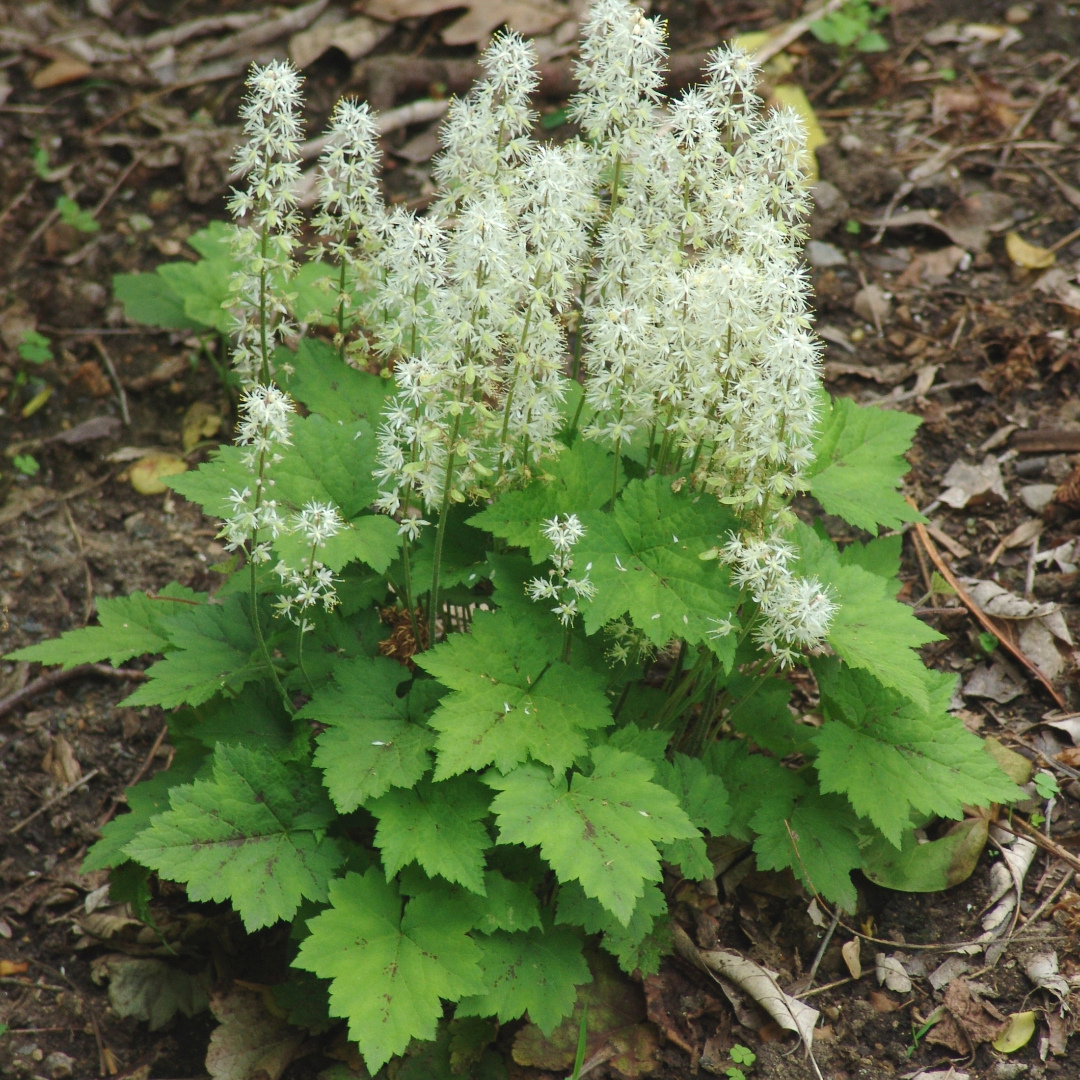
Foamflower froths up in spring like a latte that's been steamed to perfection. Fluffy white spikes over heart-shaped leaves that turn bronze for fall. NATIVE AND EXTRA FOAMY.
Plant Characteristics:
- Botanical Name: Tiarella cordifolia
- Common Name: Foamflower
- Height: 15–30 cm (6–12 in)
- Spread: 30–60 cm (12–24 in), spreading by runners
- Flowers: Small, starry white flowers, sometimes tinged pink, in fluffy spikes above the leaves
- Bloom Time: Mid to late spring (May to June)
- Foliage: Heart-shaped, lobed, soft green leaves that turn bronze in fall and often persist through winter
- Features: Spreading groundcover
Where to Plant: It's an ideal groundcover for woodland gardens, shady slopes and the ground under deciduous trees. It's also a great choice for native plant and naturalized gardens.
Companion Plants: Brunnera macrophylla carries sprays of blue flowers at 30 to 45 cm in April and May, leading into the white foamflower bloom. Hosta 'Earth Angel' adds big leaves and lavender flowers at 75 to 90 cm in June and July. Cimicifuga 'Chocoholic' brings pink spires at 90 to 120 cm from August to October. Every plant here grows in full shade to partial sun.
Plant Care: Plant in part to full shade in humus-rich, moist soil that drains well. It wants consistent moisture but not soggy ground. Add leaf compost when planting, especially in heavy clay. Water through the first season and in dry spells. Leave fallen leaves around it in autumn as a natural mulch, just as it would get in the forest. In summer, its runners root and form new plants. Dig and move them in early spring to start a new patch. Trim tattered leaves in spring. Slugs are the only common pest.
History: Foamflower grows wild in rich, moist woods across eastern North America, including southern Ontario and Quebec. The genus name means little tiara, after the shape of the seed capsule, and the common name comes from the frothy look of the flower spikes.
Final Thoughts: It spreads into a lovely groundcover in the shade, and deer keep their distance. ONE SHOT. EXTRA FROTH. ORDER UP.



