

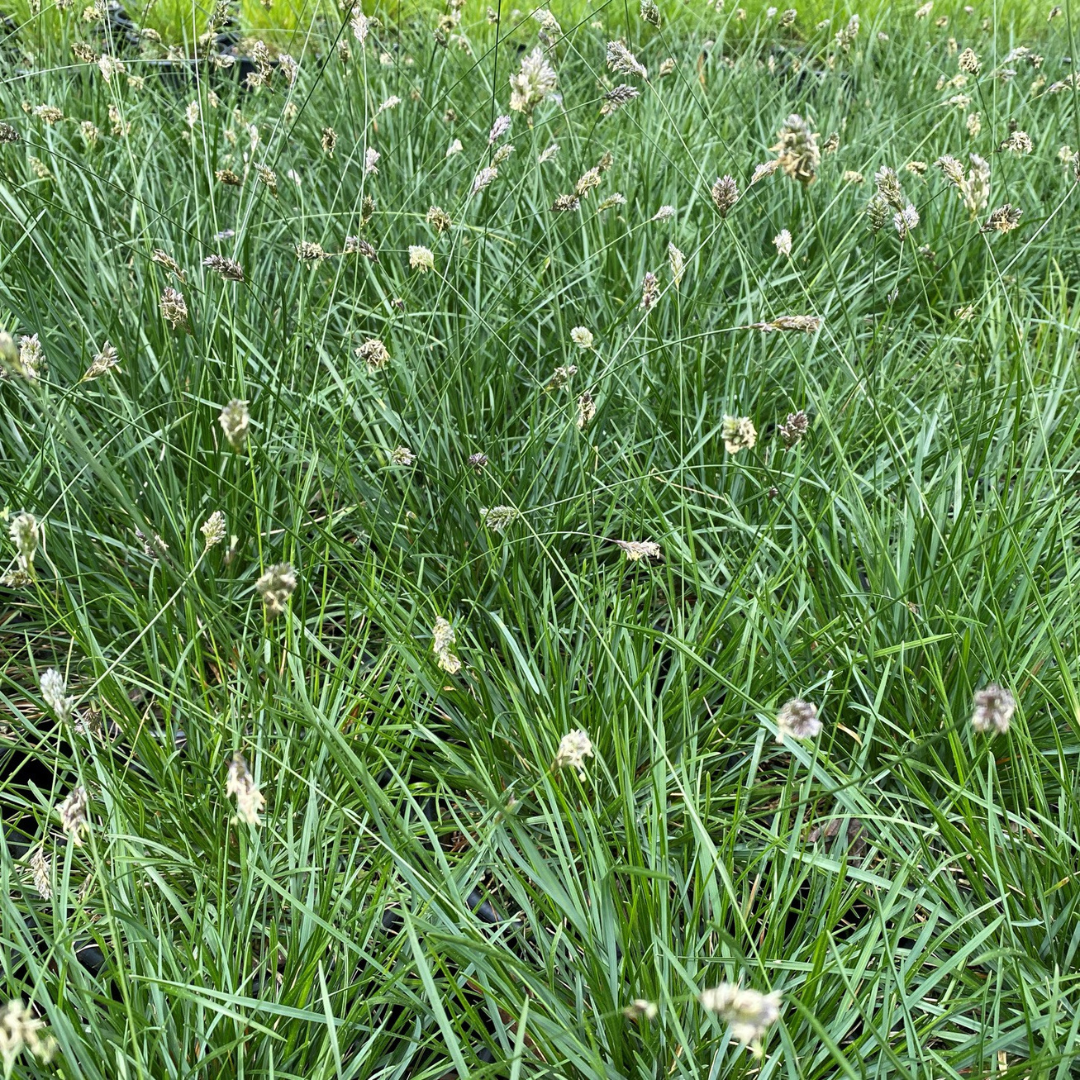
Sesleria heufleriana
- In stock, ready to ship
Sesleria heufleriana: First Grass Out of Bed Each Spring
Blue-green moor grass is the first one at the office, coffee in hand, before anybody else has found the light switch. Dark spikes dusted in creamy pollen open before most other grasses wake up. EARLY BIRD. SMUG ABOUT IT.
Plant Characteristics:
- Botanical Name: Sesleria heufleriana
- Common Name: Blue-Green Moor Grass
- Height: 45–60 cm (18–24 in) in flower
- Spread: 45–50 cm (18–20 in)
- Flowers: Short, dark purple to black spikes with creamy yellow pollen
- Bloom Time: Early spring (March to May)
- Foliage: Upright to arching tufts of leaves, green on top and blue-grey to silvery beneath; semi-evergreen
- Features: One of the earliest grasses to flower
Where to Plant: It's a good choice for edging, massing on a slope, or tucking between rocks and paving. Planted in a group, it makes a soft, two-toned groundcover that looks good from early spring well into winter.
Companion Plants: Iris 'Caesar's Brother' rises to 80 to 100 cm with violet flowers in May and June, and its upright blades echo the grass. Amsonia 'Starstruck' adds clusters of blue stars at 76 to 91 cm in the same weeks. Trollius 'Lemon Supreme' brings bright yellow globes at 25 to 30 cm in May and June, right in front of the blue-green tufts. It's a spring planting that suits full sun or partial sun.
Plant Care: Plant in average, well-drained soil. It handles dry conditions once established, but looks best with an occasional deep watering in long droughts. Wet, heavy soil in winter is the main thing to avoid, so loosen clay or plant on a slight rise. This is a cool-season grass. In early spring, before the flowers appear, comb out or lightly trim any winter-worn leaves. Don't shear it hard. Divide crowded clumps in spring.
History: Blue-green moor grass is a European species whose broader, two-toned leaves set it apart from its close cousin, blue moor grass (Sesleria caerulea). Moor grasses are known in European gardens for their early flowers and evergreen tufts, and North American gardeners have adopted them as tough, low-water alternatives to turf.
Final Thoughts: Silvery undersides, tidy tufts and drought tolerance once it settles in. PLANT IT AND START YOUR SPRING EARLY.



