

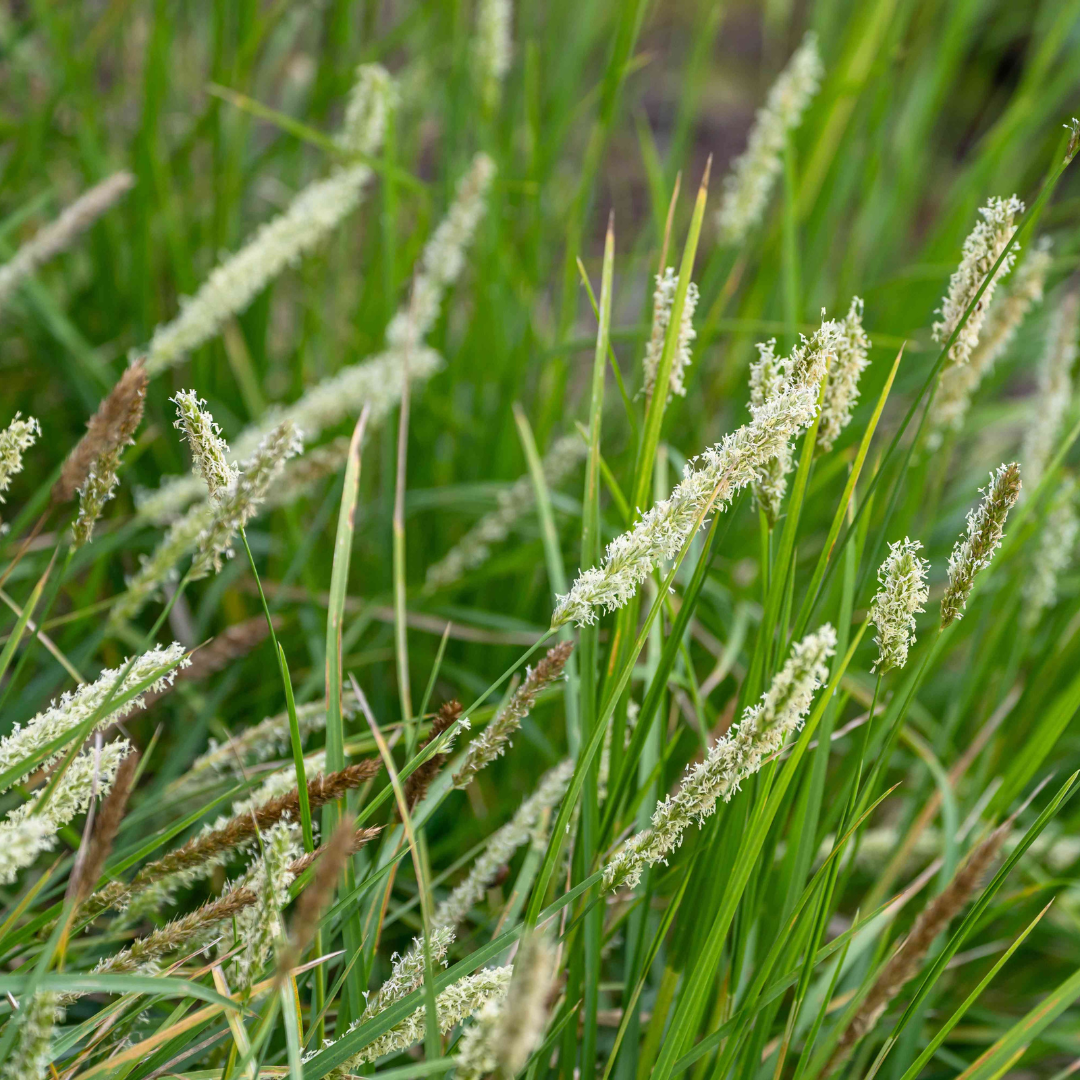
Sesleria autumnalis
- In stock, ready to ship
Sesleria autumnalis: Chartreuse Meadow in Miniature
Autumn moor grass is a tidy chartreuse tuft that looks like it just had its hair done. Creamy white spikes show up late in the season, just when the rest of the garden looks tired. NEAT FREAK. NO APOLOGIES.
Plant Characteristics:
- Botanical Name: Sesleria autumnalis
- Common Name: Autumn Moor Grass
- Height: 30–45 cm (12–18 in) in flower; the foliage mound is about 30 cm (12 in)
- Spread: 20–30 cm (8–12 in)
- Flowers: Slender, creamy white spikes held just above the leaves
- Bloom Time: Late summer to fall (August to October)
- Foliage: Narrow, bright chartreuse to yellow-green leaves in a tidy, semi-evergreen tuft
- Features: Tolerates dry soil once established, rarely browsed by rabbits
Where to Plant: Plant it in groups along a path, at the front of a border or as a soft groundcover under taller perennials and shrubs, where a loose drift reads like a meadow in miniature. It works in the light shade at the edge of trees as well as in sun.
Companion Plants: Astrantia 'Star of Billion' adds white pincushion flowers at 55 to 65 cm from June to August. Digitalis grandiflora brings soft yellow spires at 60 to 90 cm over the same months, a vertical accent behind the low tufts of grass. For height, set Eupatorium maculatum at the back, where it reaches 120 to 180 cm with pink domes from July to September. This moor grass handles full sun or partial sun, and so do all three partners.
Plant Care: Plant in average, well-drained soil in full sun to part shade. It's not fussy about soil type, but it dislikes soggy ground, especially in winter. Water regularly the first season, then only during long dry spells. Overwatering does more harm than good. It's a cool-season grass, so it starts growing early. In early spring, comb out or trim off any tired leaves before new growth gets going. Avoid hard cutting in fall. Divide in spring if a clump gets crowded. In colder zone 5 spots, a site with good drainage and some winter snow cover helps it come through.
History: Autumn moor grass is native to dry, rocky slopes and open woods of southern Europe, from Italy to the Balkan Peninsula. Its name autumnalis points to its late flowering, and the genus honours Leonardo Sesler, an 18th-century Italian physician and botanist.
Final Thoughts: Sun or part shade, dry soil once settled, and deer and rabbits rarely bother. Mass it under bigger plants. TIDY WINS.



