



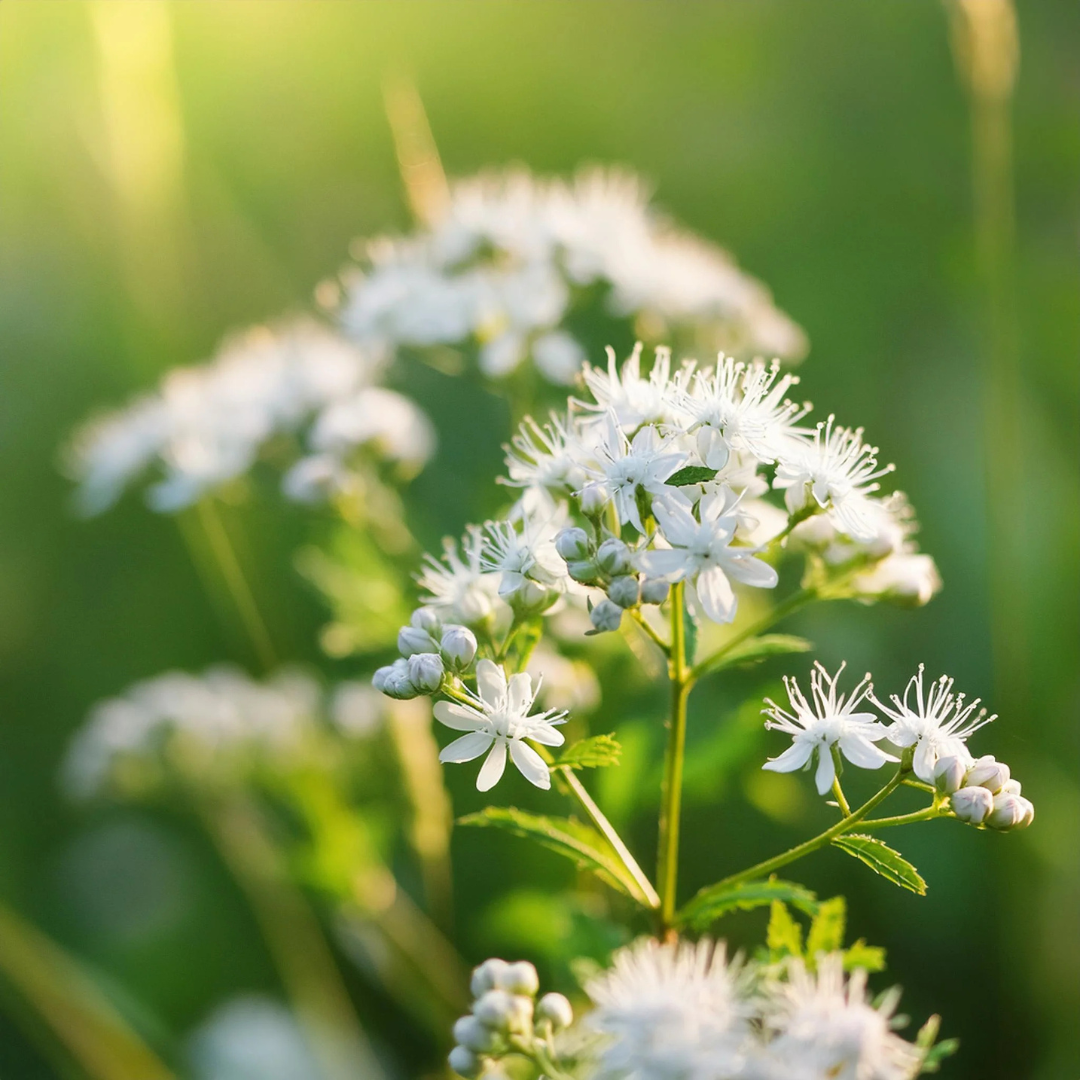
Pycnanthemum virginianum
Add to Wishlist Full Sun
 Partial Sun
 Deer Resistant
 Pollinator Friendly
 Native
 Low Maintenance
- In stock, ready to ship
Pycnanthemum virginianum: Minty Flower Clusters With a Bee Fan Club
Flat-topped clusters of tiny white flowers dotted with purple, over fine leaves with a serious mint kick. This native mountain mint is a pollinator rest stop with free breath mints. THE LINEUP NEVER ENDS.
Plant Characteristics:
- Botanical Name: Pycnanthemum virginianum
- Common Name: Virginia mountain mint, American mountain mint
- Height: 60–90 cm (2–3 ft)
- Spread: 30–45 cm (1–1.5 ft), slowly forming small colonies
- Flowers: Small white flowers, often dotted with purple, in dense flat-topped clusters
- Bloom Time: Midsummer to early fall (July to September)
- Foliage: Narrow, fine-textured green leaves with a strong mint scent
- Features: Tolerates clay
Where to Plant: It's a natural fit for meadow and prairie plantings, rain garden edges and the middle of a sunny border. It grows in clay, loam or sand, which makes it a forgiving choice for new builds with heavy, compacted soil.
Companion Plants: Aconitum carmichaelii 'Arendsii' rises to 120 to 150 cm with blue flowers from August to October. Hemerocallis 'Always Afternoon' adds purple daylilies at 50 to 55 cm from June to August. Veronica 'Pink Candles' brings pink spikes at the front from June to August. The white mountain mint flowers from July to September and links the seasons together.
Plant Care: Plant it in full sun to part shade. It prefers moist, well-drained soil but manages in average garden soil. Water regularly through the first season while the roots settle in. The rhizomes spread a short distance to form a colony. In rich, moist soil it can move faster, and in drier soil it stays put. Pull or slice off unwanted shoots in spring, and divide the clump every few years if it gets crowded. Leave the seed heads standing over winter for structure, then cut everything back in early spring.
History: Virginia mountain mint grows wild in wet meadows, prairies and open ground from eastern Canada down through the eastern United States, including southern Ontario. Despite the name and the minty smell, it is not a true mint, though it belongs to the same plant family.
Final Thoughts: It handles clay and deer rarely bother it. Plant a drift and give the local pollinators a reason to stay. HOMEGROWN AND HIGHLY RECOMMENDED.



