

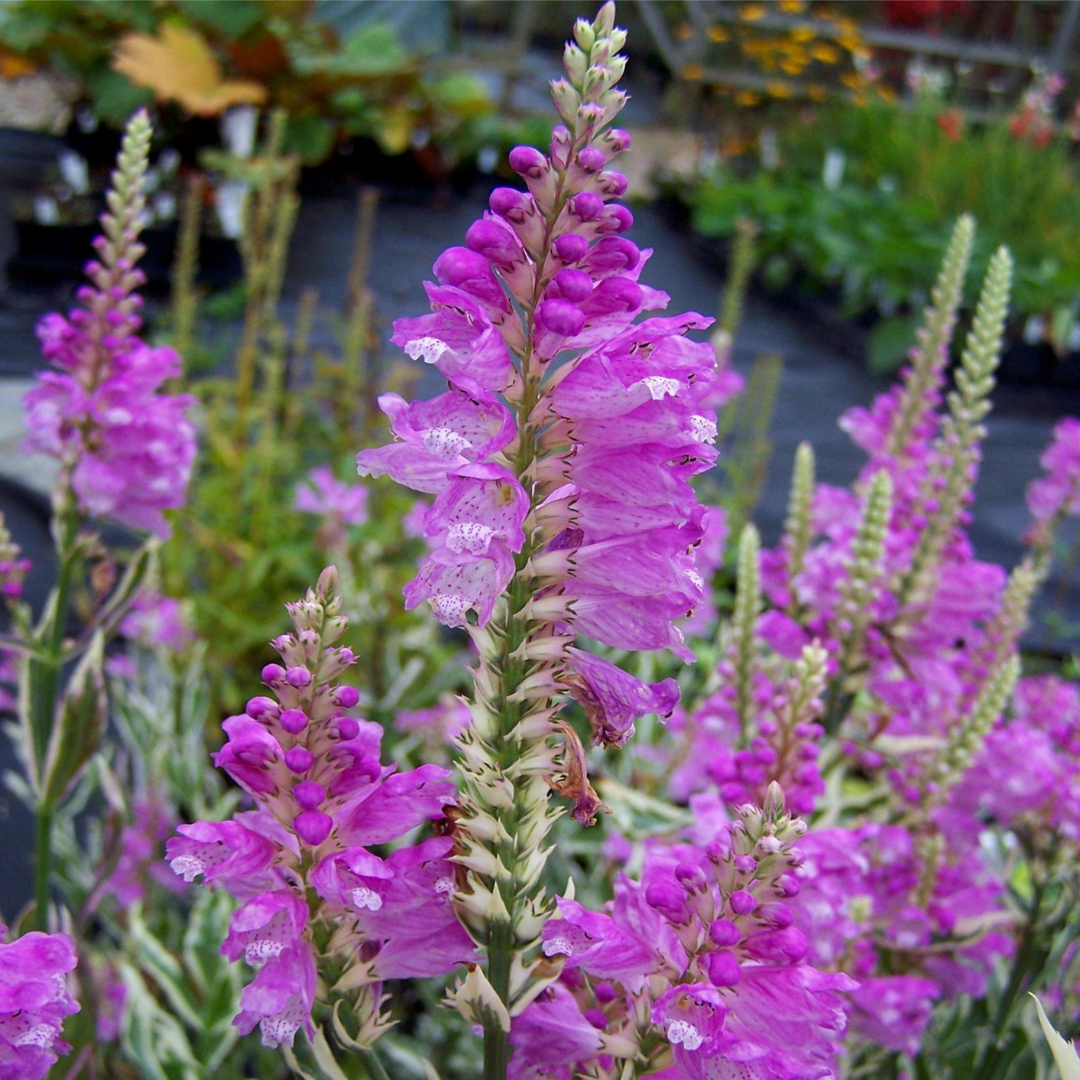
Physostegia 'Crown Rose'
- In stock, ready for delivery
Physostegia 'Crown Rose': Rose-Pink Spires, Obedient by Name
It's called Obedient Plant, and for once the name isn't false advertising. 'Crown Rose' opens rose-pink spikes from the bottom up, in order, no shoving. THE ONLY ONE IN THE FAMILY WHO FOLLOWS INSTRUCTIONS.
Plant Characteristics:
- Botanical Name: Physostegia virginiana 'Crown Rose'
- Common Name: Obedient Plant, False Dragonhead
- Height: 50 cm (20 in)
- Spread: 45 cm (18 in)
- Flowers: Rose-pink, tubular and lipped, in upright spikes that open from the bottom up
- Bloom Time: Midsummer to early fall (July to September)
- Foliage: Narrow, toothed, lance-shaped green leaves on square stems
- Features: Long-lasting cut flower
Where to Plant: Use it in the middle of a sunny or lightly shaded border, in a rain garden or along the edge of a pond where the soil stays damp. It handles heavy clay better than many perennials, and the spikes earn a spot in a cut-flower bed. Like most obedient plants, it spreads by underground runners into a patch, so give it room or edge it in a tidy bed.
Companion Plants: Give 'Crown Rose' a moist bed in sun or part shade with scarlet lobelia, deep red hibiscus and a mossy edge. Sagina subulata carpets the front at 2 to 5 cm with mossy green leaves. Lobelia cardinalis adds scarlet cardinal flower spikes at 60 to 120 cm from July to September. Hibiscus Summerific® 'Holy Grail' brings deep red blooms over dark leaves at 120 to 135 cm from July to September. Molinia 'Moorflamme' adds a fine clump at about 60 cm that turns orange-red in fall.
Plant Care: Plant in full sun to part sun in moist, moderately fertile soil. It tolerates clay and wet spots, and it doesn't want to dry out completely. In very rich, wet soil it grows taller and spreads faster. The species spreads by shallow underground runners, so give it room or plan to divide it every two or three years in spring. Unwanted shoots pull out easily. Cut the stems back in late fall or early spring.
History: Obedient plant, Physostegia virginiana, is native across much of eastern North America, including Ontario and Quebec, where it grows in wet meadows, streambanks and damp thickets. The common name comes from the way individual flowers stay put when nudged sideways on their stalks.
Final Thoughts: Bees, butterflies and hummingbirds all show up, deer don't, and cut stems last for ages. CROWN IT KING OF THE VASE.