

Perovskia 'Blue Jean Baby'
- In stock, ready for delivery
Perovskia 'Blue Jean Baby': Russian Sage Tamed to Fit
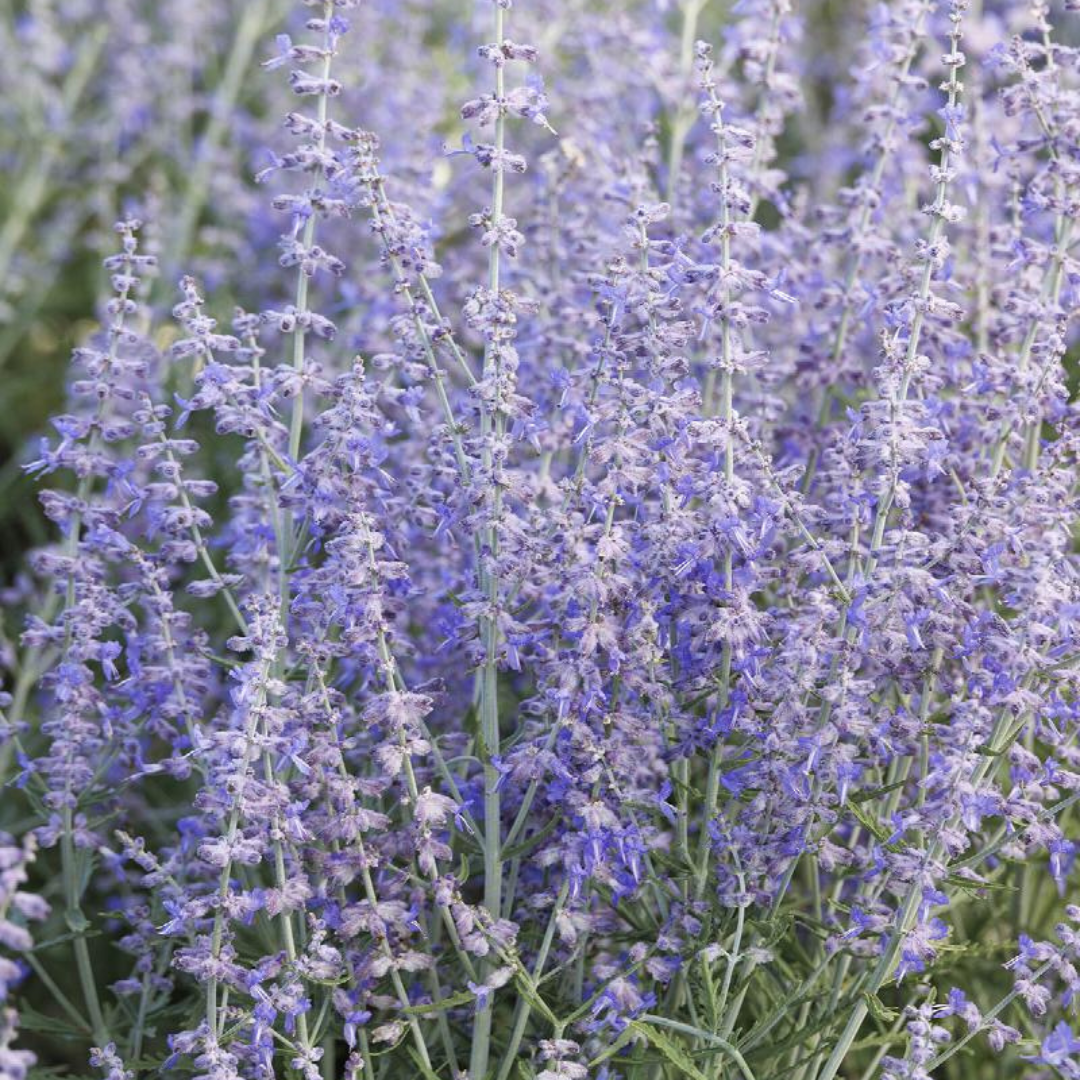
Smoky lavender-blue spikes and grey-green leaves that smell amazing when you brush past. 'Blue Jean Baby' goes with literally everything in the yard, like a good pair of jeans. BROKEN IN, NEVER WORN OUT.
Plant Characteristics:
- Botanical Name: Perovskia atriplicifolia (now often listed as Salvia yangii)
- Common Name: Russian Sage
- Height: 70–85 cm (28–34 in)
- Spread: 90 cm (36 in)
- Flowers: Lavender-blue, held in smoky purple calyxes on upright, branched spikes
- Bloom Time: Midsummer to early fall (July to September)
- Foliage: Fragrant, grey-green
- Features: Salt tolerant, fragrant, good for cut and dried flowers
Where to Plant: It's a manageable size for the front or middle of a sunny border. Mass it along a hot driveway, a dry slope or a boulevard bed, since it handles salt and heat, and grow a few extra for cut or dried stems.
Companion Plants: Use compact 'Blue Jean Baby' in a sunny, dry bed with yellow ice plant, red gaillardia and magenta gayfeather. Delosperma 'Jewel of Desert Peridot' carpets the front at 10 to 15 cm with bright yellow flowers from May to September. Gaillardia 'Goblin' adds red and yellow daisies at 25 to 30 cm from June to September. Liatris 'Kobold' brings magenta-purple spikes at 45 to 60 cm from July to September. Muhlenbergia Undaunted® adds a fine mound that turns into a pink-red haze in fall.
Plant Care: Plant in full sun in average to poor, well-drained soil. Rich soil and extra fertilizer make Russian sage floppy. Wet soil in winter is the real danger, so avoid low spots and heavy clay that holds water. Water through the first season, then mostly leave it be. Leave the stems up over winter for structure. In spring, once new buds show near the base, cut the old stems back to about 15 cm (6 in). It doesn't need regular dividing.
History: 'Blue Jean Baby' was bred by Hans Hansen at Walters Gardens in Zeeland, Michigan, picked as a seedling in summer 2012 and approved for release in 2014. It was named a Top Performer in the Chicago Botanic Garden's plant evaluation in 2020.
Final Thoughts: Deer, drought and road salt can all take a number. Plant it along the sidewalk. THE SMELL ALONE IS WORTH IT.