

Pennisetum alopecuroides
- In stock, ready to ship
Pennisetum alopecuroides: The Fountain Grass Every Cultivar Came From
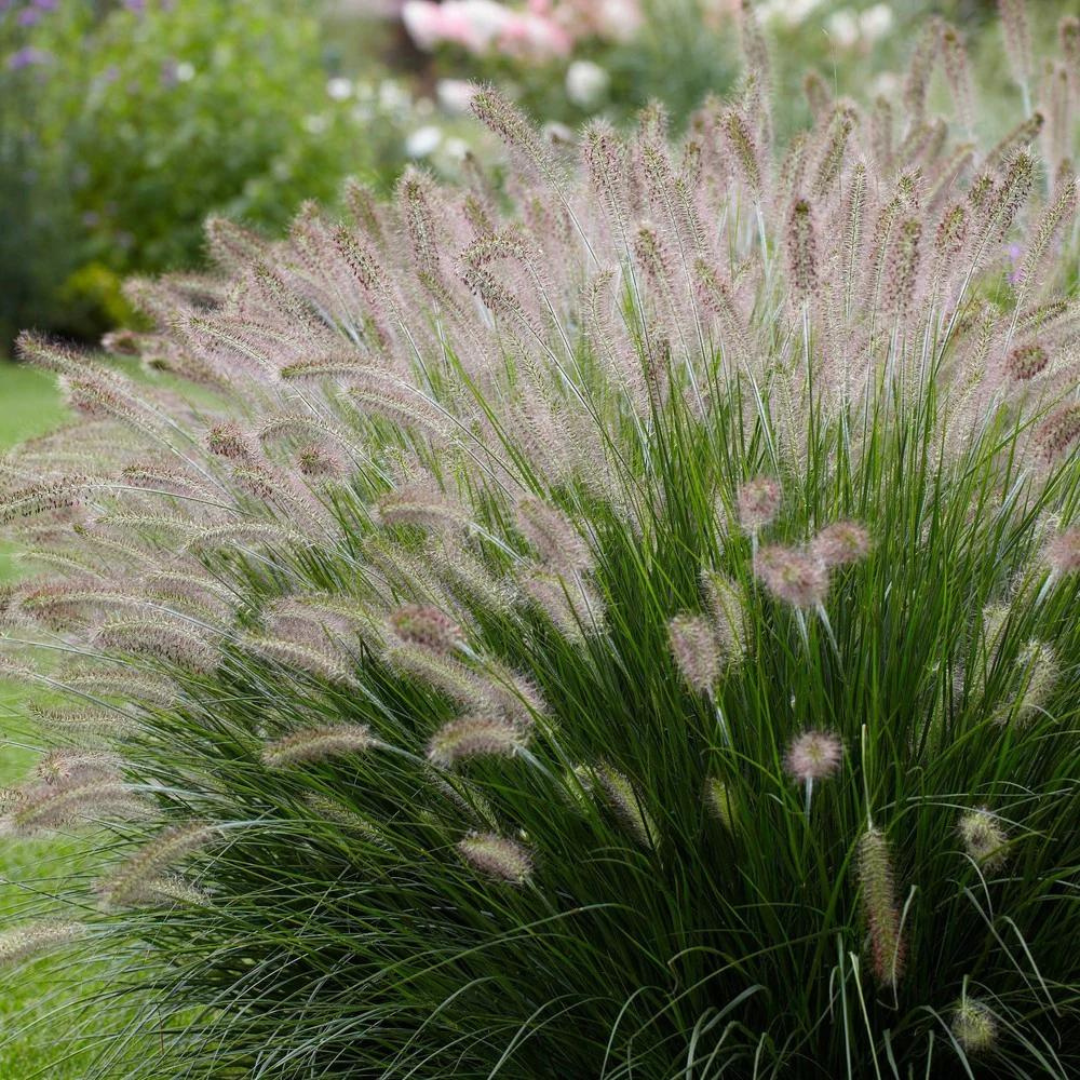
The classic fountain grass, all arching green blades and fuzzy foxtail plumes in pinkish brown. It's the friend who shows up to every group project and actually does their share. A GOLD STAR FOR THE FOXTAIL.
Plant Characteristics:
- Botanical Name: Pennisetum alopecuroides
- Common Name: Fountain Grass
- Height: 75–100 cm (2.5–3.3 ft) in flower
- Spread: 60–90 cm (2–3 ft)
- Flowers: Fuzzy, foxtail-like plumes in pinkish to reddish-brown tones, fading to tan
- Bloom Time: Late summer to fall (August to October)
- Foliage: Narrow, arching green blades that turn golden yellow in fall
- Features: Winter interest
Where to Plant: It's a versatile grass for sunny borders, mass plantings, slopes and large containers. Use it to soften stiff plantings or repeat it through a bed for rhythm, ideally where the plumes catch late-afternoon backlight.
Companion Plants: Gaura 'Monarch Pink' gives airy pink flowers at 45 to 60 cm from June to September, a nice match for the soft grass. Echinacea Kismet® 'Red' adds compact red coneflowers from June to October. Edge it with Sedum 'Blue Spruce', a low stonecrop with yellow flowers from June to August. The grass's bottlebrush plumes join in from August to October.
Plant Care: Plant in full sun in average, well-drained soil. Part shade is tolerated, but you'll get fewer plumes. Set the crown at or slightly above soil level, since soggy winter soil is the most common cause of loss. Water through the first season, then only in long dry spells. Leave the clump standing over winter for interest and crown protection. In early spring, before new growth begins, cut it back to about 8–15 cm (3–6 in). Divide in spring every few years when the centre starts to die out. The species can self-seed, and seedlings may vary. If you'd rather not have volunteers, cut the plumes off in late fall.
History: Fountain grass is native to meadows, open woods and stream banks in eastern Asia, mainly China and Japan, and in Australia, and its name alopecuroides means foxtail-like. Most popular fountain grass cultivars, from 'Hameln' to 'Red Head', were selected from it, and in colder climates the species doesn't behave invasively.
Final Thoughts: Golden in fall, still standing in winter, ignored by deer. Plant it and cross one more thing off the list. LOW EFFORT, HIGH PRAISE.



