

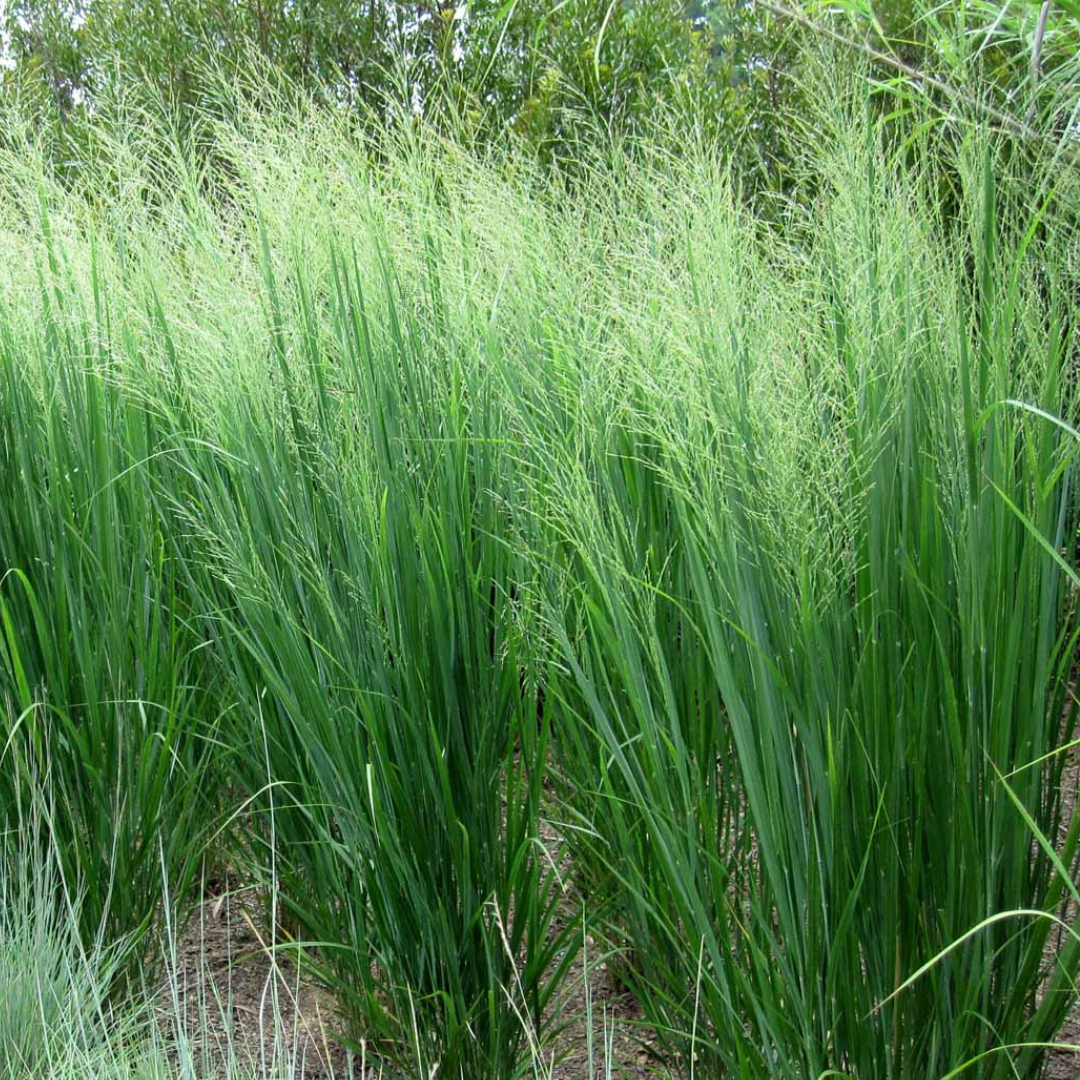
Panicum virgatum
- In stock, ready to ship
Panicum virgatum: Deep-Rooted Prairie Original
The original switch grass, native and deep-rooted, and frankly a little tired of all the fancy cultivars getting the credit. Pink-tinted plumes, golden fall colour, seeds for the birds. RESPECT YOUR ELDERS.
Plant Characteristics:
- Botanical Name: Panicum virgatum
- Common Name: Switch Grass
- Height: 90–150 cm (3–5 ft) in flower
- Spread: 60 cm (2 ft)
- Flowers: Airy, open panicles with a pink to purple tint, ripening to cream and golden-brown seed heads
- Bloom Time: Late summer into fall (August to October)
- Foliage: Narrow green to blue-green blades that turn yellow to bronze in fall and beige in winter
- Features: Deep roots for erosion control, seeds for birds
Where to Plant: Straight species switch grass is a workhorse for naturalized areas, meadows, pollinator gardens and rain gardens, and its deep roots help hold soil on slopes and banks. It handles clay, sand, periodic flooding and some road salt, which makes it practical along ditches and driveways.
Companion Plants: Echinacea paradoxa brings yellow coneflowers at 75 to 90 cm, a cheerful contrast to the fine grass blades from June to August. Perovskia 'Blue Jean Baby' adds lavender spires from July to September that read beautifully against the switch grass. Edge the planting with Sedum 'Touchdown Teak', whose red flower heads appear in August and September as the grass comes into bloom. All four love full sun and handle dry spells once settled.
Plant Care: Plant in full sun in almost any soil. It prefers average moisture but adapts to dry or occasionally wet ground. Skip the fertilizer, because rich soil makes it floppy. Water through the first season while the roots grow down. Leave the clump standing for winter interest and bird food. Cut back to about 10 cm (4 in) in early spring, before new growth begins. As a warm-season grass, it doesn't really get going until the soil warms in late spring. Divide in spring every few years. It can self-seed in open soil, so remove unwanted seedlings while they're small.
History: Switch grass is native from southern Canada to Mexico across most of North America east of the Rockies, including southern Ontario and Quebec, and was one of the main grasses of the tallgrass prairie. Today it's also used for erosion control, wildlife habitat and prairie restoration.
Final Thoughts: Roots go down so deep they practically hold the hill together. Plant it on the slope your lawn mower fears. THE BIRDS WILL SEND A THANK-YOU CARD.



