

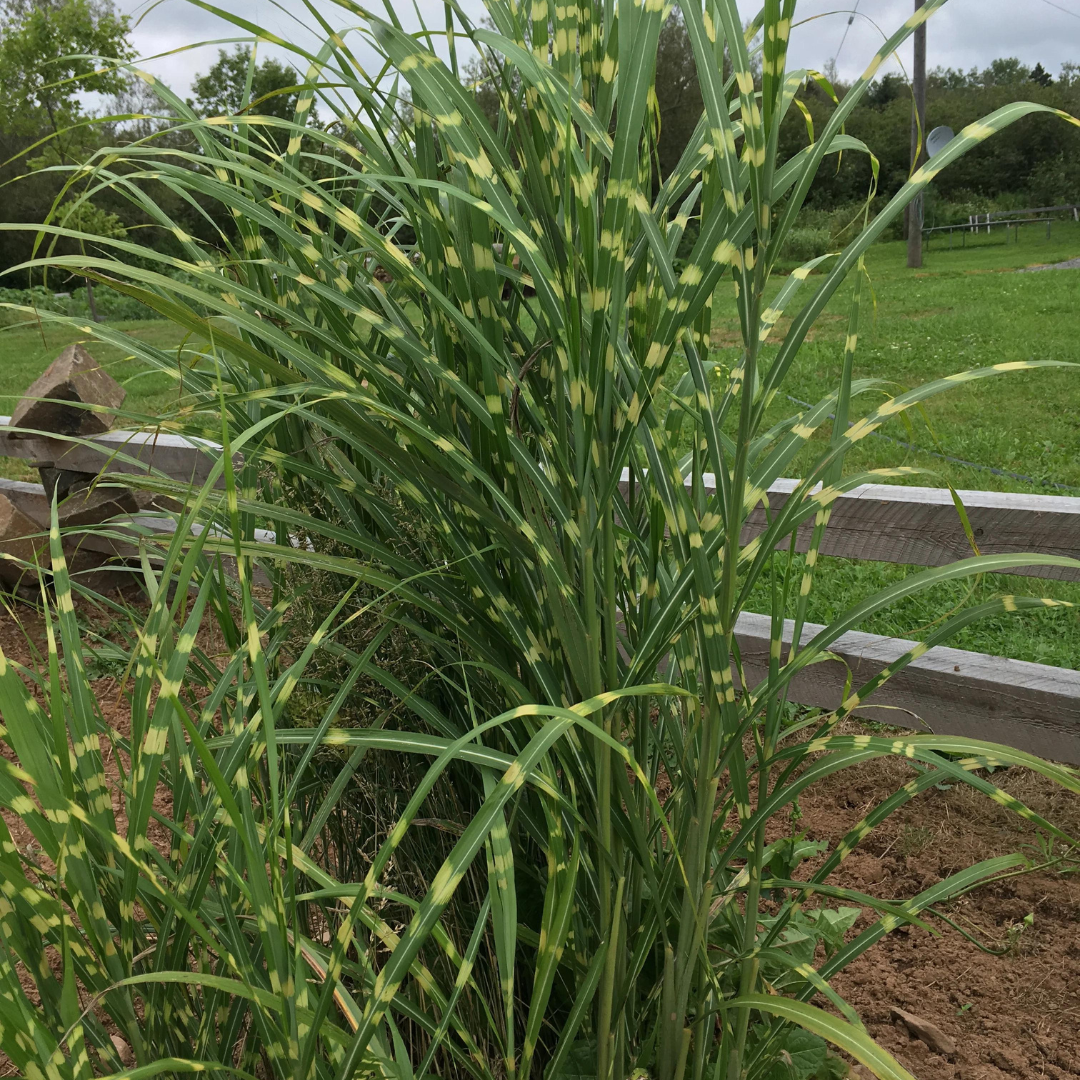
Miscanthus 'Zebrinus'
- In stock, ready to ship
HEADS UP. THIS ONE CAN SELF-SEED.
Maiden grass is on Ontario's invasive plant list because its seed can blow into natural areas. In the garden it stays a tidy clump. If you live near woodland, meadow or water, cut the plumes off in fall before they drop seed.
Miscanthus 'Zebrinus': Give It Room and Watch It Arch
Zebra Grass has long, arching blades banded in yellow, like it couldn't choose between a striped suit and a ponytail and went with both. Coppery-pink plumes finish the look. TALL, STRIPED AND NOT SORRY.
Plant Characteristics:
- Botanical Name: Miscanthus sinensis 'Zebrinus'
- Common Name: Zebra Grass
- Height: 180–210 cm (6–7 ft) in flower
- Spread: 120–150 cm (4–5 ft)
- Flowers: Coppery-pink plumes that mature to silver and last into winter
- Bloom Time: Late summer to fall (August to October)
- Foliage: Long, arching green blades with horizontal yellow bands, turning gold to tan in fall
- Features: Good for cutting and drying
Where to Plant: Give zebra grass room to arch as a specimen in a lawn or large bed, at the back of a deep border, or near a pond where the leaves can spill toward the water. Several in a row make a casual summer screen.
Companion Plants: Phlox 'Fashionably Early Princess' carries pink flowers at 70 to 80 cm from June to August in front of the striped blades. Agastache foeniculum adds lavender spikes at 60 to 120 cm from July to September and draws in pollinators. Digitalis Arctic Fox™ Lemon Cream brings soft yellow spires at 60 cm from June to August, picking up the yellow bands in the leaves. Grow them in full sun or part sun.
Plant Care: Plant it in full sun in average to moist, well-drained soil. In too much shade, or rich soil, the clump flops open in late summer. If yours tends to lean, a hidden ring of stakes or a loose tie helps. Water regularly through the first season, then during long dry spells. Leave it up for winter interest. Cut it back to about 10–15 cm (4–6 in) in early spring, before new growth appears. Divide in spring every few years to keep the clump vigorous.
History: Miscanthus sinensis is native to eastern Asia, and 'Zebrinus' has long been a garden favourite whose Latin name simply means "zebra-like." It's the arching cousin of the more upright 'Strictus'.
Final Thoughts: Plant it at the back for height, cut the plumes for dried arrangements and let the deer walk on by. EARN YOUR STRIPES.



