

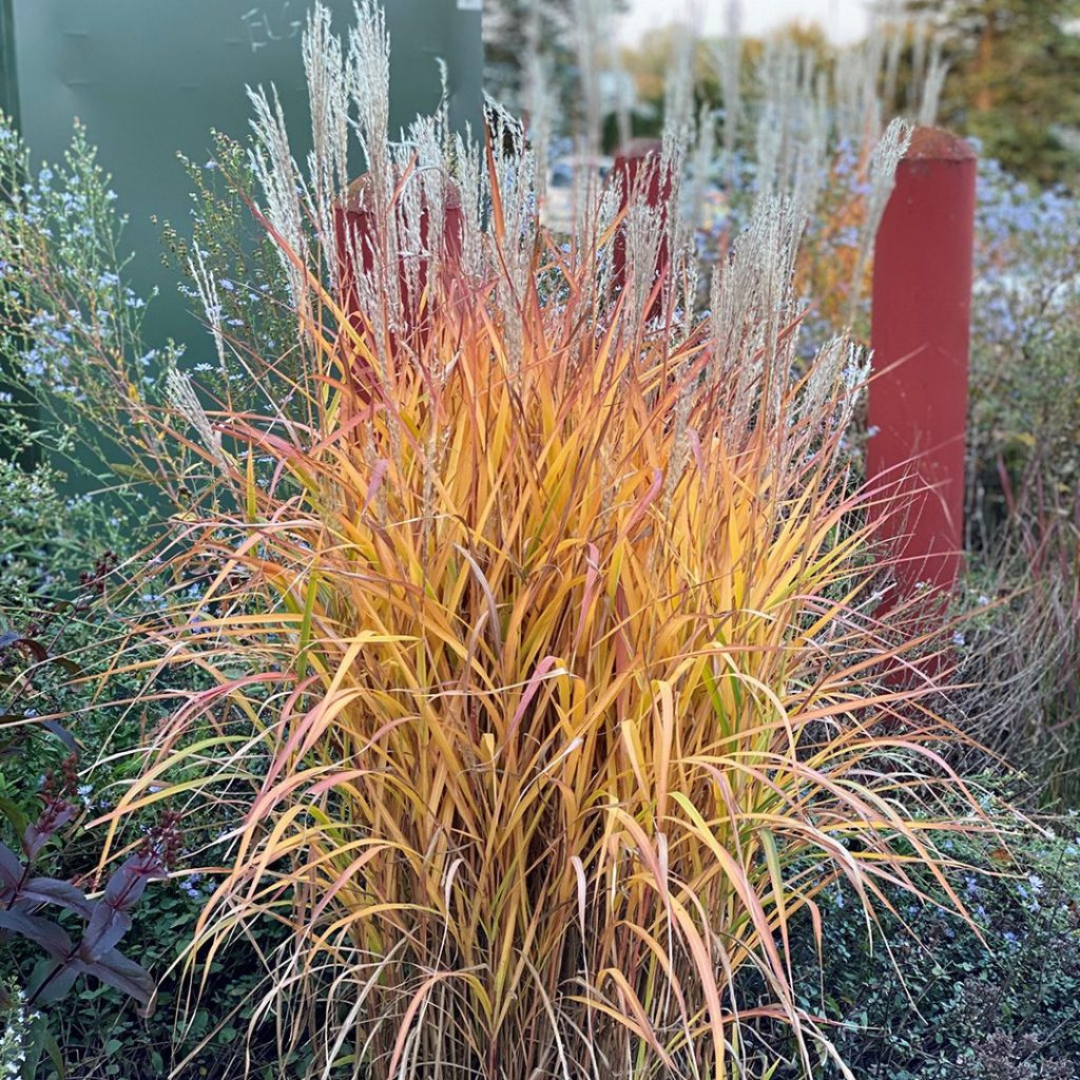
Miscanthus 'Purpurascens'
- In stock, ready to ship
HEADS UP. THIS ONE CAN SELF-SEED.
Maiden grass is on Ontario's invasive plant list because its seed can blow into natural areas. In the garden it stays a tidy clump. If you live near woodland, meadow or water, cut the plumes off in fall before they drop seed.
Miscanthus 'Purpurascens': Fall Fire in a Suburban-Sized Clump
Flame Grass is the guest who arrives in grey-green and leaves the party in head-to-toe orange, red and purple. The silvery plumes stick around for the winter after-party. FASHION CHANGES. ATTITUDE DOESN'T.
Plant Characteristics:
- Botanical Name: Miscanthus 'Purpurascens'
- Common Name: Flame Grass
- Height: 120–180 cm (4–6 ft) in flower
- Spread: 60–90 cm (2–3 ft)
- Flowers: Magenta-tinged plumes that mature to silvery white and persist into winter
- Bloom Time: Late summer to fall (August to October)
- Foliage: Upright grey-green blades that turn orange, red and purple-red in fall
- Features: Salt tolerant, excellent fall colour, winter interest
Where to Plant: Use it in mid-border, in groups on a slope or as a medium-height screen. It's smaller than many maiden grasses, so it fits regular suburban beds, and its salt tolerance helps near roads.
Companion Plants: Hibiscus 'Marshmallow Moon' opens big white flowers at 90 to 105 cm from July to September, a bright partner for the grass's reddish tones. Monarda didyma adds red flowers at 60 to 120 cm from June to August and draws in hummingbirds. Gaura Rosyjane keeps airy bicolour flowers dancing at 60 to 75 cm from June to September. Grow the group in full sun or part sun.
Plant Care: Plant it in full sun for the strongest fall colour. It handles nearly any soil, from sand to clay, and it tolerates road salt. It isn't a drought plant, though, so water it regularly the first season and during hot, dry stretches after that. Leave the clump standing for winter interest. Cut it back to about 10–15 cm (4–6 in) in early spring, before new growth starts. Divide in spring every few years if the centre opens up.
History: 'Purpurascens' has been grown in gardens for many years, and its exact parentage is debated, so it's often listed simply as Miscanthus 'Purpurascens'. Its name is Latin for "becoming purple," a nod to the fall foliage.
Final Thoughts: It shrugs off road salt and deer, so plant it right by the driveway. THE DRIVEWAY JUST GOT HOT.



