

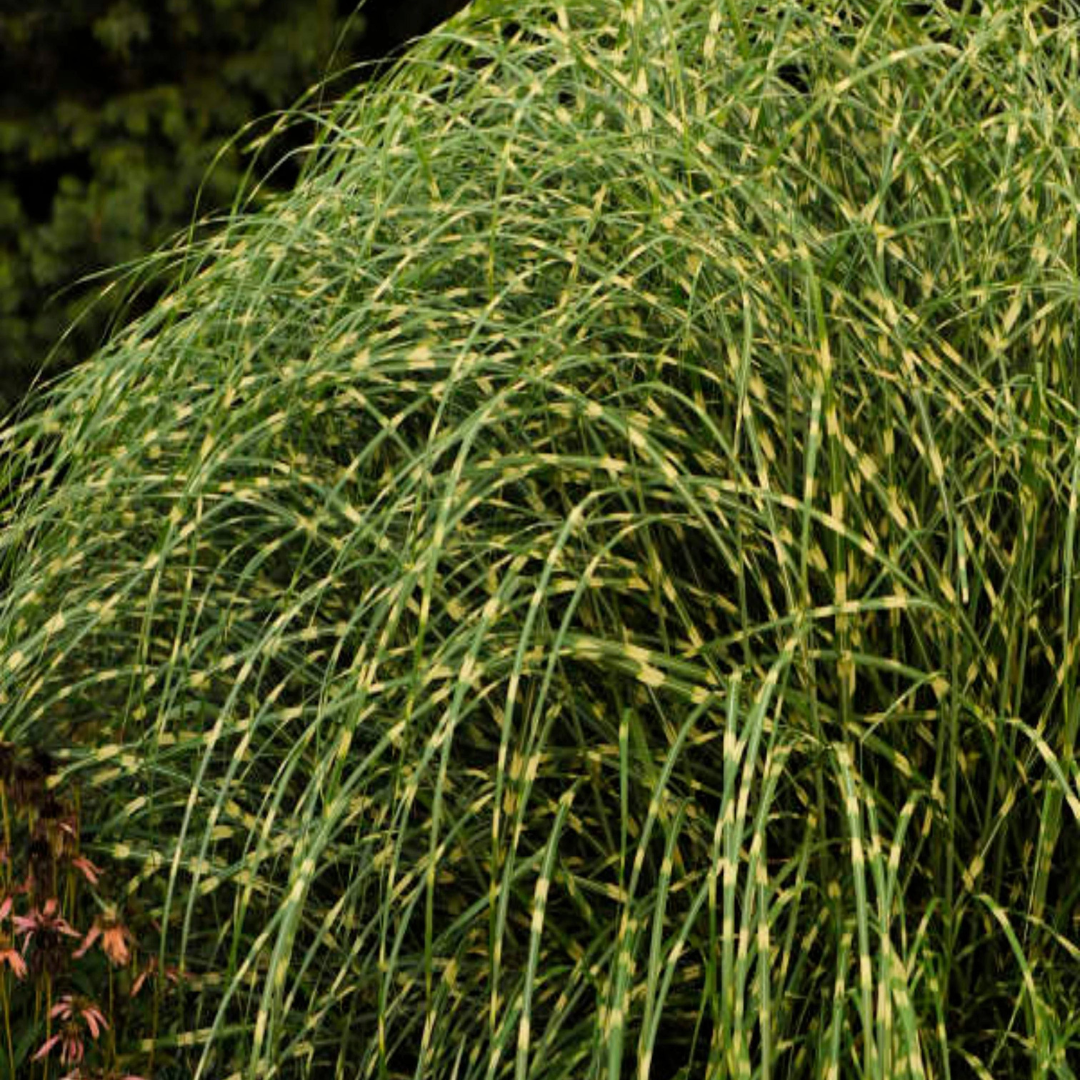
Miscanthus 'Little Zebra'
- In stock, ready for delivery
HEADS UP. THIS ONE CAN SELF-SEED.
Maiden grass is on Ontario's invasive plant list because its seed can blow into natural areas. In the garden it stays a tidy clump. If you live near woodland, meadow or water, cut the plumes off in fall before they drop seed.
Miscanthus 'Little Zebra': Zebra Stripes Without the Sprawl
'Little Zebra' is a pint-sized grass with horizontal yellow bands, like it ran through a crosswalk on the way to the garden. Deep pink plumes add the flair. STRIPES ARE ALWAYS IN SEASON.
Plant Characteristics:
- Botanical Name: Miscanthus sinensis 'Little Zebra'
- Common Name: Maiden Grass
- Height: 90–120 cm (3–4 ft) in flower
- Spread: 75–90 cm (2.5–3 ft)
- Flowers: Deep pink to reddish plumes that age to silver
- Bloom Time: Late summer to fall (August to October)
- Foliage: Upright green blades with horizontal creamy yellow bands, drying to almond in winter
- Features: Rabbit resistant, suited to containers, good for cutting and drying
Where to Plant: Use 'Little Zebra' in mid-sized borders, small gardens, along a sunny foundation or in a large container. Plant it in a group of three for a lively accent that won't block the view.
Companion Plants: Plant 'Little Zebra' in a sunny or part-shade bed with magenta cranesbill, pink lupines and ivory daylilies. Geranium macrorrhizum 'Bevan's Variety' carpets the front at 20 to 30 cm with magenta flowers from May to July. Lupinus 'Gallery Pink' adds pink lupine spikes at 45 to 60 cm in June and July. Phlox 'Fashionably Early Princess' brings light fuchsia-pink heads at 70 to 80 cm from June to August. Hemerocallis 'Arctic Snow' adds ivory-white daylilies at 60 cm in July and August.
Plant Care: Plant it in full sun in average, well-drained soil for the strongest banding. In part sun, the stripes may be fewer and the clump looser. Water regularly the first season, then only in long dry spells. Leave the foliage and plumes up for winter. Cut it back to about 10 cm (4 in) in late winter or early spring. Divide in spring when the clump becomes crowded.
History: 'Little Zebra' was found by Thomas M. Walsh as a mutation, or sport, of Miscanthus sinensis and first propagated in 1995 in Nunica, Michigan.
Final Thoughts: Compact enough for a container, tough enough for deer and rabbits. Plant one where you'd normally put a shrub. THE SAFARI COMES TO YOU.