

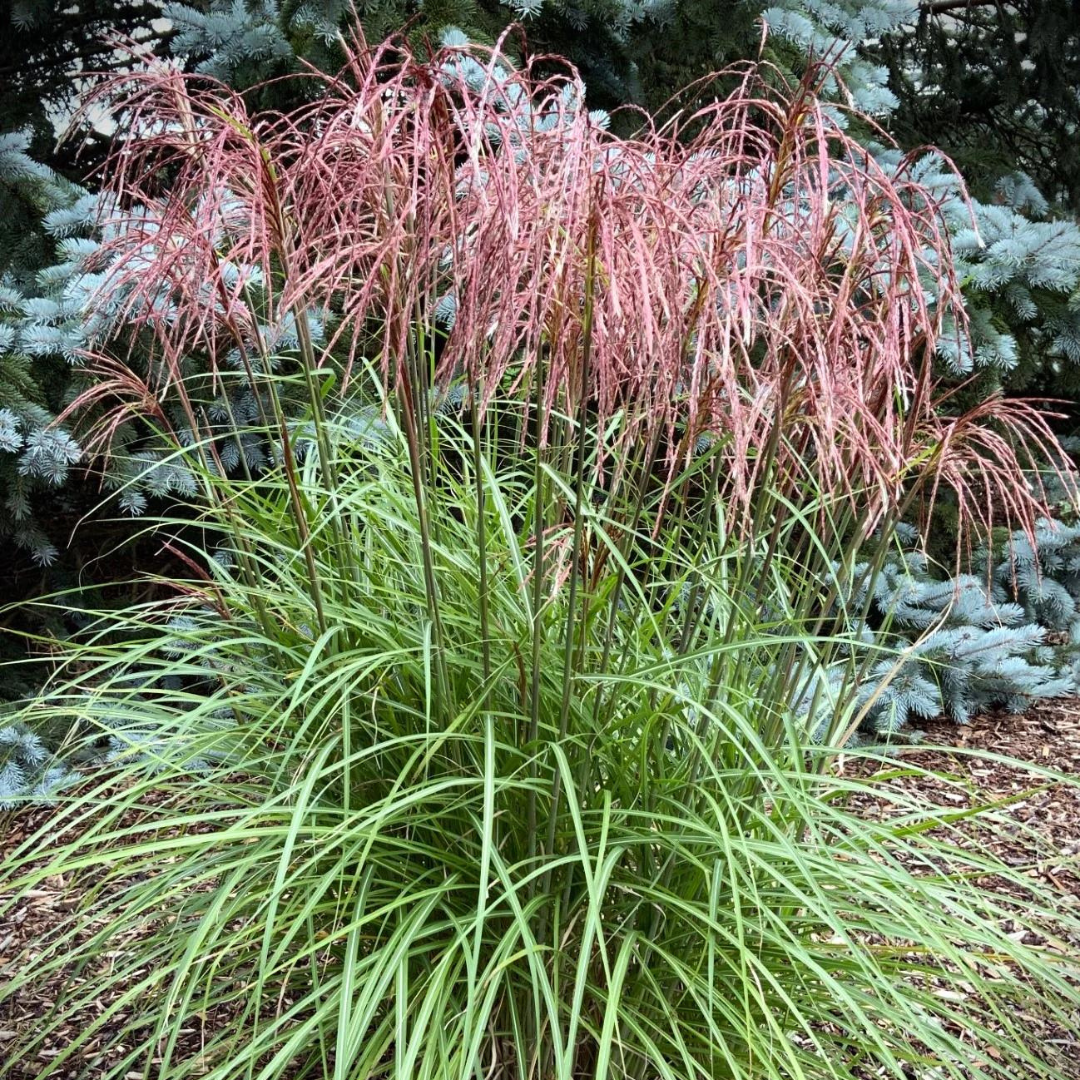
Miscanthus 'Huron Sunrise'
- In stock, ready to ship
HEADS UP. THIS ONE CAN SELF-SEED.
Maiden grass is on Ontario's invasive plant list because its seed can blow into natural areas. In the garden it stays a tidy clump. If you live near woodland, meadow or water, cut the plumes off in fall before they drop seed.
Miscanthus 'Huron Sunrise': Canadian Roots, Burgundy-Red Plumes
This maiden grass sends up full, burgundy-red plumes that look like the sky at dawn, then ages them to silver like it has been up all night. EARLY RISER, LATE NIGHT, STILL GORGEOUS.
Plant Characteristics:
- Botanical Name: Miscanthus sinensis 'Huron Sunrise'
- Common Name: Maiden Grass
- Height: 150–180 cm (5–6 ft) in flower
- Spread: 60–90 cm (2–3 ft)
- Flowers: Large, full plumes that open burgundy-red and age to silver
- Bloom Time: Late summer to fall (August to October), with plumes lasting into winter
- Foliage: Deep green blades with silver midribs, drying to almond in winter
- Features: Rabbit resistant, good for cutting and drying
Where to Plant: Use it as a specimen, in groups along the back of a border or as a seasonal screen. Its narrower footprint fits mid-sized gardens better than the giant maiden grasses, and it tolerates clay soil.
Companion Plants: Phlomis russeliana holds tiered yellow whorls at 90 cm from June to August, a bold shape beside the soft grass. Anemone 'Dainty Swan' adds white flowers at 46 to 61 cm from June to September. Hemerocallis 'Always Afternoon' fills the front with purple daylilies from June to August, often reblooming. Plant them in full sun or part sun.
Plant Care: Plant it in full sun for the best plume show. It accepts sandy, average or clay soil as long as it doesn't sit in standing water. Water regularly through the first season, then during long dry spells. Leave the plumes standing over winter. Cut the clump back to about 10 cm (4 in) in late winter or early spring. Divide in spring when the clump gets crowded or the centre thins out.
History: 'Huron Sunrise' was developed in Ontario by Martin Quinn, which makes it one of the few maiden grasses with Canadian roots. The species, Miscanthus sinensis, is native to eastern Asia.
Final Thoughts: Leave the dried blades standing through winter and enjoy the almond tones. Deer and rabbits take a pass. SET YOUR ALARM FOR THIS ONE.



