

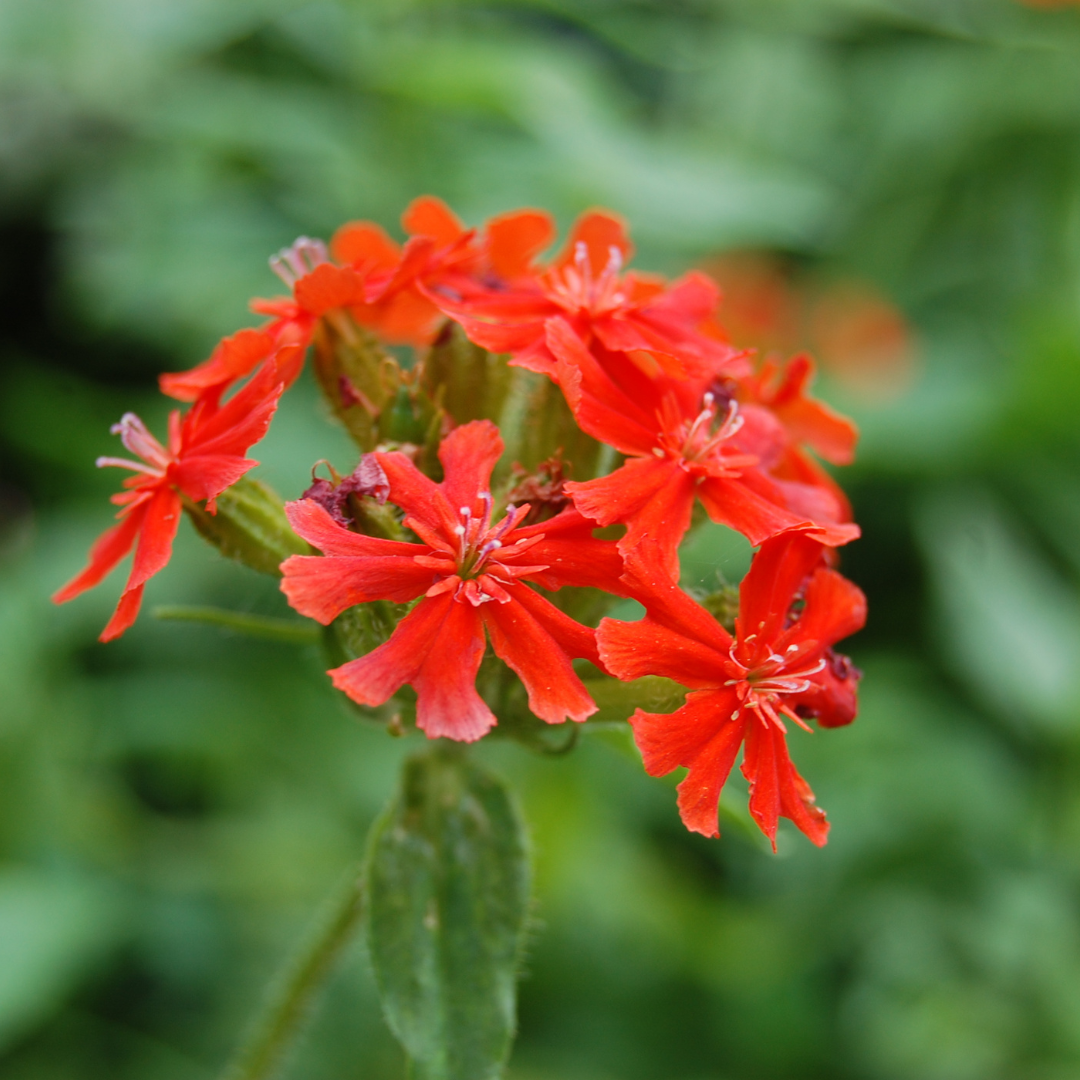
Lychnis chalcedonica 'Scarlet'
- In stock, ready to ship
Lychnis chalcedonica 'Scarlet': A Scarlet Flare Nobody Can Miss
'Scarlet' doesn't whisper. Dense, domed clusters of brilliant red flowers sit on stiff stems like stop signs for every hummingbird in town. THE LOUDEST RED IN THE BORDER, AND PROUD OF IT.
Plant Characteristics:
- Botanical Name: Lychnis chalcedonica 'Scarlet'
- Common Name: Maltese Cross
- Height: 90–120 cm (3–4 ft)
- Spread: 30–45 cm (12–18 in)
- Flowers: Brilliant scarlet, in dense, domed clusters about 8–10 cm across. Each small flower has notched petals in a cross shape.
- Bloom Time: Early to late summer (June to August)
- Foliage: Deep green, slightly hairy leaves on stiff, upright stems
- Features: Rabbit resistant, good for cutting
Where to Plant: Plant it in the middle or back of a sunny border, in cottage gardens, or anywhere you need a bold hit of red. It's also a classic cut flower.
Companion Plants: Amsonia 'Storm Cloud' flowers blue at 61 to 76 cm in May and June, leading into the scarlet heads. Calamintha 'White Cloud' forms a soft white mound at 30 to 60 cm from June to September that cools the bright red. Solidago 'Little Miss Sunshine' adds yellow at 30 to 45 cm from July to October, carrying colour into fall. The group is happy in full sun or part sun.
Plant Care: Plant it in full sun to light shade, in average, well-drained soil that stays evenly moist. It handles clay, sand and normal garden soil. Very rich soil makes the stems soft and floppy, so staking may help in fertile beds or windy spots. Deadhead the spent flower heads to keep it blooming longer and tidy. If you leave a few, it will self-seed. Cut it back in late fall. Divide the clump in spring or fall every few years if the centre starts to thin.
History: Maltese cross comes from European Russia and Central Asia and has been grown in gardens for centuries, including early North American colonial gardens. The species name chalcedonica refers to Chalcedon, an ancient city near modern Istanbul, and the common name comes from the cross-shaped flowers, said to resemble the emblem of the Knights of Malta.
Final Thoughts: Deer and rabbits ignore it, butterflies adore it, and it cuts beautifully. Plant it wherever you need a jolt. CONSIDER THIS YOUR WAKE-UP CALL.



