

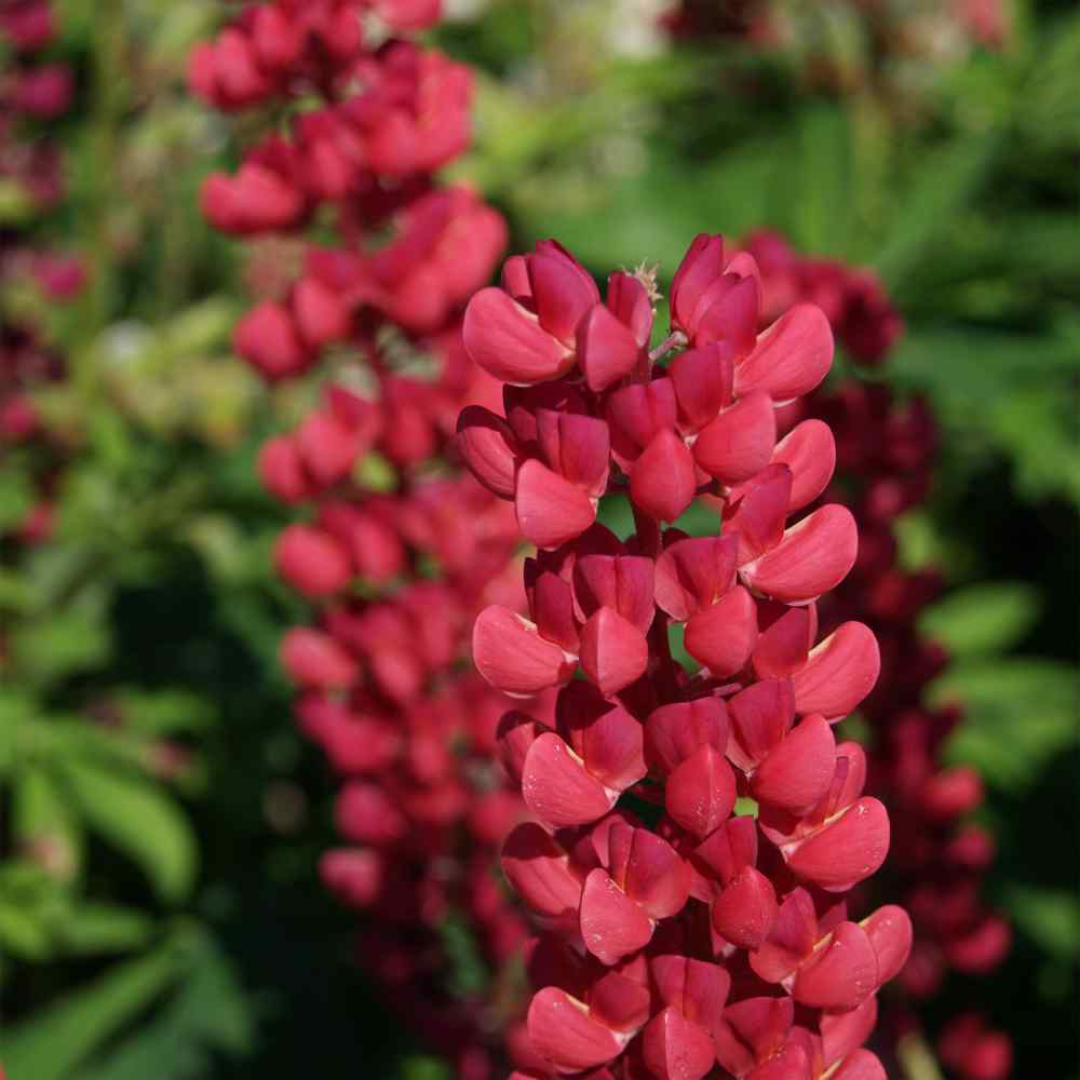
Lupinus 'Gallery Red'
- In stock, ready to ship
Lupinus 'Gallery Red': Rich Dark Red in a Sturdy Dwarf
'Gallery Red' is the lupine version of a red sports car: compact, packed with power and made to be noticed. Densely packed spikes of dark red pea flowers. ZERO TO GORGEOUS IN ONE SEASON.
Plant Characteristics:
- Botanical Name: Lupinus 'Gallery Red' (hybrid, Gallery series; derived from Lupinus polyphyllus)
- Common Name: Lupine, Dwarf Lupine
- Height: 45–60 cm (18–24 in)
- Spread: 40–50 cm (16–20 in)
- Flowers: Densely packed upright spikes of dark red pea-like flowers
- Bloom Time: Late spring to early summer (June to July), with a possible second flush if deadheaded
- Foliage: Deep green, palm-shaped leaves in a compact mound
- Features: Good for cutting, suits containers, rabbit resistant
Where to Plant: Plant it near the front of a sunny border, in a cottage garden or in a large container. Its compact size keeps the dark red spikes close to eye level, where the colour reads richest.
Companion Plants: Aubrieta 'Rock On Blue' spreads at 10 to 15 cm with blue flowers from April to June, so the edge is colourful before the lupines open. Later, Monarda 'Purple Rooster' takes over from July to September with purple flowers at 90 to 100 cm. Tuck Anemone 'Elfin Swan' in between for white flowers at 35 to 40 cm over the same months. Grow them all in full sun or part sun.
Plant Care: Give it full sun to part sun and light, well-drained soil that is slightly acidic to neutral. Sandy soil gives the best flowering. Avoid heavy clay that stays wet, especially in winter. Water while it's getting established, then water only in long dry spells. Lupines fix their own nitrogen, so go easy on fertilizer. Cut faded spikes back after flowering to encourage a second flush. Lupines often live only a few years, so leave a spike to set seed if you'd like volunteers. The deep taproot makes moving or dividing risky, so plant it where it can stay. Keep an eye out for aphids and powdery mildew. All parts, especially the seeds, are toxic if eaten.
History: The modern garden lupine began with George Russell of York, England, who spent more than twenty years crossing and selecting Lupinus polyphyllus from western North America and earned the Royal Horticultural Society's Veitch Memorial Medal in 1937. The Gallery series is a dwarf group of Russell-type lupines, bred for a shorter, tidier plant.
Final Thoughts: Park it in a container by the front door and let the neighbours do a slow drive-by. The deer and rabbits will keep on driving. NO TEST DRIVES.



