

Lobelia 'Queen Victoria'
- In stock, ready to ship
Lobelia 'Queen Victoria': Scarlet Royalty on Beet-Red Foliage
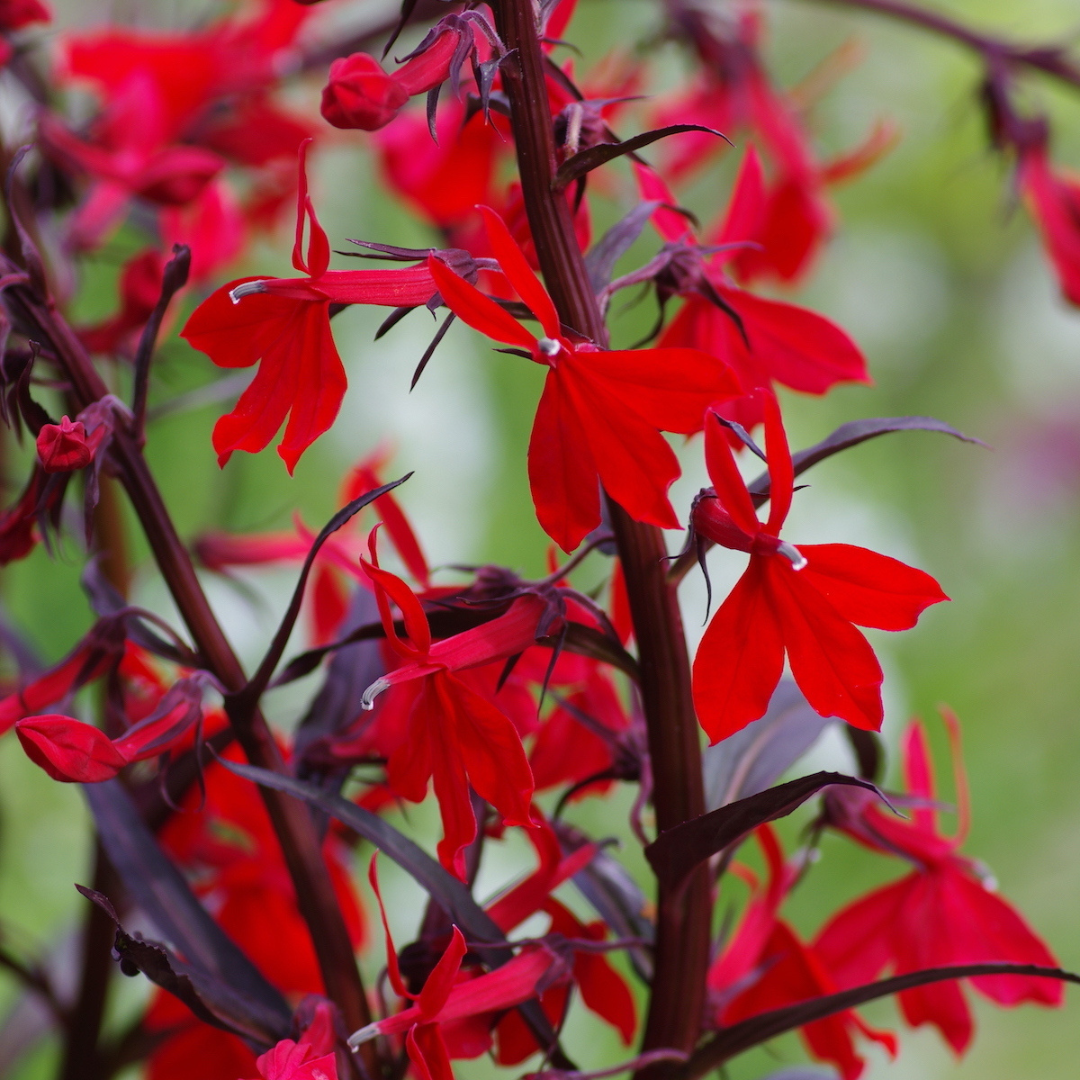
'Queen Victoria' was never going to wear anything modest. Beet-red to burgundy leaves all season, topped with scarlet spikes the hummingbirds treat like a royal summons. THE HUMMINGBIRDS BOW ON ARRIVAL.
Plant Characteristics:
- Botanical Name: Lobelia 'Queen Victoria' (often sold as Lobelia cardinalis or L. fulgens 'Queen Victoria'; RHS also lists it under Lobelia × milleri)
- Common Name: Cardinal Flower
- Height: 75–90 cm (30–36 in)
- Spread: 30–45 cm (12–18 in)
- Flowers: Bright scarlet, two-lipped flowers on tall upright spikes
- Bloom Time: Midsummer to early fall (July to September)
- Foliage: Lance-shaped, beet-red to deep burgundy leaves that hold their colour all season
- Features: Excellent cut flower, dramatic dark foliage
Where to Plant: Use it at the edge of a pond, in a rain garden, a bog garden or any border spot that stays reliably moist. Plant several together for a bold block of red that hummingbirds won't miss.
Companion Plants: Aconitum carmichaelii 'Arendsii' stands behind at 120 to 150 cm and opens deep blue flowers from August to October, a rich contrast to the red spikes. Alchemilla mollis softens the middle with frothy yellow flowers at 30 to 45 cm from June to August. Edge the bed with Geranium 'Biokovo', whose white flowers sit at 15 to 25 cm from May to July. All three enjoy the same full sun or part sun and evenly moist soil.
Plant Care: Plant in rich, moisture-retentive soil in full sun to part sun. Never let it dry out, especially in summer. In hot spots, a little afternoon shade helps. This lobelia can be short-lived, and winter wet sitting on the crown is its biggest enemy. In late fall, cut the faded stems down, keep mulch off the crown itself, and add a loose, dry layer of leaves or evergreen boughs once the ground freezes. In colder parts of our region, a sheltered spot with good snow cover helps a lot. Divide in spring every couple of years by separating the small rosettes, which keeps the plant going. All parts are toxic if eaten, and the sap can irritate skin, so wear gloves when handling it.
History: 'Queen Victoria' is an old, widely grown garden selection of cardinal flower whose exact parentage and origin aren't well documented, though it is generally linked to Lobelia cardinalis and its close Mexican relative L. fulgens. The Royal Horticultural Society lists it among the hybrid lobelias.
Final Thoughts: Plant it where that dark foliage can glow against green neighbours, and cut a few spikes for a vase. LONG MAY SHE BLOOM.



