

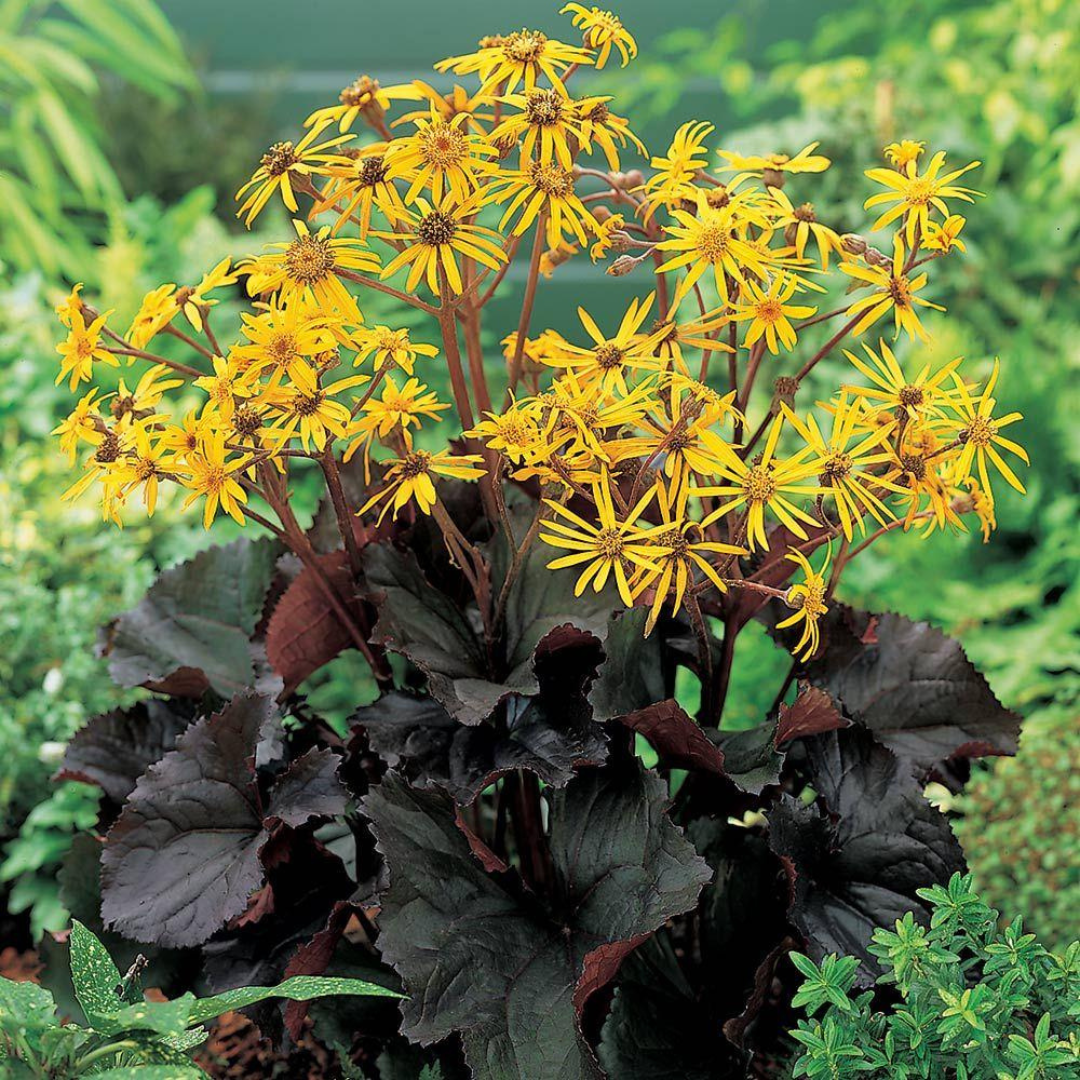
Ligularia 'Midnight Lady'
- In stock, ready to ship
Ligularia 'Midnight Lady': Purple-Black Leaves Steal the Shade
'Midnight Lady' dresses for a gala every single day, even in the shade. Glossy purple-black leaves on dark red stems, accessorized with golden-orange daisies. THE SHADE GARDEN HAS A DRESS CODE NOW.
Plant Characteristics:
- Botanical Name: Ligularia dentata 'Midnight Lady'
- Common Name: Bigleaf Ligularia, also called leopard plant
- Height: 90–100 cm (3–3.3 ft) in bloom
- Spread: 75–90 cm (30–36 in)
- Flowers: Golden-orange daisies in clusters on tall stems above the leaves
- Bloom Time: Mid to late summer (July to September)
- Foliage: Large, rounded, glossy purple-black leaves on dark red stems, forming a broad mound
- Features: Good for cutting, suited to moist soil
Where to Plant: Plant it where its dark leaves can do the heavy lifting: a moist shade border, a woodland edge, the side of a pond, or a large container. It's a natural focal point and makes pale plants nearby look brighter.
Companion Plants: Astilbe 'Fanal' brings red plumes at 60 cm in June and July, picking up the dark tones in the Ligularia's leaves. Edge the bed with Liriope 'Royal Purple', a grassy 30 to 45 cm plant that flowers purple in August and September alongside the orange daisies. Pulmonaria 'Dark Vader' opens purple flowers in April and May for early colour. Grow them all in shade or part sun with even moisture.
Plant Care: Plant it in deep, fertile soil that stays reliably moist. Clay is fine as long as it doesn't bake dry. Morning sun is okay, but protect it from hot afternoon sun, or the leaves will flop on warm days until evening. Water deeply in dry spells, and mulch to keep the roots cool. Slugs can chew the leaves, especially in a wet spring. Cut flower stems back after blooming, and cut the old foliage down in late fall or early spring. Divide in spring every three or four years if you want more plants.
History: 'Midnight Lady' is credited to Jelitto, the German perennial seed house, which introduced it in 2008. The species, Ligularia dentata, comes from damp ground in China and Japan, and the genus name comes from the Latin for strap, after the shape of its petals.
Final Thoughts: Moist soil and a shady corner, and she's set for the season. Cut a few blooms for the table. SHE OWNS THE NIGHT.



