

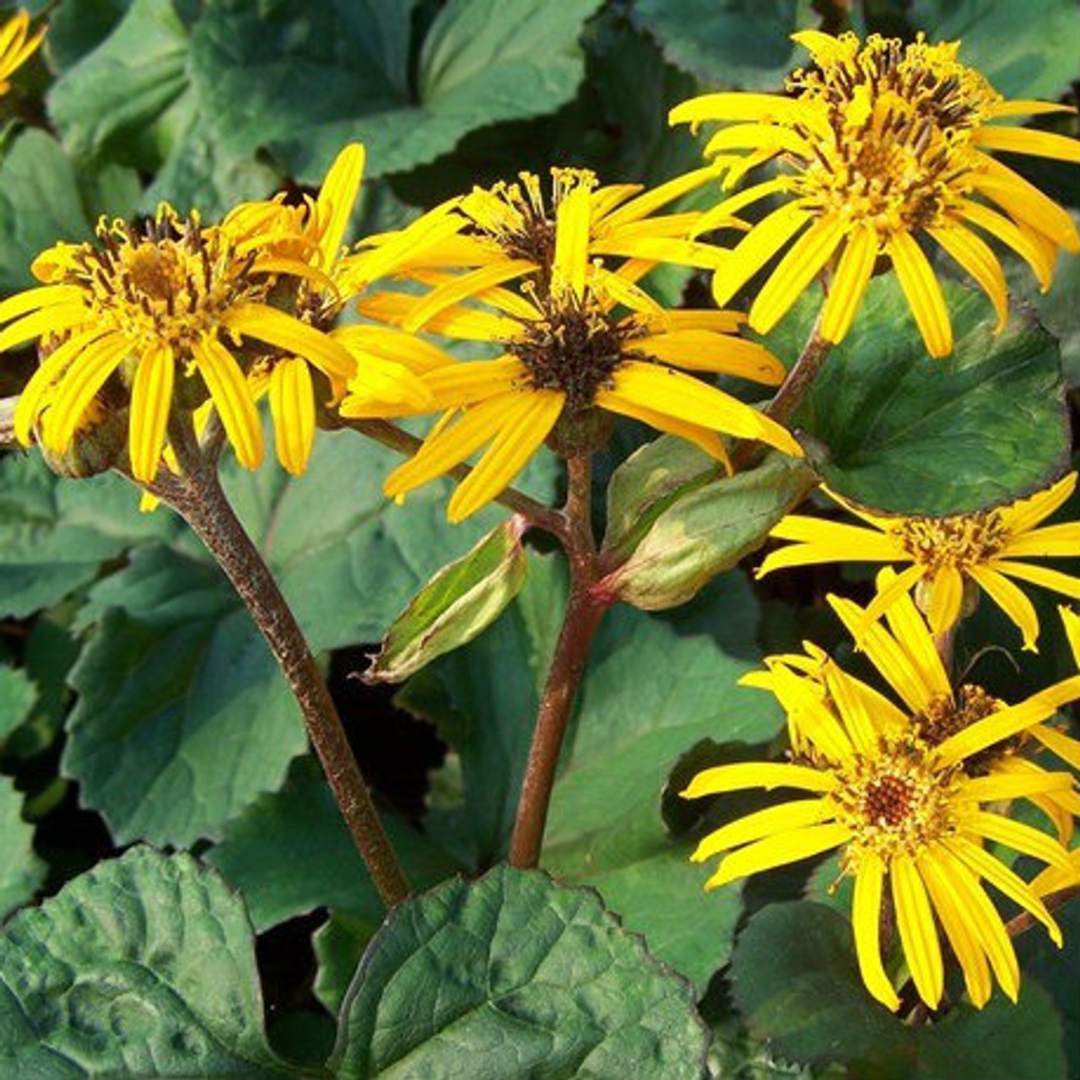
Ligularia 'Othello'
- In stock, ready to ship
Ligularia 'Othello': Dark Round Leaves That Love Soggy Ground
'Othello' has a whole theatrical thing going on. Dark green leaves on top, deep purple underneath, and golden-orange daisies stealing the final act. EVERY LEAF FLIP IS A PLOT TWIST.
Plant Characteristics:
- Botanical Name: Ligularia dentata 'Othello'
- Common Name: Bigleaf Ligularia, also called leopard plant
- Height: 90–120 cm (3–4 ft) in bloom
- Spread: 75–90 cm (30–36 in)
- Flowers: Deep golden-orange daisies in loose clusters on tall stems
- Bloom Time: Midsummer to early fall (July to September)
- Foliage: Large, rounded, toothed leaves, dark green on top with purple undersides
- Features: Good for cutting, suited to wet soil and waterside planting
Where to Plant: It's made for the soggy corners other perennials sulk in: pond and stream edges, rain gardens in shade, downspout zones and woodland beds. Its big round leaves give strong texture, and both the flowers and leaves are handy in arrangements.
Companion Plants: Astilbe 'Cappuccino' sends up white plumes at 60 to 75 cm in June and July, just ahead of the orange flowers. Tricyrtis 'Autumn Glow' follows with purple flowers at 60 to 66 cm in August and September. Mertensia virginica opens blue bells in April and May, giving the bed an early start before the big leaves fill in. It's a moist, shady planting with colour from spring to fall.
Plant Care: Plant it in rich soil that stays consistently moist or even wet. It tolerates clay. Give it shelter from hot afternoon sun. If the leaves droop on a hot day, that's normal; check the soil and water if it's dry. Mulch to hold moisture. Watch for slugs in damp weather. Remove spent flower stems after blooming. Cut the foliage back in late fall or early spring. Divide the clump in spring every three or four years.
History: Ligularia dentata is native to China and Japan, and 'Othello' and its sister plant 'Desdemona' are among the best-known older selections, both named after characters in Shakespeare's Othello. The darker-leaved 'Britt-Marie Crawford' was found in Scotland as a seedling of it.
Final Thoughts: Plant it by the pond or in that soggy patch and let the drama unfold. The deer won't buy a ticket. STANDING OVATION.



