



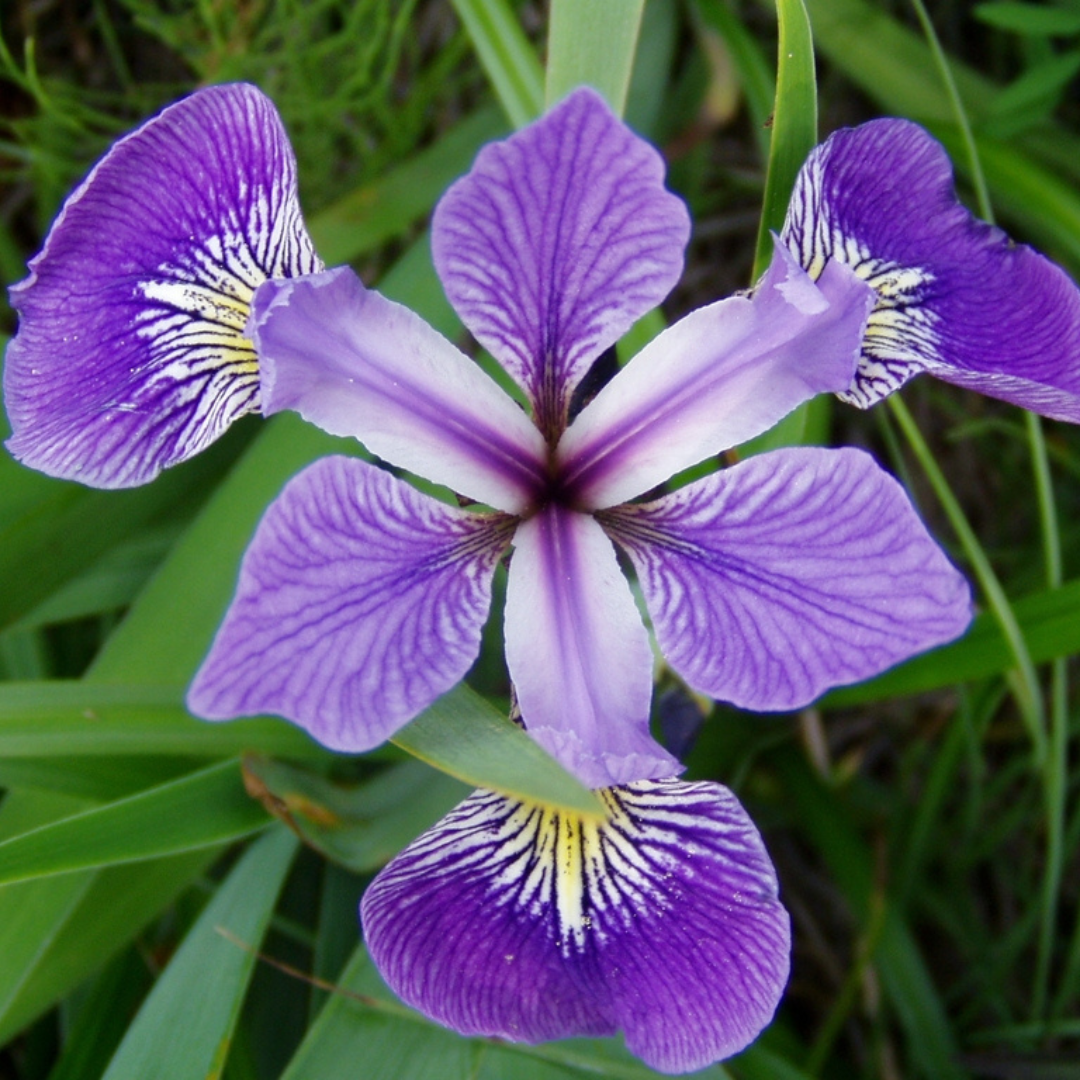
Iris versicolor
Add to Wishlist Full Sun
 Partial Sun
 Deer Resistant
 Pollinator Friendly
 Native
 Low Maintenance
- In stock, ready to ship
Iris versicolor: Violet Flag for the Soggy Corner
Violet-blue flowers with white veins and a yellow blotch, growing right where the yard turns soggy. This native iris looks at wet clay and says, WHAT PROBLEM?
Plant Characteristics:
- Botanical Name: Iris versicolor
- Common Name: Blue Flag Iris, Harlequin Blue Flag, Water Edge Iris
- Height: 60–80 cm (2–2.5 ft)
- Spread: 60 cm (2 ft)
- Flowers: Violet-blue with white veining and a yellow blotch at the base of the falls
- Bloom Time: Late spring to early summer (May to June)
- Foliage: Upright, sword-shaped, grey-green leaves in a clump
- Features: Handles wet and clay soil
Where to Plant: Blue flag is a natural fit for rain gardens, pond and stream edges, low spots and wet meadows, and it will grow in shallow standing water and hold soil along banks. In a regular border it does fine as long as the soil never dries out completely, and it copes well with heavy clay.
Companion Plants: Caltha palustris flowers yellow in April and May at 30 to 45 cm, and it shares the iris's love of wet ground. Calamagrostis canadensis adds a grass at 90 to 150 cm in flower from June through August, another plant for moist soil. Filipendula 'Venusta' towers behind at 180 to 240 cm with pink flowers from June through August. All three grow in sun to partial sun.
Plant Care: Plant in full sun to part sun in moist to wet soil. More sun means more flowers. Set the rhizomes just at or slightly below the soil surface and water well. In a drier bed, keep it watered through summer. Cut the spent flower stalks after bloom if you don't want seed pods. Clear away dead leaves in fall, which helps reduce iris borer. Divide crowded clumps every few years in late summer. All parts of the plant, especially the rhizomes, are toxic if eaten, and the sap can irritate sensitive skin. Wear gloves when dividing.
History: Blue flag grows naturally in marshes, sedge meadows and along shorelines across eastern Canada and the eastern United States, and the species name versicolor means variously coloured, a nod to the violet, white and yellow in each flower. Quebec adopted it as its floral emblem in 1999.
Final Thoughts: Deer resistant, bee friendly and happy in the spots where everything else drowns. Plant it by the downspout. PUDDLES ARE ITS LOVE LANGUAGE.



