

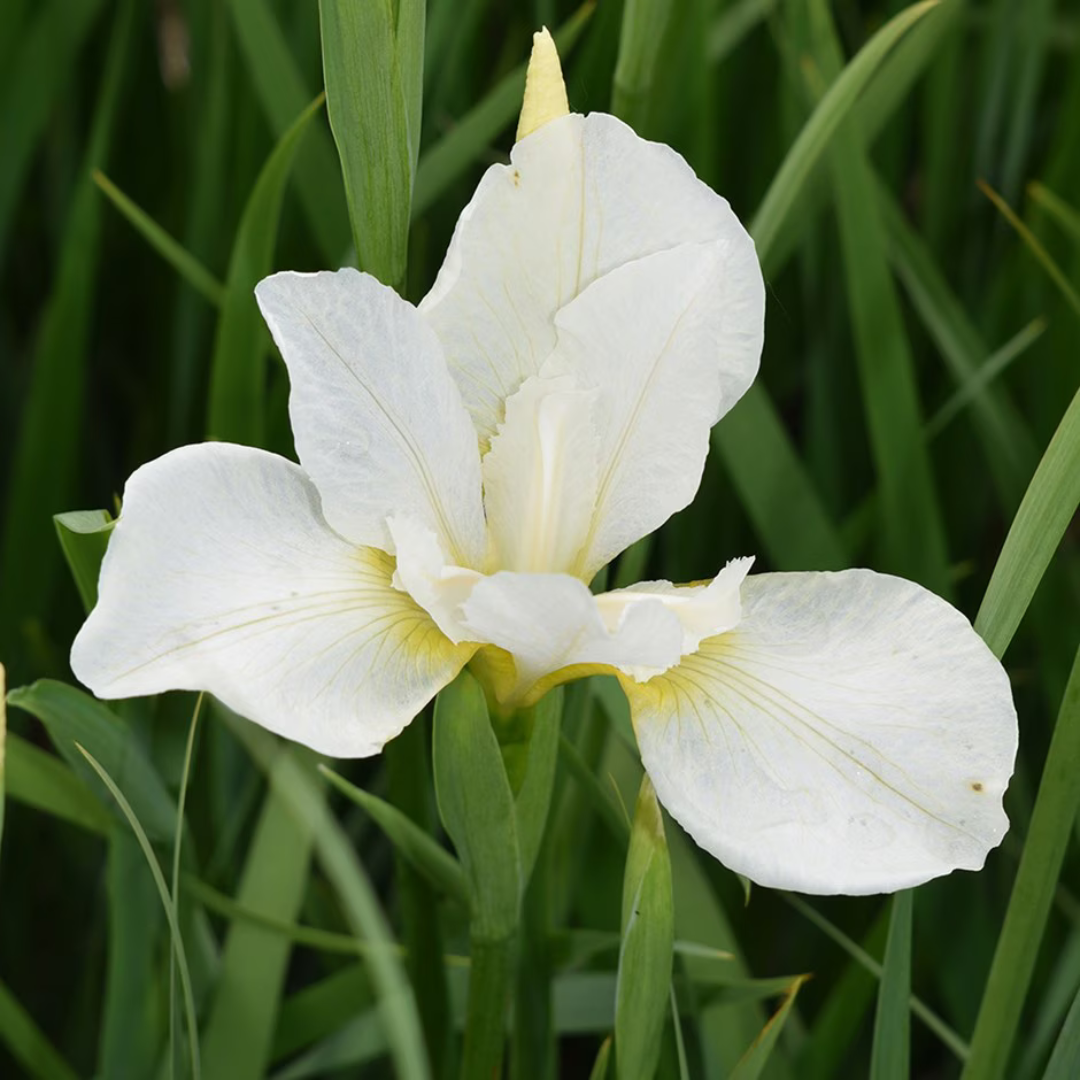
Iris 'White Swirl'
- In stock, ready to ship
Iris 'White Swirl': The Flaring White That Rewrote the Rules
Big, clear white flowers with falls that flare out almost flat, like somebody snapped open a paper fan at a stuffy dinner party. 'White Swirl' cools down the whole border and LOOKS GORGEOUS DOING IT.
Plant Characteristics:
- Botanical Name: Iris sibirica 'White Swirl'
- Common Name: Siberian Iris
- Height: 80–100 cm (31–39 in)
- Spread: 45–60 cm (18–24 in)
- Flowers: Large, clear white with a yellow glow at the base of the falls. The falls flare out almost horizontally.
- Bloom Time: Late spring to early summer (May to June)
- Foliage: Narrow, upright, grass-like dark green leaves
- Features: Tolerates moist soil, good cut flower, seed pods for winter interest
Where to Plant: Use it in the middle of a border, in a rain garden, or along a pond edge, where the tall, slim clumps add vertical lines and the leaves stay tidy all season. White carries well at dusk, so it shines near a patio or deck.
Companion Plants: Stachys 'Hummelo' adds purple flowers at 45 to 60 cm from June through August. Rudbeckia 'Goldblitz' brings yellow flowers at 60 to 70 cm from June into September. Sedum 'Blue Spruce' edges the front at 10 to 25 cm with yellow flowers from June through August. These all enjoy sun, with Stachys 'Hummelo' and Rudbeckia 'Goldblitz' also taking partial sun.
Plant Care: Plant in full sun to part sun in moist, fertile soil that's neutral to slightly acidic. It tolerates clay. Set the rhizomes about 2.5 cm (1 in) deep. Water well through the first year and during dry spells after that. Remove spent flower stems if you don't want seed pods, or leave them for winter interest. Cut the foliage down in late fall or early spring. Divide when the centre of the clump starts to die out, in late summer or early spring. Keep the divisions moist until they root in.
History: Fred Cassebeer, a New York pharmacist and amateur hybridizer, raised 'White Swirl' and introduced it in the 1950s, and its flaring falls were a big change from the drooping form of older Siberians. It won the Morgan Award in 1962, and in 1987 the American Iris Society gave it a Board of Directors Award for its influence on breeding, since more than 100 registered Siberians descend from it.
Final Thoughts: Deer resistant, happy in moist soil, and the seed pods hang around for winter. Plant it once and IT KEEPS GIVING ALL YEAR.



