



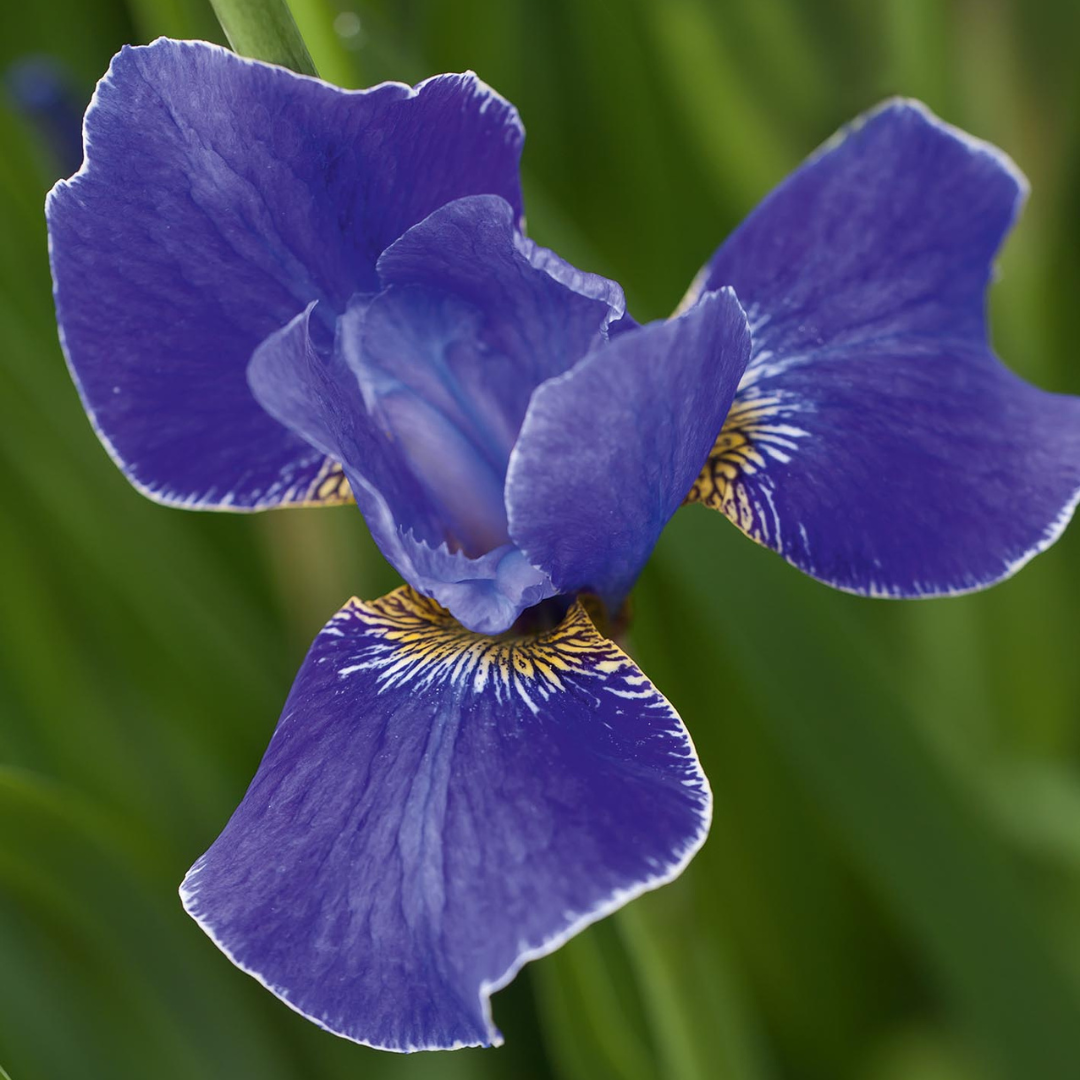
Iris 'Silver Edge'
Add to Wishlist Full Sun
 Partial Sun
 Deer Resistant
 Low Maintenance
- In stock, ready to ship
Iris 'Silver Edge': True Blue with a Silver Outline
Medium blue flowers with a thin silver-white edge on the falls, like the trim on a dress uniform. 'Silver Edge' is crisp, sharp and SHARPER THAN YOUR BROTHER-IN-LAW'S COMEBACKS.
Plant Characteristics:
- Botanical Name: Iris sibirica 'Silver Edge'
- Common Name: Siberian Iris
- Height: 70–75 cm (28–30 in)
- Spread: 45–60 cm (18–24 in)
- Flowers: Medium blue with a thin silver-white edge on the falls and a yellow and white signal patch
- Bloom Time: Late spring to early summer (May to June)
- Foliage: Narrow, upright green leaves with a slight blue tint
- Features: Tolerates moist soil, good cut flower
Where to Plant: Use it along a stream or pond, in a rain garden, or in a sunny border with decent moisture, and it's happy in clay. Plant three or more together for a real drift of blue.
Companion Plants: Campanula 'Rapido White' edges the front at 15 to 20 cm with white flowers from June into September. Platycodon 'Astra Pink' adds pink flowers at 20 to 25 cm from June through August. Filipendula 'Venusta' towers behind at 180 to 240 cm with pink flowers from June through August, and it likes moisture the same as Siberian iris. All three grow in sun to partial sun.
Plant Care: Plant in full sun to part sun, in moist, rich soil that's slightly acidic to neutral. Set the rhizomes a few centimetres deep and water them in well. Keep the soil evenly moist in the first season, and water during long dry spells after that. Cut spent flower stems back if you'd like a tidier look. The foliage can stay up through winter. Cut it down in late fall or early spring. Divide large clumps when the centre opens up, ideally in late summer or very early spring.
History: 'Silver Edge' was bred by Currier McEwen, the Maine physician who did more than almost anyone to modernize Siberian irises, and it won the Morgan Award, the top honour for Siberian irises, in 1978. The species Iris sibirica grows wild in damp meadows from Europe into western Asia.
Final Thoughts: Deer resistant, fine in moist soil and a great cut flower. Plant it and enjoy the competitive edge, because SECOND PLACE IS NOT AN OPTION.



