

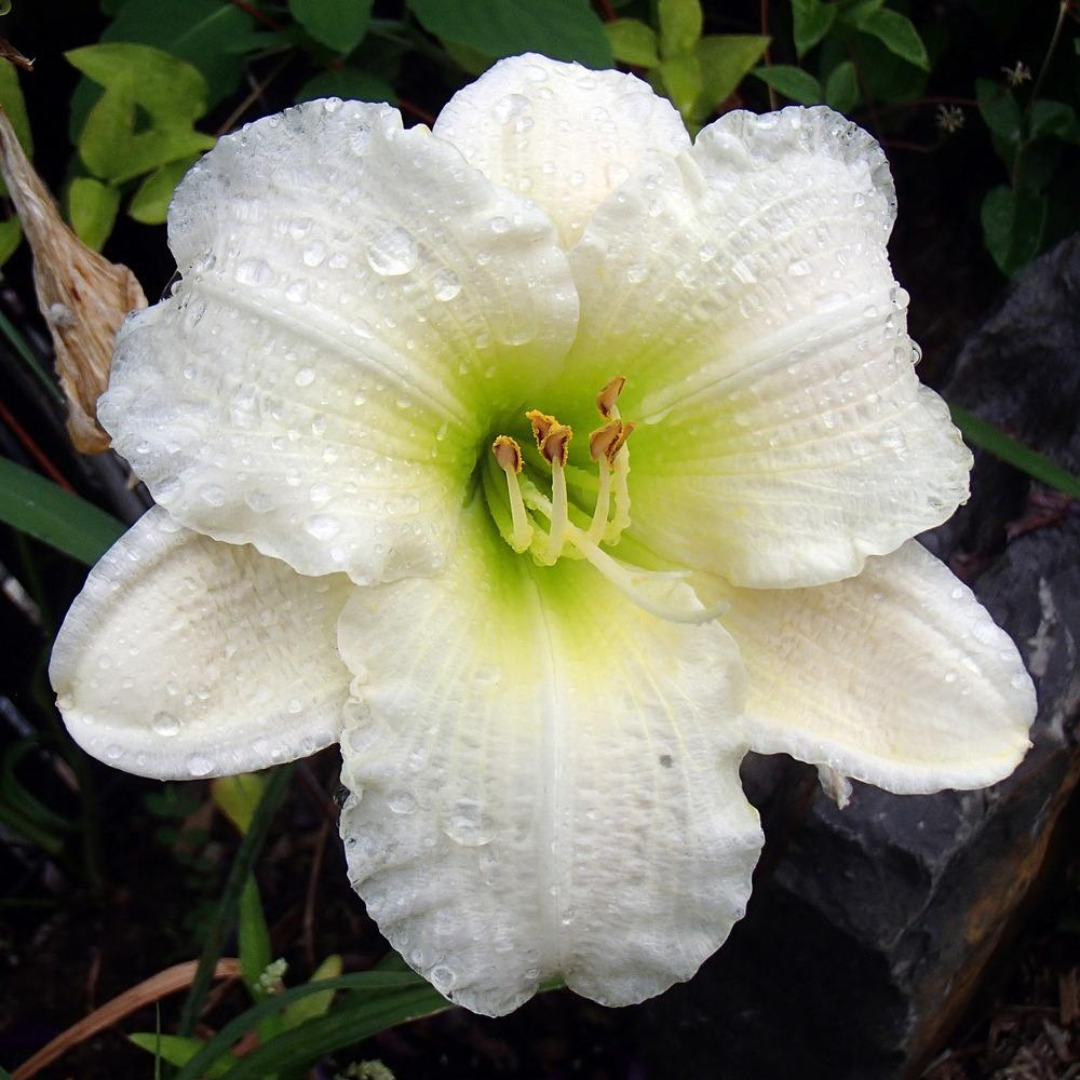
Hemerocallis 'Gentle Shepherd'
Add to Wishlist- In stock, ready to ship
Hemerocallis 'Gentle Shepherd': Nearly Pure White and Glowing at Dusk
Every flock of black sheep needs a 'Gentle Shepherd'. Near-white flowers with a soft green throat, opening one after another on stems loaded with buds. KEEPING THE WHOLE BORDER IN LINE.
Plant Characteristics:
- Botanical Name: Hemerocallis 'Gentle Shepherd'
- Common Name: Daylily
- Height: 70–75 cm (28–30 in) in flower
- Spread: 45–60 cm (18–24 in)
- Flowers: Near white with a yellow-green throat, about 13 cm (5 in) across. Single form. Each flower lasts one day, with many buds on every stem.
- Bloom Time: Midsummer (July to August)
- Foliage: Arching, grass-like green leaves; registered as semi-evergreen
Where to Plant: White flowers glow at dusk, so it is a natural for a moon garden or a patio bed you mostly see after work. Plant it in groups of three or more along a walk or through the middle of a border; it copes with clay soil, which helps in tricky city yards.
Companion Plants: White daylilies sit nicely against Tradescantia 'Concord Grape', whose purple flowers run from June to September. Eupatorium 'Atropurpureum' rises 150 to 210 cm at the back with pink flower heads from August to October. Edge the front with Kalimeris 'Blue Star', which adds blue daisies from June to September. Grow them in full sun or part sun.
Plant Care: Plant in full sun for the most flowers. Part sun works too, though bloom gets lighter as shade increases. Average, well-drained soil is fine, and daylilies handle clay. Water well through the first season, then only during long dry spells. Snap off spent flowers to keep things tidy, and cut each flower stem to the base once all its buds have opened. Clear away old foliage in late fall or early spring. Divide the clump every four or five years, in spring or early fall, when the centre gets crowded or flowering slows. Keep in mind that daylilies are toxic to cats.
History: 'Gentle Shepherd' was registered with the American Hemerocallis Society (now the American Daylily Society) in 1980 and is credited to hybridizer Elizabeth Yancey. It is a diploid with single flowers in the early-midseason group, and more than forty years later it is still sold widely.
Final Thoughts: Use it to calm down a bed full of loud colours. Drought tolerant once established. THE FLOCK APPROVES.



