

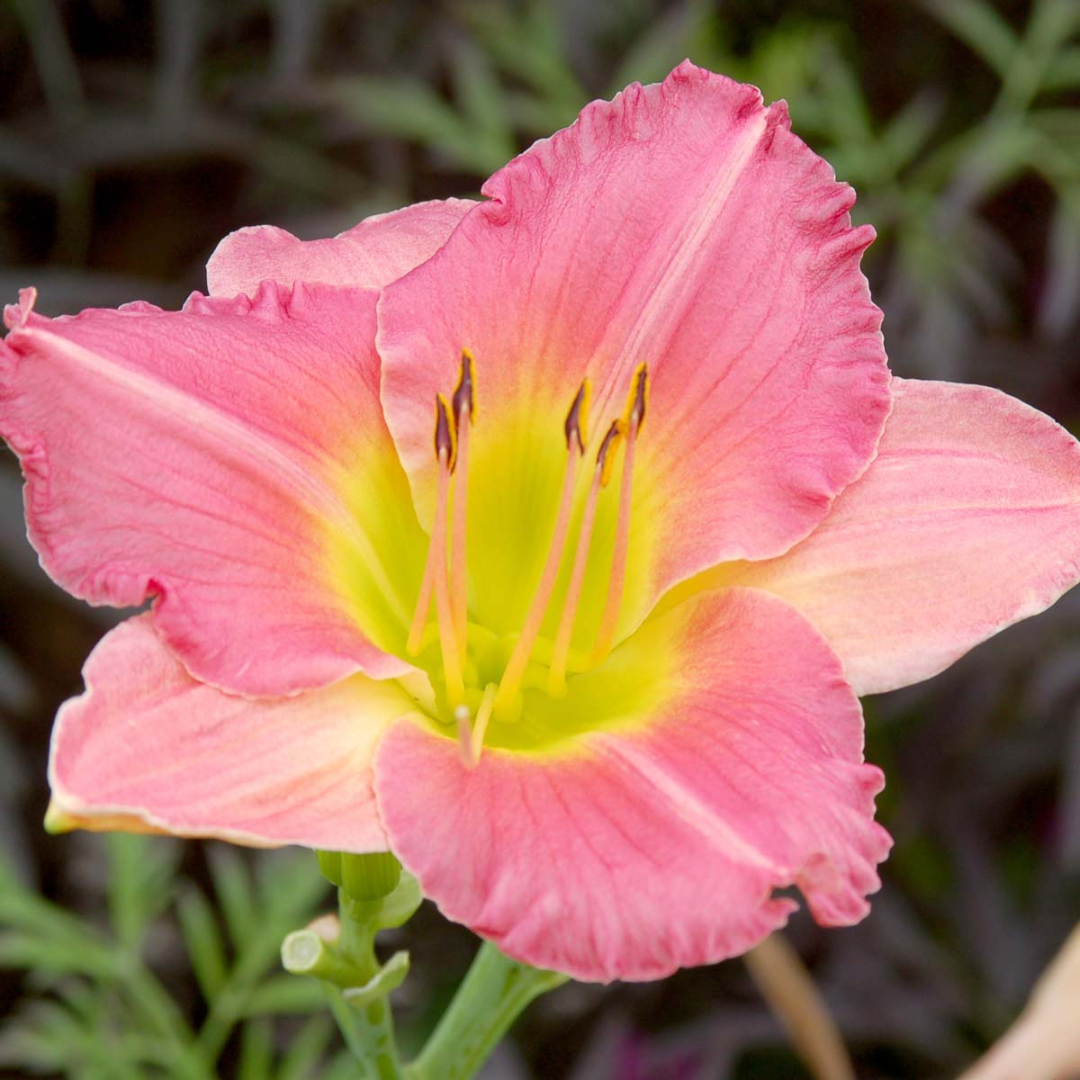
Hemerocallis 'Final Touch'
- In stock, ready to ship
Hemerocallis 'Final Touch': Lavender-Pink Encore After the July Rush
Every party has that one guest who shows up after dessert and steals the whole night. 'Final Touch' blooms late, when the other daylilies have packed it in. LATE? FASHIONABLY.
Plant Characteristics:
- Botanical Name: Hemerocallis 'Final Touch'
- Common Name: Daylily
- Height: 75–80 cm (29–31 in) in flower
- Spread: 60–90 cm (24–35 in)
- Flowers: Soft lavender-pink with a green throat, about 13 cm (5 in) across, fragrant
- Bloom Time: Late summer to early fall (August to September)
- Foliage: Arching, strap-like green leaves in a broad clump
- Features: Late blooming, fragrant
Where to Plant: Plant it to stretch the season into late summer, in the middle or back of a border where it has room to spread. It grows well in clay and handles cold winters, but plan its spot with grazing deer and rabbits in mind.
Companion Plants: This late pink daylily pairs well with Agastache foeniculum, whose lavender spikes run from July to September. Platycodon 'Astra Blue' sits at the front with blue balloon flowers from June to August. Aster 'Wood's Light Blue' adds blue asters from August to October, blooming right alongside the daylily. All three like full sun or part sun.
Plant Care: Full sun gives the strongest late show. Part sun works, with fewer flowers. Plant the crown about 2.5 cm (1 in) below the surface in average, well-drained soil and water regularly in the first season. Give it room, since the clump gets broad. Once established, it tolerates dry spells. Late summer can be dry, so a deep watering when buds form helps. Remove finished stalks, then clear the foliage in late fall or early spring. Divide in spring every few years when the clump gets crowded.
History: 'Final Touch' is a diploid daylily registered in 1991 and credited to Dr. Darrel Apps, the breeder behind several well-loved reblooming daylilies. It was later offered in Heritage Perennials' Trophytaker daylily program, which featured varieties tested for bloom, hardiness and vigour.
Final Thoughts: Plant it to keep the border going after the rest have quit. The fragrance is a bonus. SAVE THE BEST FOR LAST.



