

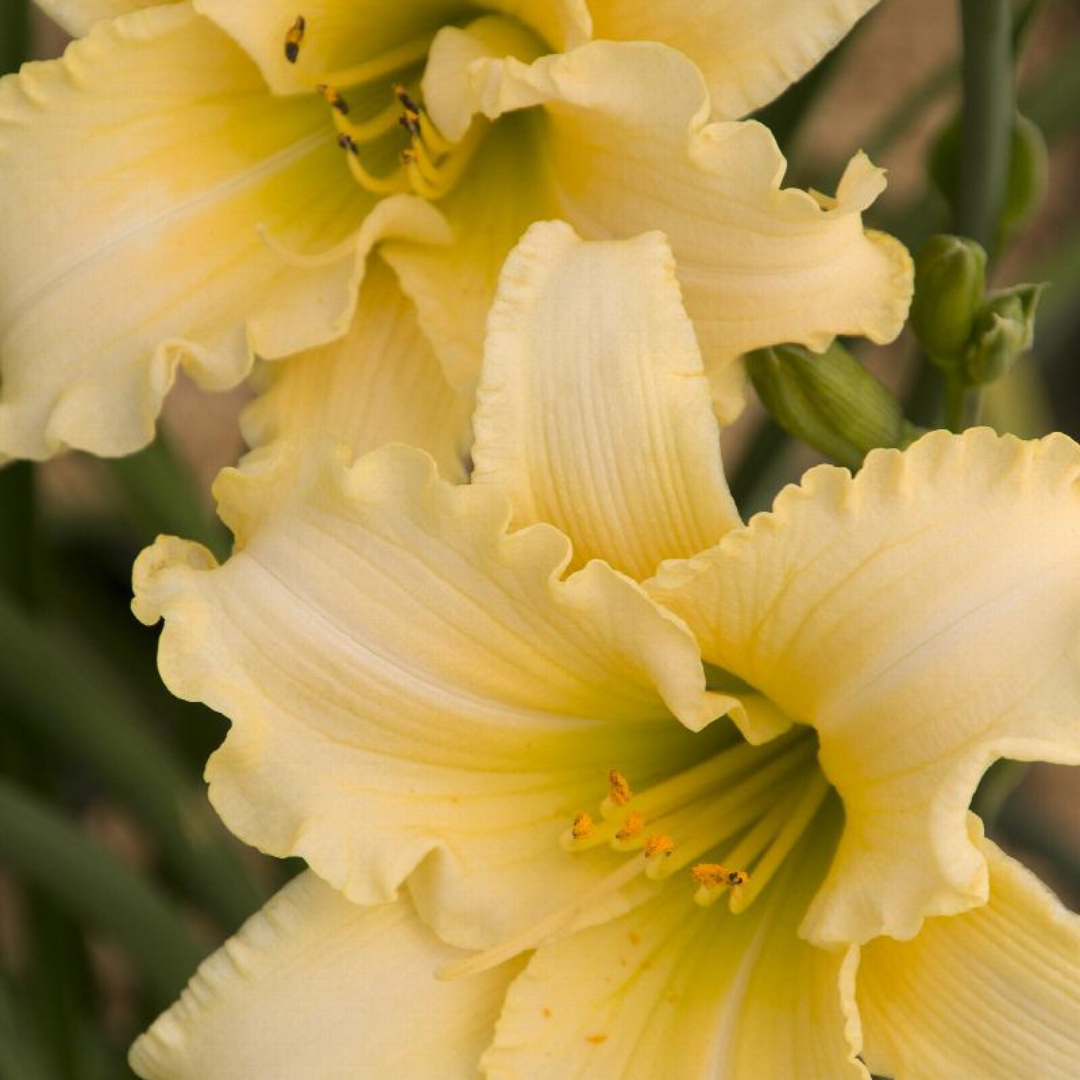
Hemerocallis EveryDaylily™ Cream®
- In stock, ready to ship
Hemerocallis EveryDaylily™ Cream®: Creamy Dwarf Blooms, No Nap Time
This daylily blooms like nobody told it there's a schedule. Creamy yellow softening to cream-white, flower after flower on a low, compact clump. A GOOD BOOK, A HAMMOCK AND THIS. DONE.
Plant Characteristics:
- Botanical Name: Hemerocallis 'VER00112'
- Common Name: Daylily
- Series: EveryDaylily™, bred by Heemskerk in the Netherlands
- Height: 35 cm (14 in) in flower
- Spread: 30–40 cm (12–16 in)
- Flowers: Creamy yellow softening toward cream-white, with a greenish centre, about 8 cm (3 in) across
- Bloom Time: Early summer until frost (June to September)
- Foliage: Narrow, arching green leaves in a compact, low clump
- Features: Long, continuous bloom
- Plant Patent: USPP 27,115
Where to Plant: This is a front-row plant, so edge a sunny path, ring a mailbox or fill a row of pots on the deck. Plant it in groups of five or more for a low ribbon of colour all summer; it is at home in clay, though deer and rabbits will sample it.
Companion Plants: Iris 'Black Joker' brings purple iris flowers in May and June in front of the cream daylily. Solidago ptarmicoides adds white flowers from July to September at 30 to 60 cm. Plant Paeonia 'Duchesse de Nemours' behind for big white peony blooms in May and June. This easy group suits full sun or part sun.
Plant Care: Full sun gives the most flowers. Part sun works, with fewer blooms. Plant the crown about 2.5 cm (1 in) deep in average, well-drained soil and water through the first season. In containers, check moisture more often in summer heat. Removing faded flowers and finished stalks keeps it looking tidy. Clear the foliage in late fall or early spring. Divide in spring or late summer every few years if the clump gets crowded.
History: The EveryDaylily™ series comes from the Heemskerk nursery in Noordwijk, the Netherlands, where Cream® was introduced in 2015 before reaching North America through Ball Horticultural in 2016. It is a diploid descendant of the famous reblooming 'Stella de Oro', selected for a longer, steadier bloom season and better hardiness.
Final Thoughts: Line a sunny path and let it bloom straight through until frost. No deadheading guilt. THE CREAM RISES TO THE TOP.



