

Helictotrichon 'Sapphire'
- In stock, ready to ship
Helictotrichon 'Sapphire': Spiky Sapphire Fountains That Stay Put
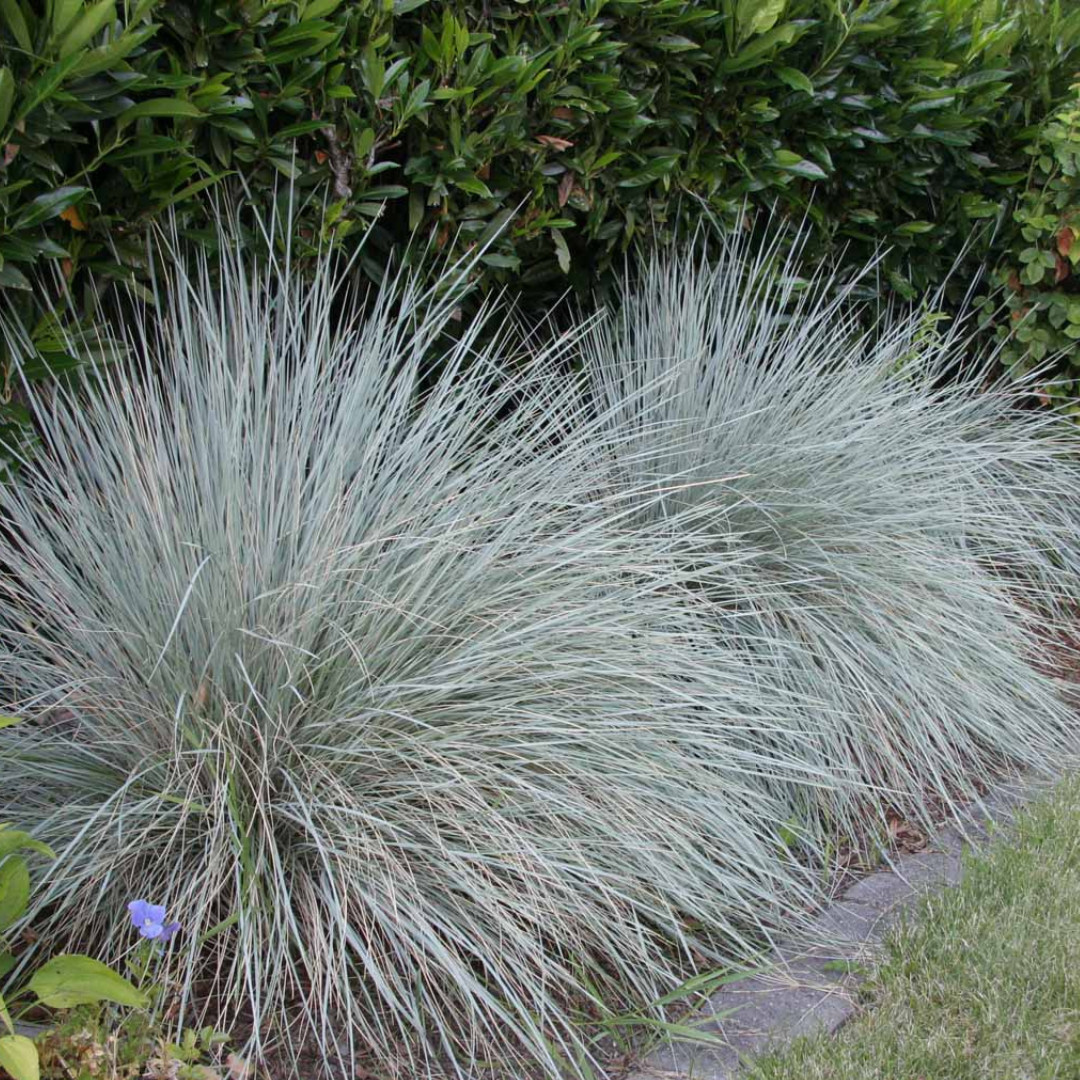
Blue Oat Grass sits in the border like a perfectly round, steel-blue pincushion. Stiff silver-blue blades that never wander off into the neighbour's bed. KNOWS ITS LANE. STAYS IN IT.
Plant Characteristics:
- Botanical Name: Helictotrichon sempervirens 'Sapphire' (also sold as 'Saphirsprudel')
- Common Name: Blue Oat Grass
- Height: 60–100 cm (24–40 in); foliage about 60 cm (24 in), flower stems to about 100 cm (40 in)
- Spread: 50–60 cm (20–24 in)
- Flowers: Slender, oat-like sprays that open bluish and age to tan
- Bloom Time: Early to late summer (June to August)
- Foliage: Stiff, narrow, steel-blue to silver-blue blades in a dense, rounded clump. Semi-evergreen.
- Features: Rabbit resistant, clump-forming, non-spreading
Where to Plant: Use it as a cool blue accent at the front or middle of a sunny border, in a rock or gravel garden, on a slope or in a large container, and plant it in a row or loose group for a steady rhythm. On heavy clay, use a raised bed or a slope, because wet winter soil is the one thing it can't forgive.
Companion Plants: The blue-grey blades of 'Sapphire' look great beside Aster 'Purple Dome', whose purple daisies bloom from August to October. Veronica 'Snow Candles' adds white spikes at the front from July to September. Anemone Frilly Knickers™ brings white flowers from August to October at 45 to 60 cm, keeping the bed fresh late in the season. Keep everything in full sun with good drainage.
Plant Care: Plant in full sun, in well-drained, average to lean soil. Neutral to alkaline soil is fine. The colour is best in full sun. Water through the first season, then only in long droughts. Skip the fertilizer. Don't shear it to the ground. In spring, put on gloves and comb out the dead blades with your fingers, or trim off any brown tips. Cut the old flower stems once they look tired. Wet, heavy soil can rot the crown, especially in winter. If the centre of an older clump dies out, divide it in spring and replant the healthy outer pieces.
History: Blue oat grass is native to dry, rocky slopes in the mountains of southern Europe, and sempervirens means evergreen. 'Sapphire' is the English name for the German selection 'Saphirsprudel', which growers list as bluer than the species, with better heat tolerance and better resistance to rust.
Final Thoughts: Pair it with hot pinks or deep purples and let the blue do the cooling. No deer, no rabbits, no spreading. THE ONLY SAPPHIRE THAT DOESN'T NEED INSURANCE.



