



Geranium macrorrhizum
Add to Wishlist Full Sun
 Partial Sun
 Full Shade
 Drought Tolerant
 Deer Resistant
 Pollinator Friendly
 Low Maintenance
- In stock, ready to ship
Geranium macrorrhizum: Living Mulch That Smells Amazing
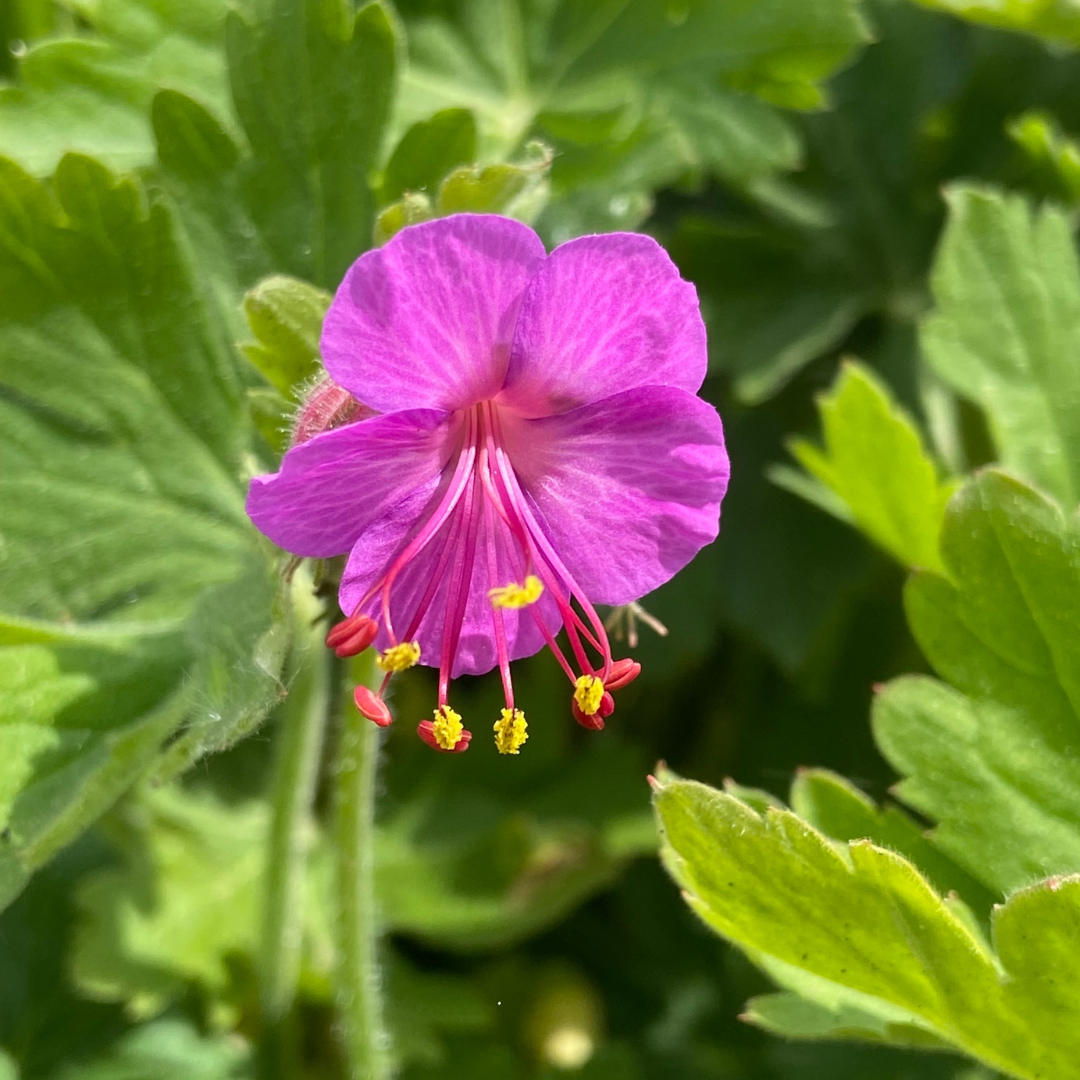
Big Root Geranium is the plant equivalent of a contractor who actually shows up. Dense, scented leaves, pink flowers with stamens sticking out like antennae, and weeds don't stand a chance. SUN. SHADE. DRY. NOT A SINGLE EXCUSE.
Plant Characteristics:
- Botanical Name: Geranium macrorrhizum
- Common Name: Big Root Geranium, Bigroot Cranesbill
- Height: 30–35 cm (12–14 in)
- Spread: 45–60 cm (18–24 in)
- Flowers: Clusters of pink to magenta-pink flowers, about 2.5 cm (1 in) across, with long, sticking-out stamens
- Bloom Time: Late spring to early summer (May to June)
- Foliage: Soft, hairy, lobed and strongly scented; semi-evergreen, turning red and bronze in fall
- Features: Aromatic foliage, rabbit resistant, dense weed-smothering ground cover
Where to Plant: Plant it where you need living mulch: under trees, on a shady slope, along a woodland path or in that dry strip beside the house. It handles root competition better than most perennials, and its fall leaf colour brightens a corner that is usually done by September.
Companion Plants: Aruncus 'Chantilly Lace' makes a soft cream backdrop in June and July, rising 60 to 80 cm behind the low geranium. Digitalis Arctic Fox™ Lemon Cream adds yellow spires from June to August for a middle layer. Use Heuchera 'Cherry Cola' as a neighbour at the front, where its red flowers in June and July pick up the geranium's pink. It is an easy, forgiving group for part sun.
Plant Care: Plant it in almost any well-drained soil. It grows in sun or deep shade, though it looks its best with some shade in the afternoon. Water through the first season; after that, it handles dry spells. The thick rhizomes creep along the soil surface and root as they go. Lift pieces from the edge to keep it in bounds, or to start new patches. Divide in spring or early fall. No deadheading needed. Remove tired leaves in spring.
History: Big root geranium grows wild in the southeastern Alps and the Balkan mountains, and macrorrhizum means large root, for its fat rhizomes. In Bulgaria it is a well-loved folk plant, and oil from the leaves has long been used in traditional herbal medicine and perfumery.
Final Thoughts: Cover that awkward bare patch and never think about it again. The deer and rabbits won't either. FIVE STARS, WOULD HIRE AGAIN.



