

Gaura 'Whirling Butterflies'
Add to Wishlist- In stock, ready to ship
Gaura 'Whirling Butterflies': White Wands Dancing in the Breeze
'Whirling Butterflies' never learned to sit still. Long, airy wands of white flowers bob around in every breeze like they've had three espressos and a sugar cookie. HEAT? DROUGHT? IT JUST KEEPS DANCING.
Plant Characteristics:
- Botanical Name: Gaura lindheimeri (now also classified as Oenothera lindheimeri)
- Common Name: Butterfly Flower, Wand Flower, Beeblossom
- Height: 60–90 cm (2–3 ft)
- Spread: 50–60 cm (20–24 in)
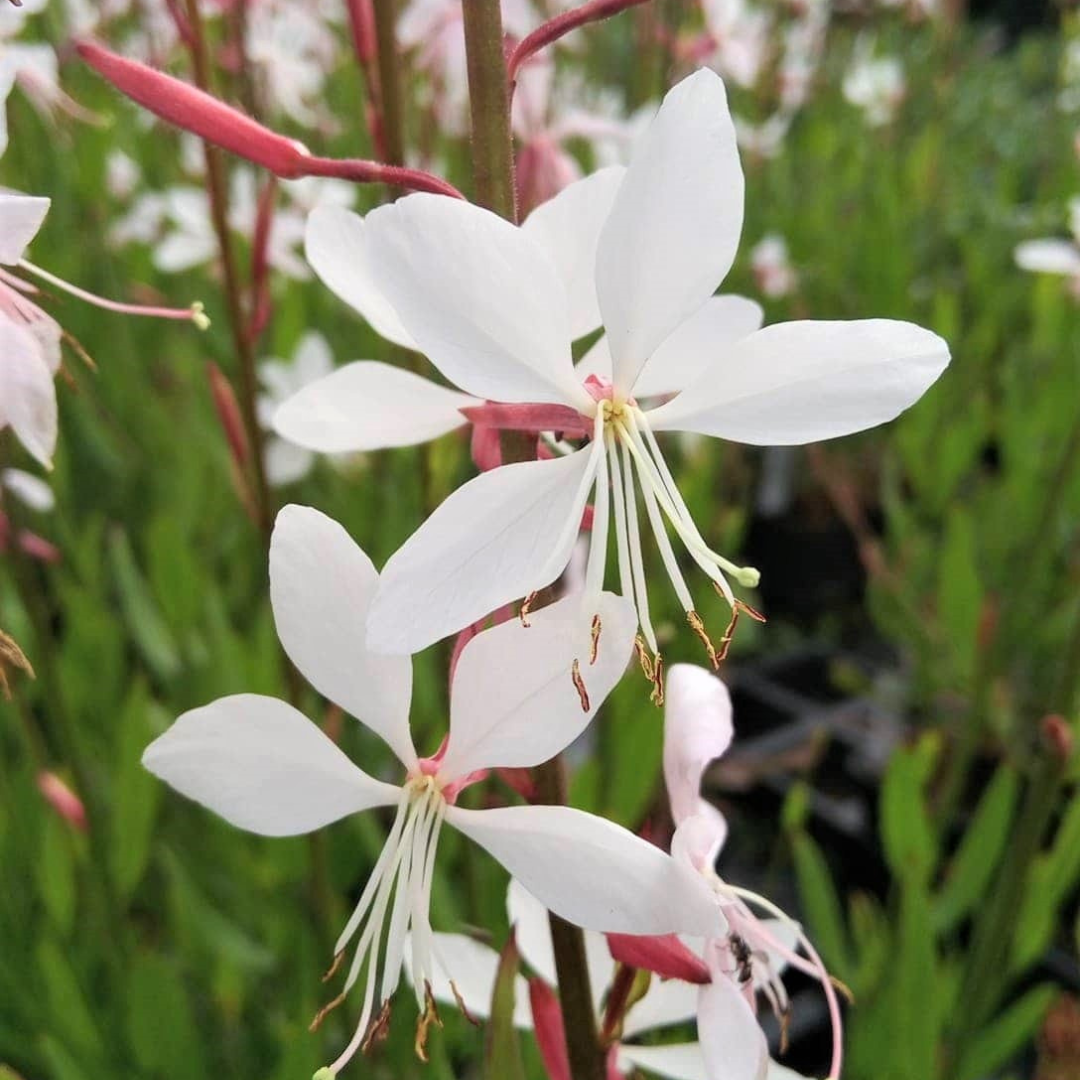
- Flowers: Small, four-petalled white flowers with reddish sepals, in loose sprays on long, airy wands
- Bloom Time: Early summer to early fall (June to September)
- Foliage: Narrow, deep green leaves on reddish stems
- Features: Heat tolerant, good for cutting
Where to Plant: Use it in the middle of a sunny border, in prairie-style and gravel plantings, or in a large container, where its tall, see-through habit adds movement without blocking the view. It is a good choice for hot, dry spots near pavement, but make sure winter drainage is sharp, since wet clay in March is harder on it than cold in January.
Companion Plants: Phlomis tuberosa stands behind the gaura with tiers of lavender flowers on 90 to 150 cm stems through summer. Edge the planting with Geranium 'Cambridge', a low cranesbill with magenta flowers from May to July. Add Allium 'Serendipity' in the middle for purple globes in July and August that sit well against the white wands. This group is happy in full sun or part sun.
Plant Care: Plant in full sun, or part sun with afternoon shade, in sandy or average soil with excellent drainage. Raised beds and slopes help in heavy soil. Skip the fertilizer and compost-rich soil. Lean conditions keep it from flopping. Water well the first season. Once established, it only needs water in long droughts. If it gets leggy in midsummer, cut it back by about a third and it will rebloom in a few weeks. Leave stems standing through winter and cut back in spring when new growth appears. It grows a woody taproot and resents being moved or divided, so choose its spot carefully.
History: 'Whirling Butterflies' was selected for its nearly pure white flowers and has been a garden standard for decades. The species grows wild in Texas and southern Louisiana, is named for German-born botanist Ferdinand Lindheimer, and is now placed by botanists in Oenothera, the evening primrose genus.
Final Thoughts: Give it sun and a little breathing room, then pull up a chair for the show. THE BEST CARDIO IN THE GARDEN, AND YOU DON'T HAVE TO DO ANY.



