

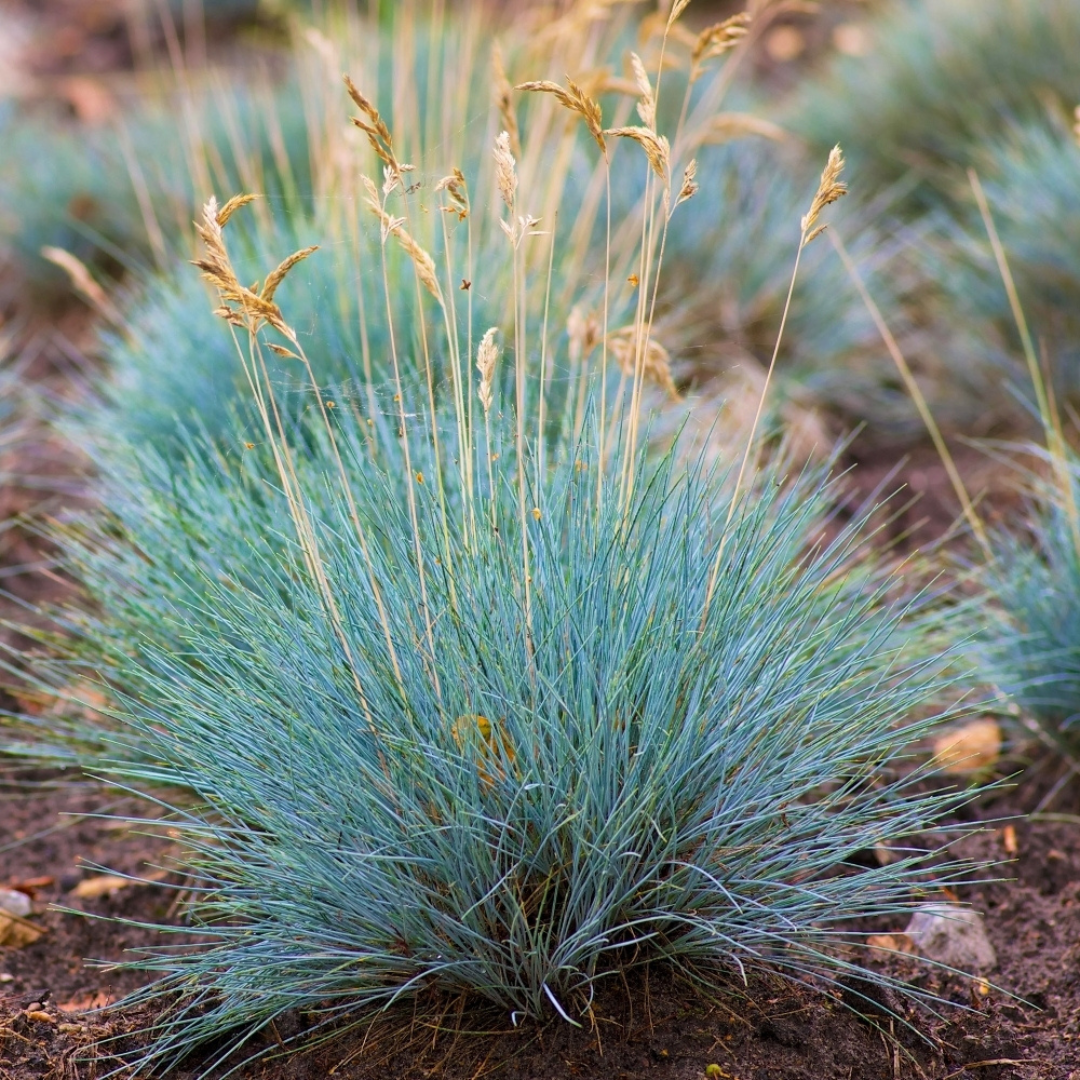
Festuca 'Elijah Blue'
- In stock, ready to ship
Festuca 'Elijah Blue': Powder-Blue Tufts That Keep the Peace
Pale powder-blue blades in a tidy, rounded clump, like a pincushion that got very into self-care. This fescue sits pretty, asks for nothing and makes every plant beside it look more sophisticated. THE CLASSIC BLUE EVERYBODY COPIES.
Plant Characteristics:
- Botanical Name: Festuca glauca 'Elijah Blue'
- Common Name: Blue Fescue
- Height: 20–30 cm (8–12 in)
- Spread: 20–30 cm (8–12 in)
- Flowers: Slim tan spikes held just above the foliage
- Bloom Time: Late spring to early summer (June to July)
- Foliage: Fine, needle-like, pale powder-blue blades in a dense, rounded clump. Evergreen in mild winters.
Where to Plant: Use it to edge beds and walkways, dot it through a rock garden, or mass it as a cool-toned groundcover, and it makes a great filler for containers and troughs. It suits gravel gardens, dry slopes and sunny front gardens where the soil drains fast.
Companion Plants: Persicaria 'Dimity' forms a 15 to 20 cm mat with pink flowers from June to September around the blue tufts. Lysimachia clethroides adds arching white spikes at 60 to 90 cm from July to September. Rudbeckia 'American Gold Rush' brings golden daisies from July to October, a strong contrast to silvery blue. This combination grows well in sun or part sun.
Plant Care: Plant in full sun in average to sandy, well-drained soil. Good drainage is the key, since soggy winter soil is the most common reason blue fescues fail. In heavy clay, raise the planting spot or mix in grit. Water regularly through the first season, then only during extended drought. Like all fescues, it's a cool-season grass. It grows most in spring and fall and can look a little tired in the peak of summer heat. That's normal. Comb out dead blades in early spring, or cut the clump back to the base in late winter if winter has left it scruffy. Remove the flower spikes after they fade for the cleanest look. Divide every two to three years to keep the clump full in the centre.
History: 'Elijah Blue' was selected at The Plantage, a nursery on Elijah's Lane in Mattituck, New York, which is where the name comes from. The species, Festuca glauca, is native to dry, rocky ground in southern Europe, and its name refers to the blue-grey bloom on its leaves.
Final Thoughts: Plant a few at the front of a sunny bed and let the deer walk on by. SMALL CLUMP, SERIOUS CURB APPEAL.



