

Euphorbia polychroma
- In stock, ready for delivery
Euphorbia polychroma: Chartreuse Fireworks to Kick Off Spring
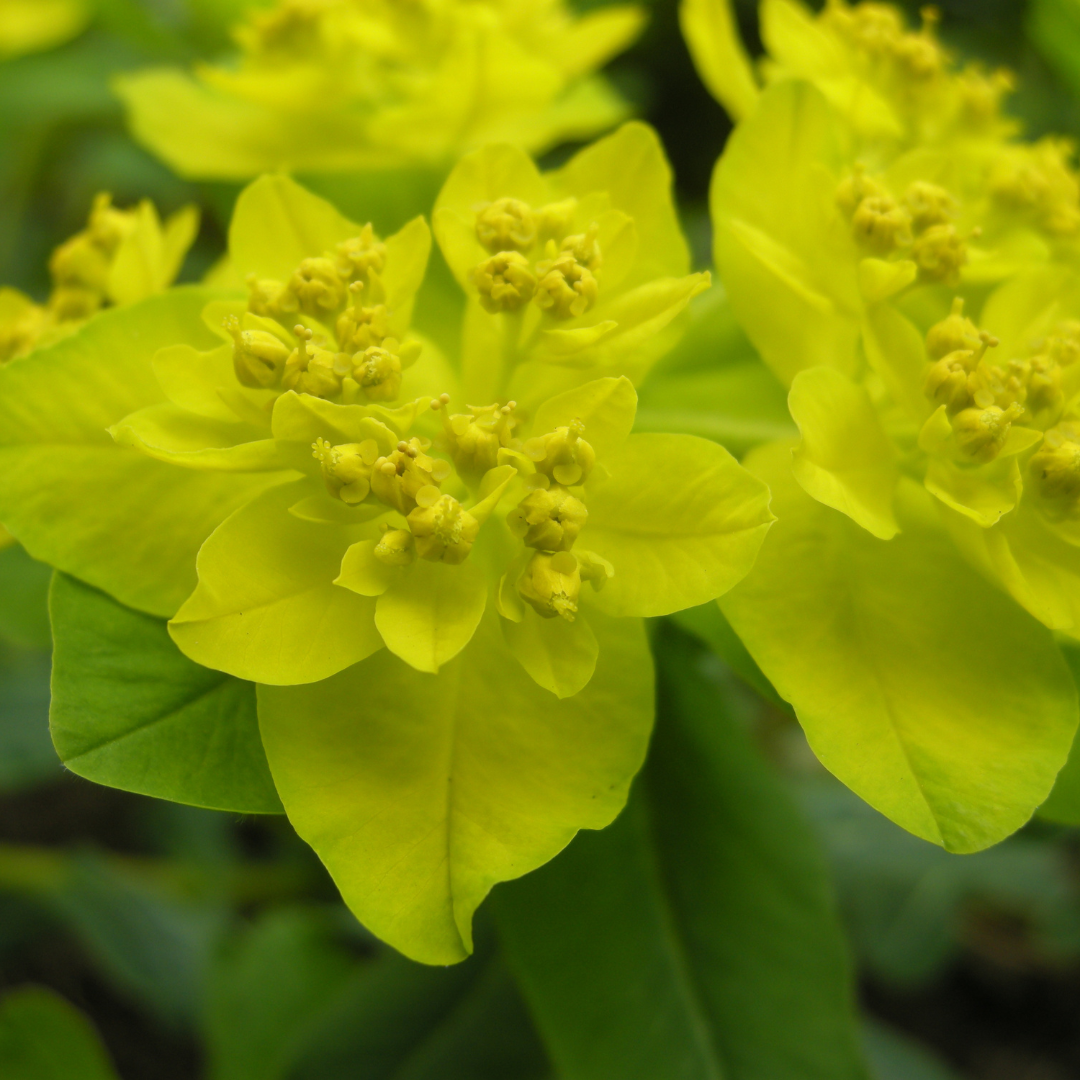
A perfectly round cushion of bright chartreuse in spring, like somebody set a giant highlighter down in the border. Then in fall it turns red and orange, just to make a point. LOUD IN SPRING, LOUDER IN FALL.
Plant Characteristics:
- Botanical Name: Euphorbia polychroma (syn. E. epithymoides)
- Common Name: Cushion Spurge
- Height: 30–45 cm (12–18 in)
- Spread: 45–60 cm (18–24 in)
- Flowers: Bright chartreuse to golden-yellow bracts surrounding tiny true flowers, in rounded clusters
- Bloom Time: Mid to late spring (April to May)
- Foliage: Mid-green, narrow leaves on a dense, rounded mound, often turning red and orange in fall
- Features: Rabbit resistant
Where to Plant: Use it at the front of a border, along a sunny path, in a rock garden or in a dry bed. The milky sap can irritate skin and eyes, so site it away from where small children play.
Companion Plants: Use cushion spurge for chartreuse in spring at the front of a sunny, dry bed with red to follow. Dianthus 'Paint the Town Magenta' adds magenta pinks at 15 to 20 cm from June to September. Gaillardia Low Rider™ brings red and yellow daisies at 20 to 25 cm from June to October. Echinacea Sombrero® Salsa Red adds bright red coneflowers at 61 to 66 cm from June to September. Elymus virginicus stands behind at 90 to 125 cm, a native wild rye.
Plant Care: Plant in full sun or light shade in well-drained, average soil. It handles dry, poor and rocky soils once established, but it dislikes soggy ground, especially in winter. Water through the first season. After flowering, a light trim keeps the mound tight. Cut it back in late fall or early spring. It's long-lived and doesn't like being moved, so divide only when necessary, in spring, wearing gloves.
History: Cushion spurge is native to the open woods and rocky ground of Europe, and polychroma means many-coloured, a nod to its yellow spring bracts and colourful fall leaves. Botanists now usually call it Euphorbia epithymoides, but it is still widely sold as E. polychroma.
Final Thoughts: Early pollinators get a snack, and the deer and rabbits get nothing. PLANT IT AND LET IT DO THE HIGHLIGHTING.