

Eupatorium 'Atropurpureum'
- In stock, ready to ship
Eupatorium 'Atropurpureum': Purple-Stemmed Giant for Late Summer
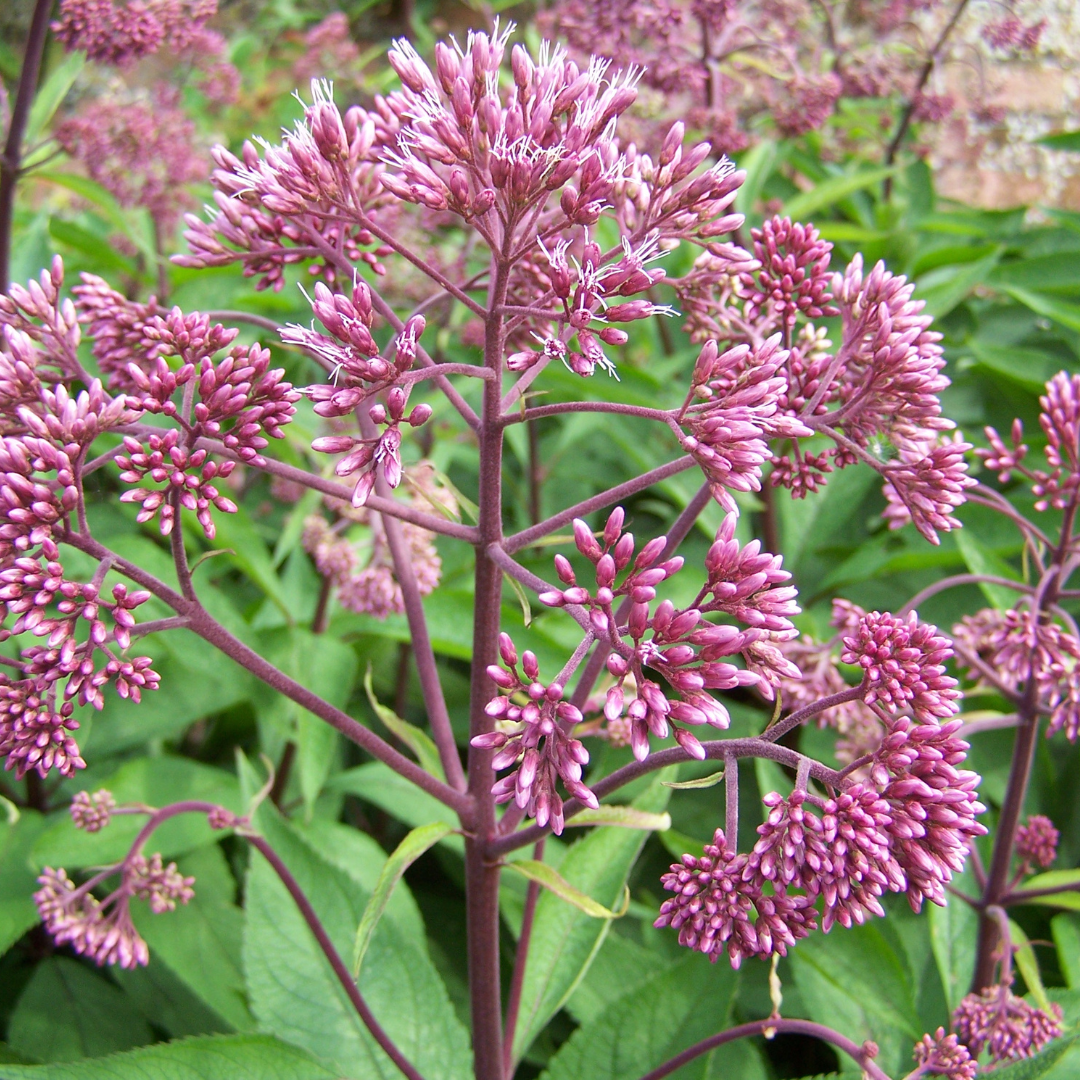
This Joe Pye weed grows taller than most of your relatives and smells faintly of vanilla. Deep purple stems hold up dusky rose clusters that butterflies treat like an ALL-YOU-CAN-EAT BUFFET. Wet clay? It barely notices.
Plant Characteristics:
- Botanical Name: Eupatorium maculatum (Atropurpureum Group), also listed as Eutrochium maculatum
- Common Name: Spotted Joe Pye Weed
- Height: 150–210 cm (5–7 ft)
- Spread: 90–120 cm (3–4 ft)
- Flowers: Large, flat to domed clusters of dusky rose-purple florets, lightly vanilla-scented
- Bloom Time: Late summer to fall (August to October)
- Foliage: Coarse, dark green leaves in whorls on deep purple stems
- Features: Rabbit resistant, tolerates clay and wet soil, selection of a species native to Ontario
Where to Plant: Put it at the back of the border, in a rain garden, along a pond or ditch, or anywhere you need late-season height, and it fits naturally into meadow and pollinator plantings. It handles heavy clay and wet soil, which is a relief for many Toronto and Ottawa gardens.
Companion Plants: Calamagrostis canadensis adds a native grass at 90 to 150 cm in flower from June to August. Crocosmia 'Lucifer' brings red flowers on arching stems in July and August. At the front, Stachys 'Hummelo' sends up purple spikes at 45 to 60 cm from June to August. These partners suit sun or part sun and lead nicely into the Joe Pye weed's fall bloom.
Plant Care: Plant in full sun or light shade in moist, average to rich soil. It's at its best where the soil never fully dries out, so water during dry spells, especially in the first couple of years. Mulch helps hold moisture. Stems are usually strong enough to stand without staking. If you'd like a shorter, bushier plant, cut the stems back by about half in early June. Leave the stems up for winter interest and cut them down in early spring. Clumps get large over time. Divide in spring every few years if it outgrows its spot.
History: Spotted Joe Pye weed grows wild in wet meadows, stream banks and ditches across much of eastern North America, including Ontario and Quebec, and botanists now place it in the genus Eutrochium. The common name honours a man named Joe Pye, traditionally said to have used the plant as a remedy in New England, though the details of the story are debated.
Final Thoughts: Plant it at the back of the border and let it loom over everything. THE GARDEN'S TALLEST, SWEETEST-SMELLING BOUNCER.



