

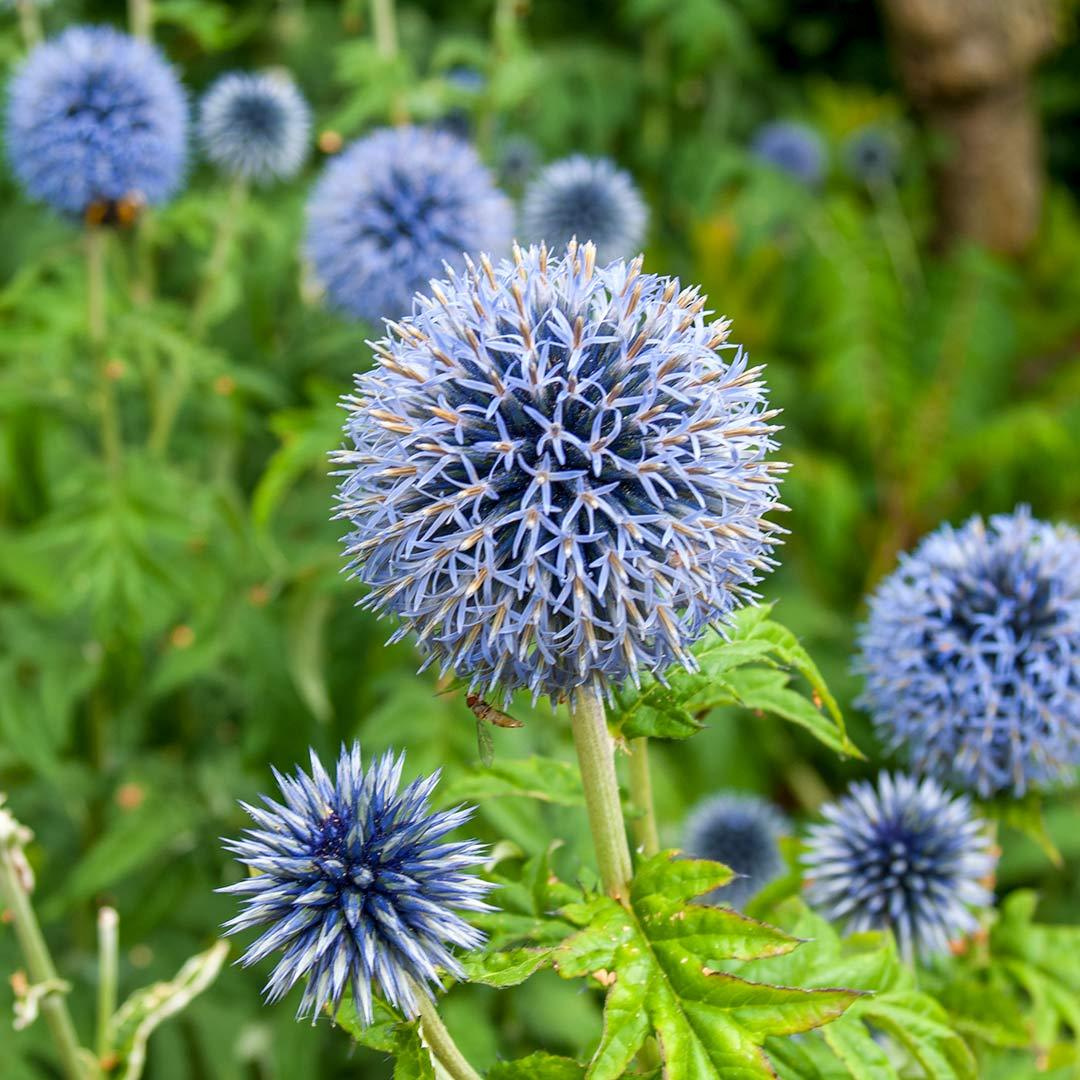
Echinops 'Blue Glow'
- In stock, ready to ship
Echinops 'Blue Glow': Spiky Steel-Blue Globes Bees Mob
Perfectly round, spiky steel-blue globes that look like a medieval weapon designed by a florist. 'Blue Glow' is the bouncer of the border: deer and rabbits take one look and keep walking. LOOK, ADMIRE, DO NOT TOUCH.
Plant Characteristics:
- Botanical Name: Echinops bannaticus 'Blue Glow'
- Common Name: Globe Thistle
- Height: 90–120 cm (3–4 ft)
- Spread: 45–60 cm (18–24 in)
- Flowers: Perfectly round, spiky globes of deep steel blue, about 4–5 cm (1.5–2 in) across, on branched stems
- Bloom Time: Midsummer to late summer (July to August)
- Foliage: Deeply lobed, spiny, grey-green leaves with paler undersides
- Features: Rabbit resistant, excellent cut and dried flower
Where to Plant: Plant it in the middle or back of a sunny border, in a gravel garden or in a dry pollinator bed. It belongs in a cut-flower bed too, since the heads dry well if cut before they fully open.
Companion Plants: Achillea New Vintage™ Red adds flat red flower heads at 66 to 71 cm from June to September, a bold match for blue globes. Asclepias 'Hello Yellow' brings yellow flowers from June to August that draw in butterflies. Pennisetum 'Hameln' softens the front with a fine grass that flowers from August to October. Give them full sun and well-drained soil.
Plant Care: Plant in full sun in average to poor, well-drained soil. Rich, wet soil leads to floppy stems and a shorter life. Water through the first season, then only during long droughts. It grows a deep taproot, so it doesn't like being moved. Wear gloves when handling it. Cut the flower stems back after blooming to tidy the plant and reduce self-seeding, and you may get a second, smaller flush. Cut back the rest in late fall or early spring.
History: Globe thistles are native to Europe and western Asia, and Echinops bannaticus is named after the Banat region of southeastern Europe. The genus name comes from the Greek words for hedgehog and appearance, which suits those spiky blue balls.
Final Thoughts: Cut a few for a dried arrangement that lasts longer than most New Year's resolutions. THE BEES, MEANWHILE, HAVE FULL ACCESS.



