



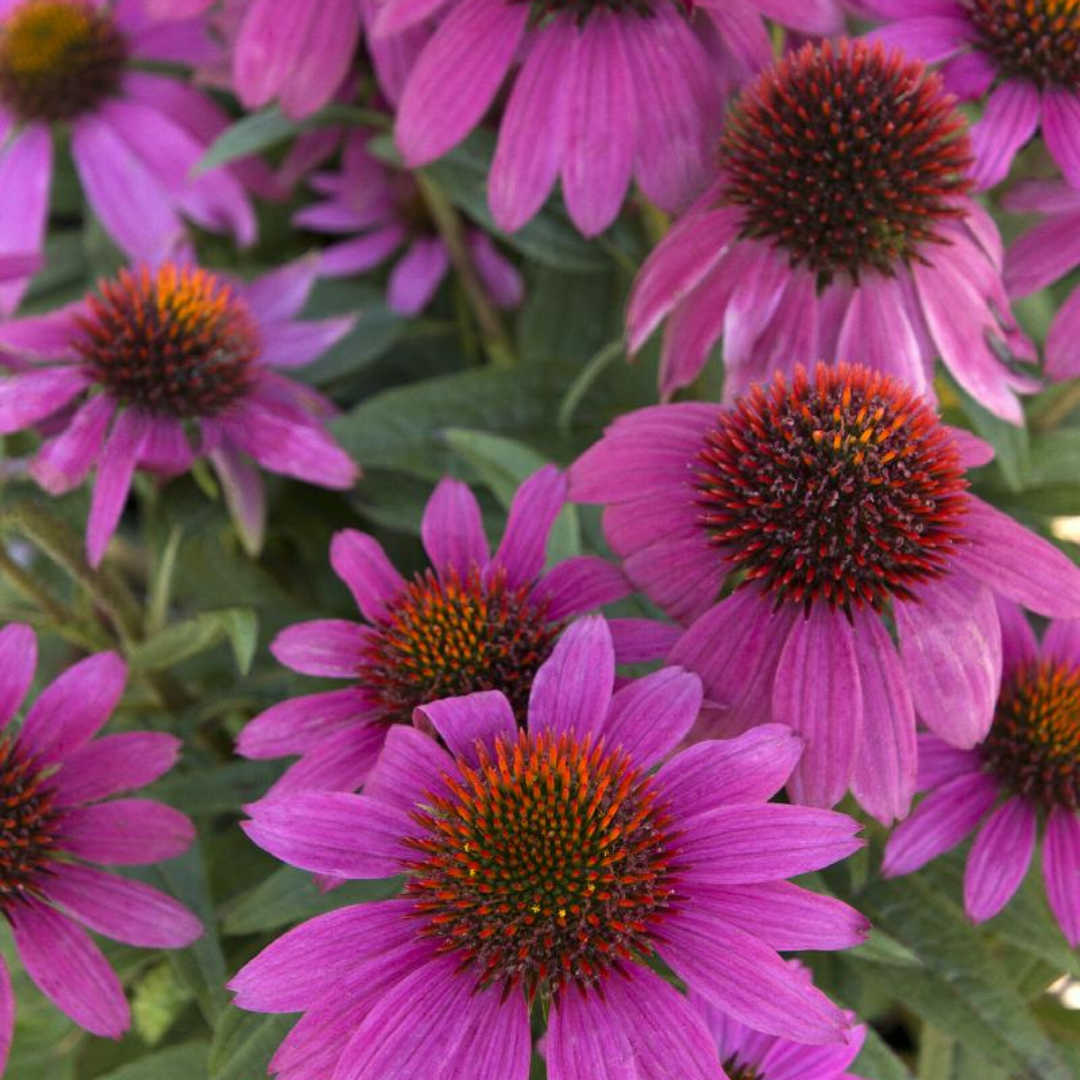
Echinacea PowWow® Wild Berry
Add to Wishlist Full Sun
 Drought Tolerant
 Deer Resistant
 Pollinator Friendly
- In stock, ready to ship
Echinacea PowWow® Wild Berry: Rose-Pink Powerhouse, Compact Edition
This coneflower doesn't bloom so much as bury itself in intense rose-pink flowers, starting in its very first year. The bees can't keep up. Neither can you. COUNTING IS POINTLESS.
Plant Characteristics:
- Botanical Name: Echinacea purpurea
- Common Name: Coneflower
- Series: PowWow®, from PanAmerican Seed
- Height: 40–60 cm (16–24 in)
- Spread: 30–40 cm (12–16 in)
- Flowers: Intense rose-pink petals around a dark cone, in large numbers on well-branched stems
- Bloom Time: Early summer to early fall (June to September)
- Foliage: Dark green, coarse leaves in a compact, upright clump
- Features: Seed heads feed birds, blooms the first year
Where to Plant: Its compact size makes it a good fit for the front of a border, small gardens, containers and mass plantings. It is tough enough for hot, sunny spots near pavement, provided the soil drains well.
Companion Plants: Asclepias 'Ice Ballet' brings white flower clusters at 90 to 120 cm from July to September, a clean contrast to berry pink. Delphinium 'Dark Blue/Dark Bee' adds blue spikes in June and July. Edge the bed with Sedum 'Red Carpet', a low mat with red flowers from June to August. All three love full sun.
Plant Care: Plant in full sun in average, well-drained soil. Avoid places where water sits in winter, and improve heavy clay before planting. Water regularly through the first season, then only in long dry spells. Deadhead through summer for more flowers. Toward fall, let the last flowers ripen so the seed heads can feed goldfinches and add winter interest. Cut back in early spring. Divide in spring every few years if the clump gets crowded.
History: PowWow® Wild Berry was developed by PanAmerican Seed as a seed-grown Echinacea purpurea that blooms in its first year with more flowers per plant than earlier seed coneflowers. It won an All-America Selections award, given after trials across North America.
Final Thoughts: Leave the seed heads for the birds and enjoy the encore in winter. THE PINK THAT PAYS ITS RENT TWICE.



