

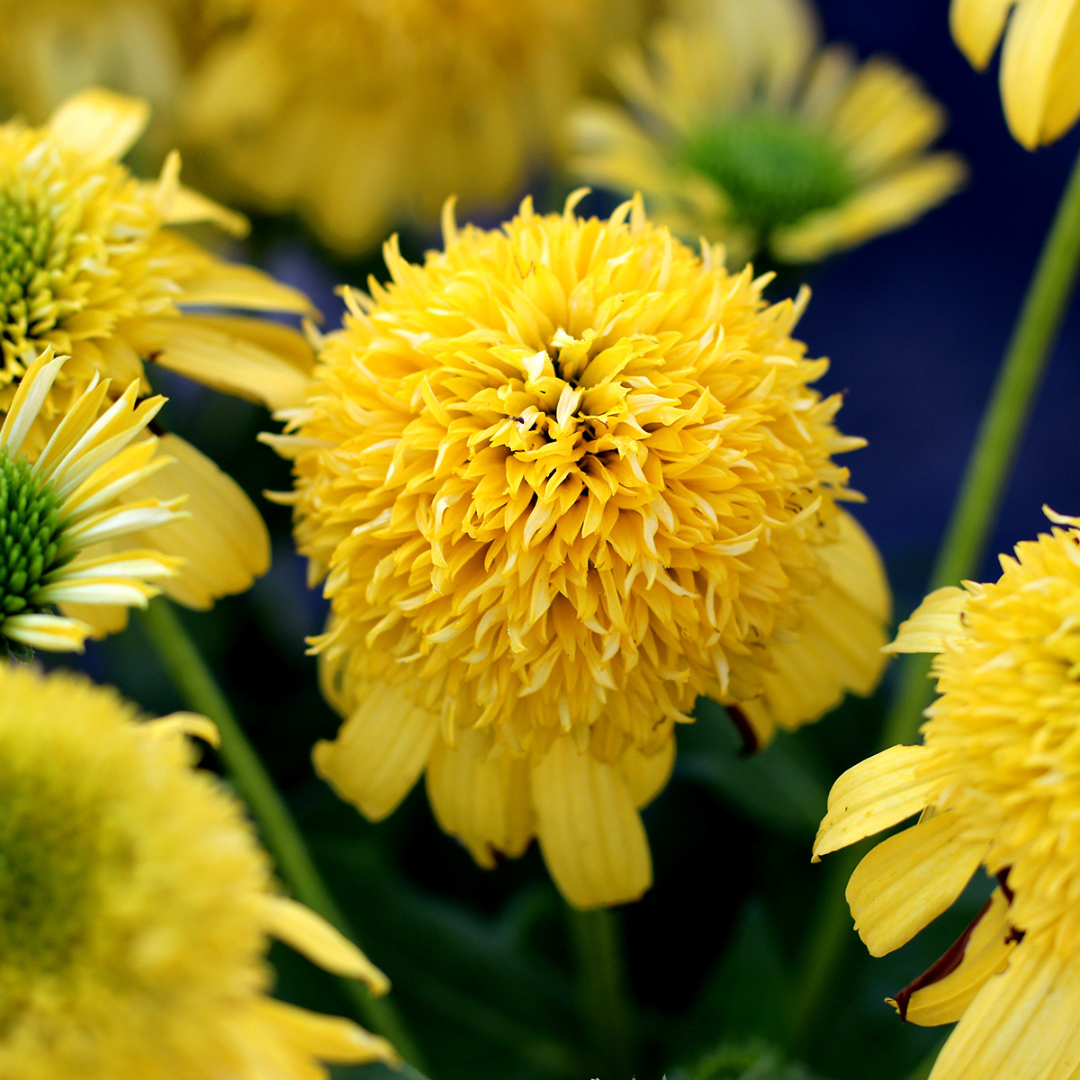
Echinacea Sunny Days™ 'Lemon'
- In stock, ready to ship
Echinacea Sunny Days™ 'Lemon': Fluffy Lemon Sherbet Until October
Lemon-yellow petals droop around a big, puffy centre, like a flower wearing a fluffy hat it absolutely refuses to take off indoors. 'Lemon' is the coneflower that went for volume. MAXIMUM FLUFF, MINIMUM EFFORT.
Plant Characteristics:
- Botanical Name: Echinacea 'TNECHSDL'
- Common Name: Coneflower
- Series: Sunny Days™, from Terra Nova® Nurseries
- Height: 55–75 cm (22–30 in): foliage about 55 cm (22 in), flowers to about 75 cm (30 in)
- Spread: 75 cm (30 in)
- Flowers: Lemon-yellow, double-looking anemone-type blooms with a full, rounded centre and drooping outer petals
- Bloom Time: Midsummer to mid-fall (July to October)
- Foliage: Bright green, in a compact, upright clump
- Features: Good cut flower
- Plant Patent: USPP 33,471
Where to Plant: Put it in the middle of a sunny border, in a pollinator bed, or in a big patio container where you can see it from the window. Since it blooms into October, it carries colour into the stretch of fall when much of the garden is done.
Companion Plants: Achillea 'Strawberry Seduction' adds flat red flower heads at 45 to 50 cm from June to September, a lively contrast to lemon yellow. Veronica 'Snow Candles' brings white spikes at the front from July to September. Perovskia 'CrazyBlue' adds violet sprays at 40 to 45 cm over the same weeks. Flat heads, spikes and airy sprays give this sunny bed good variety.
Plant Care: Plant in full sun, at least six hours a day, in average, well-drained soil. Coneflowers handle clay, but water that sits around the crown in winter is the main reason double coneflowers fail to return. Water regularly the first summer, then during long dry spells. Avoid heavy feeding. Deadhead to keep fresh flowers coming. Leave the last seed heads standing for winter interest and cut back in early spring. Divide in spring only if the clump becomes crowded.
History: Sunny Days™ 'Lemon' was bred by Terra Nova® Nurseries in Canby, Oregon, and introduced in 2020. It came from crosses involving three North American species, the yellow-flowered Echinacea paradoxa, purple coneflower (E. purpurea) and Tennessee coneflower (E. tennesseensis), with the aim of a compact coneflower with lots of crowns and flowers.
Final Thoughts: Snip a few for the table and watch guests reach out to touch them. IT'S A FLOWER, NOT A POM-POM. PROBABLY.



