

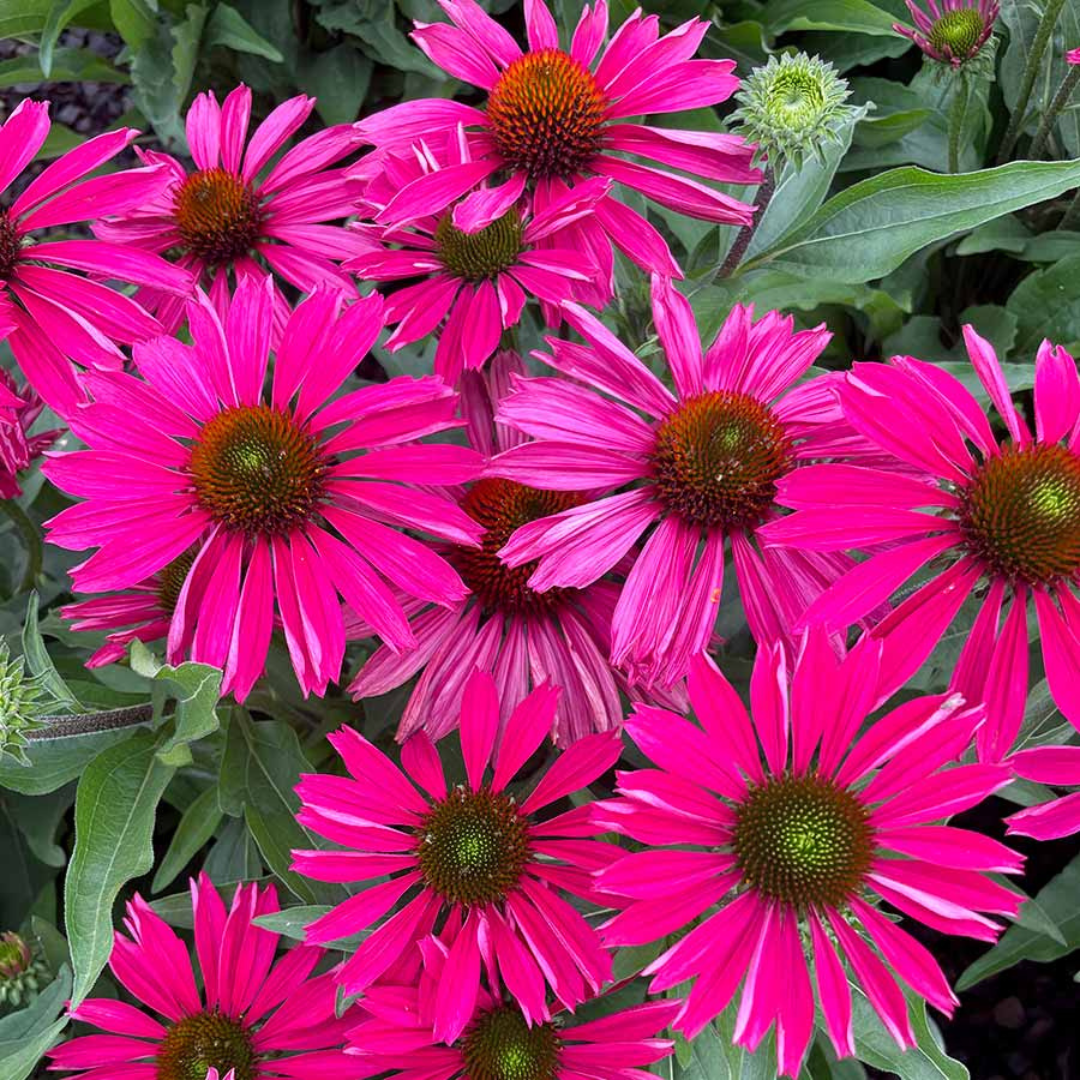
Echinacea KISMET® 'Raspberry'
- In stock, ready to ship
Echinacea KISMET® 'Raspberry': Raspberry Blooms Long After the Berries
Big raspberry-pink daisies on a compact habit that fits right into a pot. 'Raspberry' blows a big, loud raspberry at every plant that needs a second year to get going. TOO LATE, SLOWPOKES.
Plant Characteristics:
- Botanical Name: Echinacea hybrid 'TNECHKR'
- Common Name: Coneflower
- Series: KISMET®, from Terra Nova® Nurseries
- Height: 40–45 cm (16–18 in) in flower
- Spread: 60 cm (24 in)
- Flowers: Large, raspberry-pink single daisies
- Bloom Time: Early summer to fall (June to October)
- Foliage: Dark green, in a compact, upright, well-branched clump
- Features: Long-lasting flowers, blooms the first year
- Plant Patent: PP28,768
Where to Plant: Use it at the front or middle of a sunny border, in containers or along a walkway where you can see the flowers up close. It is compact enough for small gardens and balconies, and tough enough for the hot, dry side of the yard once established.
Companion Plants: Perovskia 'Blue Jean Baby' gives a soft lavender haze at 70 to 85 cm from July to September, a cool foil for raspberry pink. Along the edge, Armeria 'Alba' forms tidy tufts with white flowers in May and June, before the coneflowers start. Liatris pycnostachya adds tall purple spikes at 90 to 150 cm from July to September. Round heads, airy sprays and upright spikes make a sunny, pollinator-friendly bed.
Plant Care: Plant in full sun in average, well-drained soil. Avoid heavy, wet clay where water stands in spring or winter. Water through the first summer, then mainly during long dry spells. Deadhead to keep the flowers coming into fall. Leave late seed heads for birds and winter interest, and cut the stems back in early spring. Divide in spring if the clump gets crowded after a few years.
History: 'Raspberry' is part of the KISMET® series from Terra Nova® Nurseries in Oregon, bred through interspecific crosses for more crowns, more first-year flowers and better winter survival. It is patented as PP28,768, one number away from its sibling 'Intense Orange'.
Final Thoughts: Give it sun and walk away. It handles drought, deer and your vacation schedule. THE ONLY BERRY PATCH THAT NEEDS NO NETTING.



