

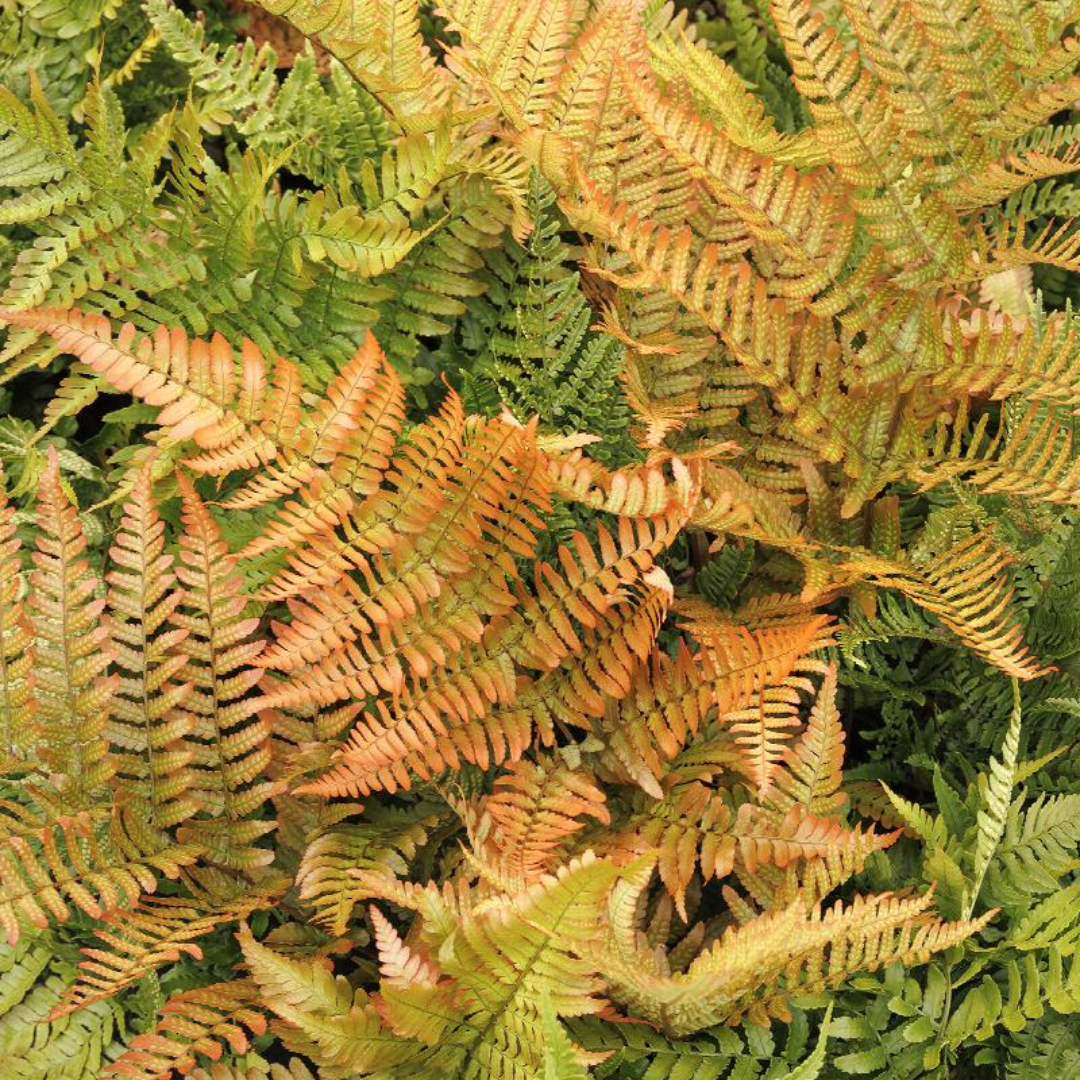
Dryopteris 'Brilliance'
- In stock, ready to ship
Dryopteris 'Brilliance': Copper Fronds Warming Up the Shade
Most ferns are green and fine with it. 'Brilliance' sends up new fronds in coppery orange-red, like it dyed its hair during a midlife crisis, then calms down to glossy green. EVERY FLUSH IS A FRESH START.
Plant Characteristics:
- Botanical Name: Dryopteris erythrosora 'Brilliance'
- Common Name: Autumn Fern
- Height: 50–60 cm (20–24 in)
- Spread: 50–60 cm (20–24 in)
- Flowers: None. Like all ferns it reproduces by spores; red spore clusters show on the undersides of the fronds.
- Foliage: Coppery orange-red new fronds that mature to glossy dark green. Evergreen in mild climates, semi-evergreen in colder winters.
- Features: Rabbit resistant, long season of foliage colour
Where to Plant: Use it to warm up a shade bed, a woodland path or a north-facing foundation, or as the thriller in a shady container. In colder gardens, give it a sheltered spot where snow piles up and the wind doesn't cut through.
Companion Plants: Heuchera 'Grape Soda' sits in front of the coppery fronds with pink flowers from May to August. Polygonatum multiflorum adds arching stems at 60 to 90 cm with white flowers in May and June. Late in the year, Symphyotrichum cordifolium carries blue asters in September and October. This mix of low mounds, arching stems and fine fronds suits shade or part sun.
Plant Care: Plant in moist, rich, well-drained soil, ideally with plenty of compost or leaf mould worked in. Morning sun is fine, but protect it from hot afternoon sun. Keep it evenly watered through the first season and during dry spells after that; it doesn't like to dry out completely. A layer of shredded leaves helps hold moisture. In early spring, before the new fiddleheads unroll, cut off any of last year's fronds that look tattered. It forms a slow clump and rarely needs dividing; if you want more plants, divide it in spring.
History: Dryopteris erythrosora is native to eastern Asia, including Japan and China, and its name joins the Greek erythros, red, with sorus, a fern's spore cluster, after the red spore clusters on young fronds. 'Brilliance' was selected for new growth that is brighter than the typical species.
Final Thoughts: Plant it in the shade where nothing exciting ever happens. IT WILL CHANGE THAT, AND THE DEER WILL NOT.



