

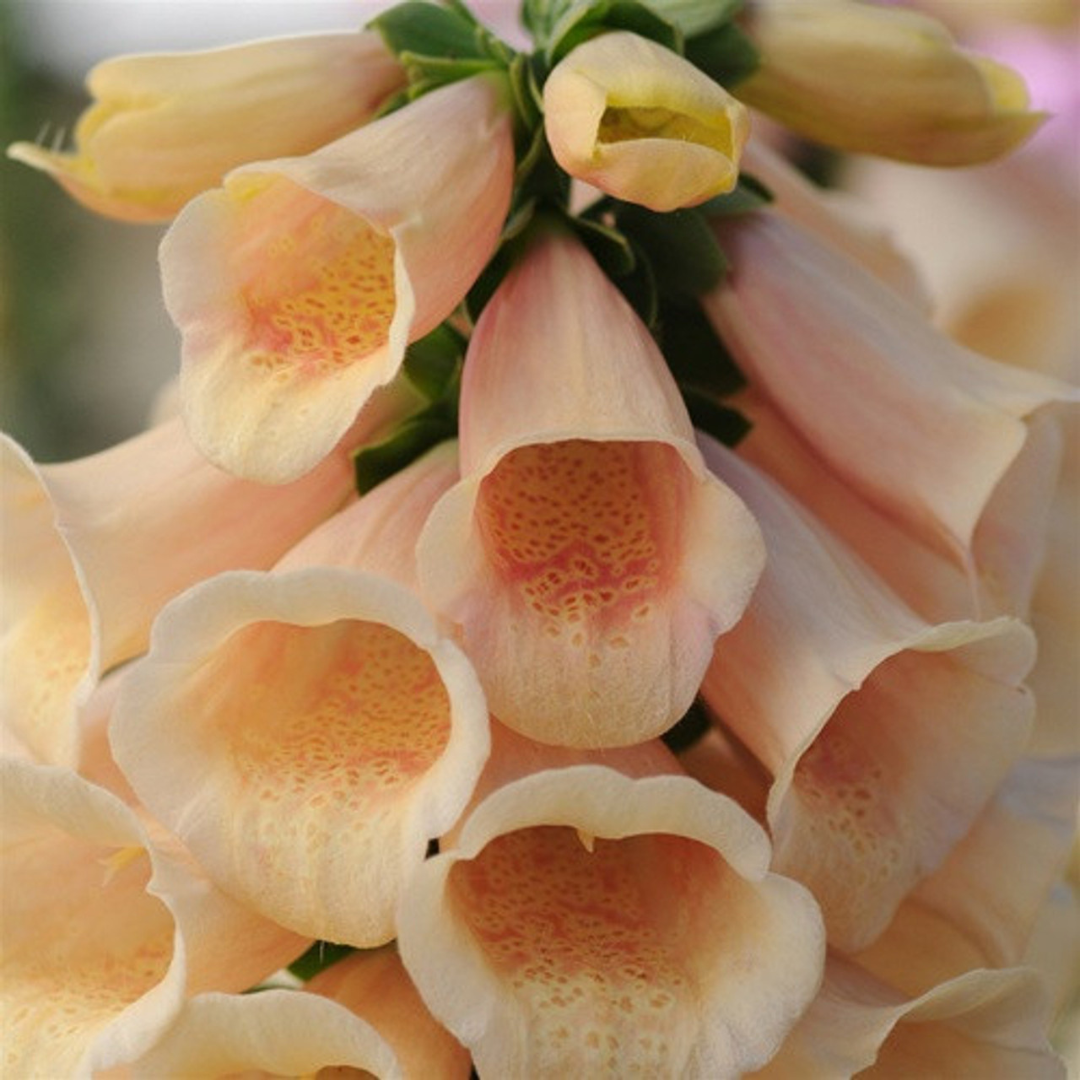
Digitalis 'Dalmatian Peach'
- In stock, ready to ship
Digitalis 'Dalmatian Peach': Freckled Peach Bells on Fast-Forward
Soft pink bells slowly fade to peach, freckled orange inside, like somebody who spent the whole afternoon at the beach without sunscreen. 'Dalmatian Peach' blooms its first year, because PATIENCE IS OVERRATED.
Plant Characteristics:
- Botanical Name: Digitalis purpurea 'Dalmatian Peach'
- Common Name: Common Foxglove
- Series: Dalmatian series
- Height: 40–60 cm (16–24 in)
- Spread: 30–36 cm (12–14 in)
- Flowers: Soft pink bells that fade to peach, with orange-speckled throats
- Bloom Time: Early to midsummer (June to July)
- Foliage: Green, slightly hairy, lance-shaped leaves in a low rosette
- Features: First-year flowering, good cut flower
Where to Plant: Its shorter height makes it easy to fit into the middle of a border, a cottage garden or a large container. Grow a few in a cut-flower bed too, since the spikes hold up well in a vase.
Companion Plants: Verbena hastata 'Blue Spires' rises to 120 cm behind the foxgloves, with blue spikes from July to September. Lysimachia clethroides adds arching white flower spikes at 60 to 90 cm in the same months. At the front, Persicaria 'Dimity' forms a low mat with pink flowers from June to September. Peach, blue and white make a soft, easy combination in sun or part sun.
Plant Care: Plant in full sun to part sun in moist, well-drained soil with compost mixed in. A bit of afternoon shade helps in hot spots. Avoid waterlogged clay, especially in winter. Water regularly during dry spells. Cut the first spikes back after flowering and you may get a smaller second round. Like most common foxgloves, it's a biennial or short-lived perennial. Let a few spikes drop seed if you want it to keep coming back. All parts are toxic if eaten, so wear gloves and keep it away from pets that chew.
History: Common foxglove is native to western and southern Europe and has been a cottage-garden plant for centuries. The Dalmatian series was bred for something unusual in foxgloves: reliable flowers in the very first year from seed.
Final Thoughts: Plant a cluster and pretend you planned the colour palette. NOBODY HAS TO KNOW IT DID ALL THE WORK.



