



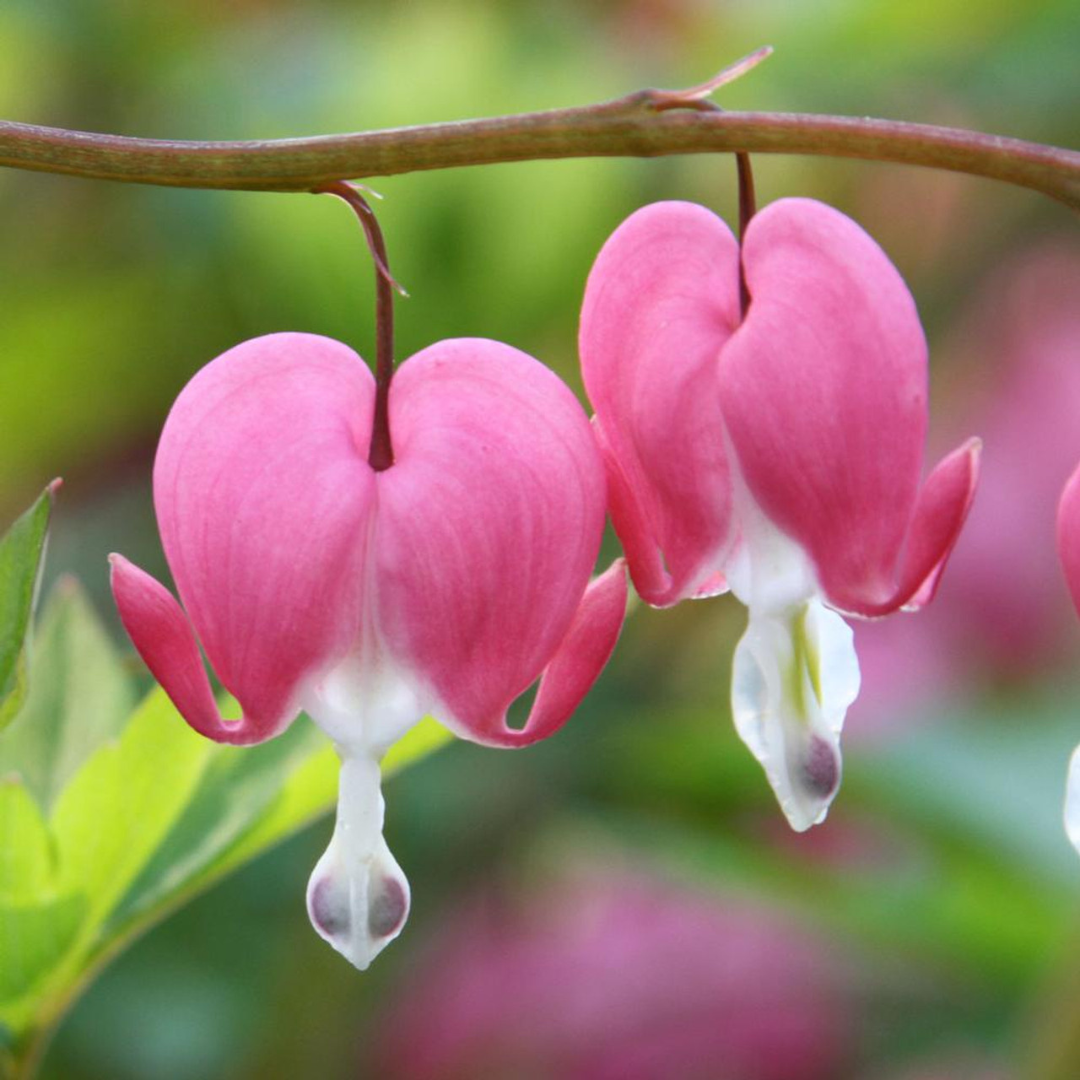
Dicentra spectabilis
Add to Wishlist Partial Sun
 Full Shade
 Deer Resistant
 Pollinator Friendly
- In stock, ready to ship
Dicentra spectabilis: The Victorian Heartthrob of Spring Shade
Your grandmother grew this. Her grandmother probably grew it too. Rose-pink hearts hang in perfect rows, still outliving every trendy plant that came after them. OLD SCHOOL NEVER GOES OUT OF STYLE.
Plant Characteristics:
- Botanical Name: Lamprocapnos spectabilis (formerly Dicentra spectabilis)
- Common Name: Old-fashioned Bleeding Heart
- Height: 60–90 cm (2–3 ft)
- Spread: 60–90 cm (2–3 ft)
- Flowers: Rose-pink, heart-shaped, with small white inner petals, hanging in rows from arching stems
- Bloom Time: Late spring to early summer (May to June)
- Foliage: Soft green and deeply divided. It often goes dormant in summer heat.
- Features: Long-lived, good cut flower
Where to Plant: It is at home in shady borders, woodland gardens, foundation beds on the north or east side of the house, and under tall trees. The leaves usually fade by midsummer, so plan for later fillers nearby, and grow a few extra stems for cutting.
Companion Plants: Brunnera 'Jack of Diamonds' sends up sprays of blue flowers in April and May, a sweet match for pink hearts. Hosta 'Abiqua Drinking Gourd' fills in at 45 to 60 cm with bold leaves and white flowers in June and July, covering the gap when the bleeding heart fades in summer. Carpet the ground with Galium odoratum, whose white flowers bloom alongside it in May and June. All three love shade or part sun, making a classic woodland grouping.
Plant Care: Plant in part shade to full shade in moist, well-drained soil rich in organic matter. It can handle morning sun if the soil stays moist. Work compost into heavy clay so the fleshy roots don't rot over winter. Water regularly in spring. Shearing the plant back after flowering can tidy it up. When the foliage yellows in summer, cut it back. It's resting, not dying. Mark the spot. Mature clumps resent being moved, so leave it be unless you need to divide, ideally in early spring. Wear gloves when handling, since the sap can irritate skin and all parts are toxic if eaten.
History: The species is native to northeast China and Korea, and after an early introduction to England in 1810 was lost, plant hunter Robert Fortune brought it back in 1846 from a garden on Chusan Island. It became a Victorian favourite and now sits in its own genus, Lamprocapnos, while spectabilis simply means showy.
Final Thoughts: Plant it once, then pass a piece on to the grandkids. IT WILL PROBABLY OUTLAST THE FAMILY HOME.



