

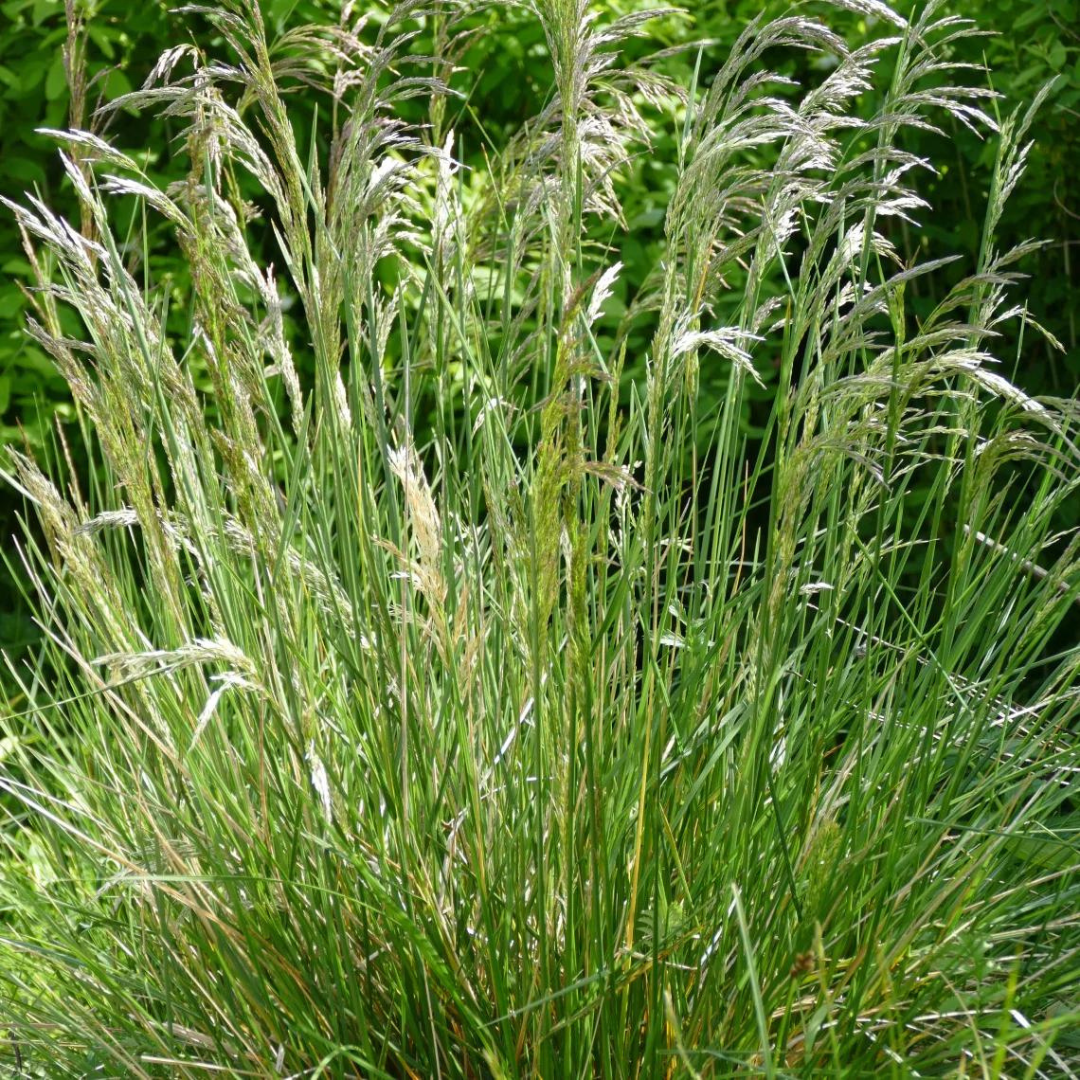
Deschampsia cespitosa
- In stock, ready to ship
Deschampsia cespitosa: Silky Haze From Shoreline to Rain Garden
Road salt, deer, a little shade? This native grass has heard worse at the family dinner table. Clouds of tiny silver and purple spikelets ripen to gold and refuse to fall over until winter says please. HOMEGROWN AND HARD TO RATTLE.
Plant Characteristics:
- Botanical Name: Deschampsia cespitosa
- Common Name: Tufted Hair Grass
- Height: 60–90 cm (2–3 ft) in flower
- Spread: 30–60 cm (1–2 ft)
- Flowers: Open, airy panicles of tiny spikelets in silver, green and purple tones, ripening to gold and tan. They stay standing into winter.
- Bloom Time: Early to midsummer, with seed heads into fall (June to August)
- Foliage: Fine, dark green blades in a dense, low tuft. Semi-evergreen.
- Features: Salt tolerant, shade tolerant, cool-season grass
Where to Plant: Plant it in drifts in a rain garden, along a pond or stream, or in a moist meadow, and it also suits a lightly shaded spot. Repeated through a border, it ties bolder plants together with a soft haze, and it tolerates some salt near a road or driveway.
Companion Plants: Plant Geranium 'Biokovo' at the front, where its low mat of white flowers from May to July sits neatly below the airy grass. Echinacea 'Prairie Splendor' adds bold pink coneflowers from June to September, a strong shape against the fine, misty plumes. For the back, Symphyotrichum novae-angliae rises to 180 cm and finishes the year with purple asters in late summer and fall. It is a soft, naturalistic mix for sun or part sun.
Plant Care: Plant in full sun to part shade, in moist soil rich in organic matter. It does best where the soil stays cool and doesn't dry out for long. It tolerates clay and periodically wet ground. In hot, dry full sun, the leaves can brown, so water during dry spells or give it some afternoon shade. Leave the seed heads up for winter interest. In early spring, comb out or trim the old foliage before new growth appears. Divide in spring or early fall every few years if the centre thins out.
History: Tufted hair grass grows wild across much of the northern hemisphere, including Ontario and Quebec, in wet meadows, shorelines, bogs and open woods. The species name cespitosa means growing in tufts, and European gardeners have grown it for generations.
Final Thoughts: Plant it right where the plow throws its little tantrum every winter. COME SPRING, GUESS WHO'S STILL SMILING.



