

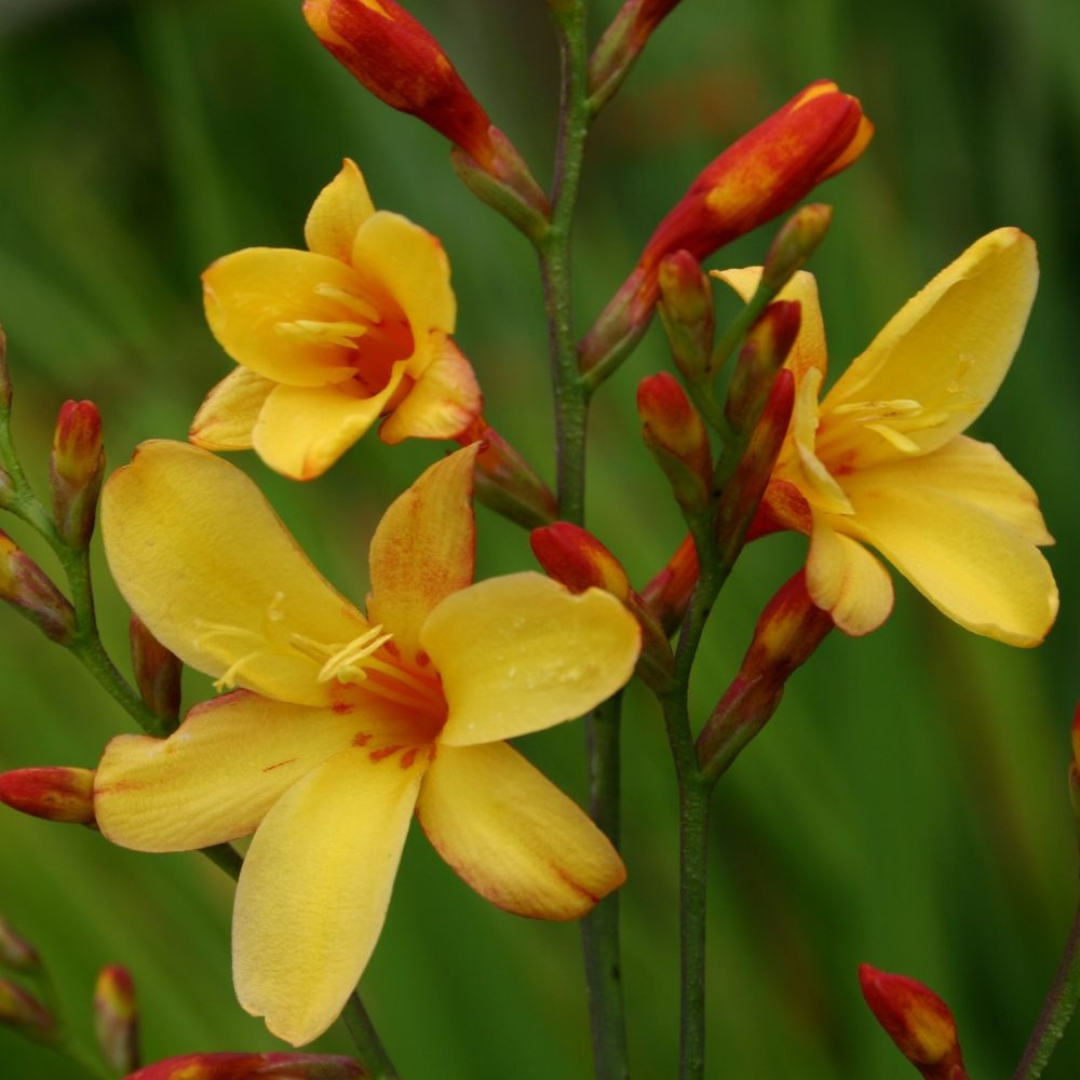
Crocosmia 'Harlequin'
- In stock, ready to ship
Crocosmia 'Harlequin': Three Hot Colours on Every Stem
Yellow faces up front, red-orange on the back, opening from red and orange buds on purple stems. 'Harlequin' dresses like a court jester and juggles three colours at once. THE CIRCUS CAME TO YOUR BORDER.
Plant Characteristics:
- Botanical Name: Crocosmia × crocosmiiflora 'Harlequin'
- Common Name: Montbretia
- Height: 60–90 cm (2–3 ft)
- Spread: 30–45 cm (1–1.5 ft)
- Flowers: Wide, tubular flowers with yellow faces and red-orange petal backs, opening from red and orange buds on arching purplish stems
- Bloom Time: Midsummer to early fall (July to September)
- Foliage: Upright, sword-shaped green leaves in fans
- Features: Good cut flower
Where to Plant: Plant it in clumps through the middle of a sunny border or a hot-colour bed, where the arching stems add movement. It brings colour to the late-summer garden and earns a place in a cutting bed, since the stems last well in a vase.
Companion Plants: Aquilegia Earlybird™ White opens white flowers from May to July at the front. Baptisia Decadence® Deluxe 'Pink Truffles' forms a shrubby clump at 120 to 140 cm with pink spikes in June and July. Eupatorium 'Atropurpureum' rises behind with pink heads from August to October. The sword-like crocosmia leaves give the mix a strong upright line.
Plant Care: Plant in full sun to part sun in moist but well-drained soil with plenty of compost. The corms rot in waterlogged winter soil, so improve clay or plant on a slight rise. Water in dry summer spells. Winters here are tough on crocosmia. Plant in a warm, sheltered spot, set the corms about 10–15 cm (4–6 in) deep, leave the leaves standing over winter, and cover the area with a thick mulch of leaves or straw once the ground freezes. In colder gardens, lift the corms in fall and store them frost-free until spring. Cut back old foliage in early spring. Divide congested clumps every few years in spring.
History: Garden montbretias (Crocosmia × crocosmiiflora) were first bred in France in the 1880s by the Lemoine nursery, which crossed two species from the grasslands of southern Africa. The name comes from Greek words for saffron and smell, after the saffron scent of dried flowers soaked in water.
Final Thoughts: Hummingbirds buy season passes, and the deer stay out of the tent. Plant a bunch and LET THE SHOW RUN ALL SUMMER.



