

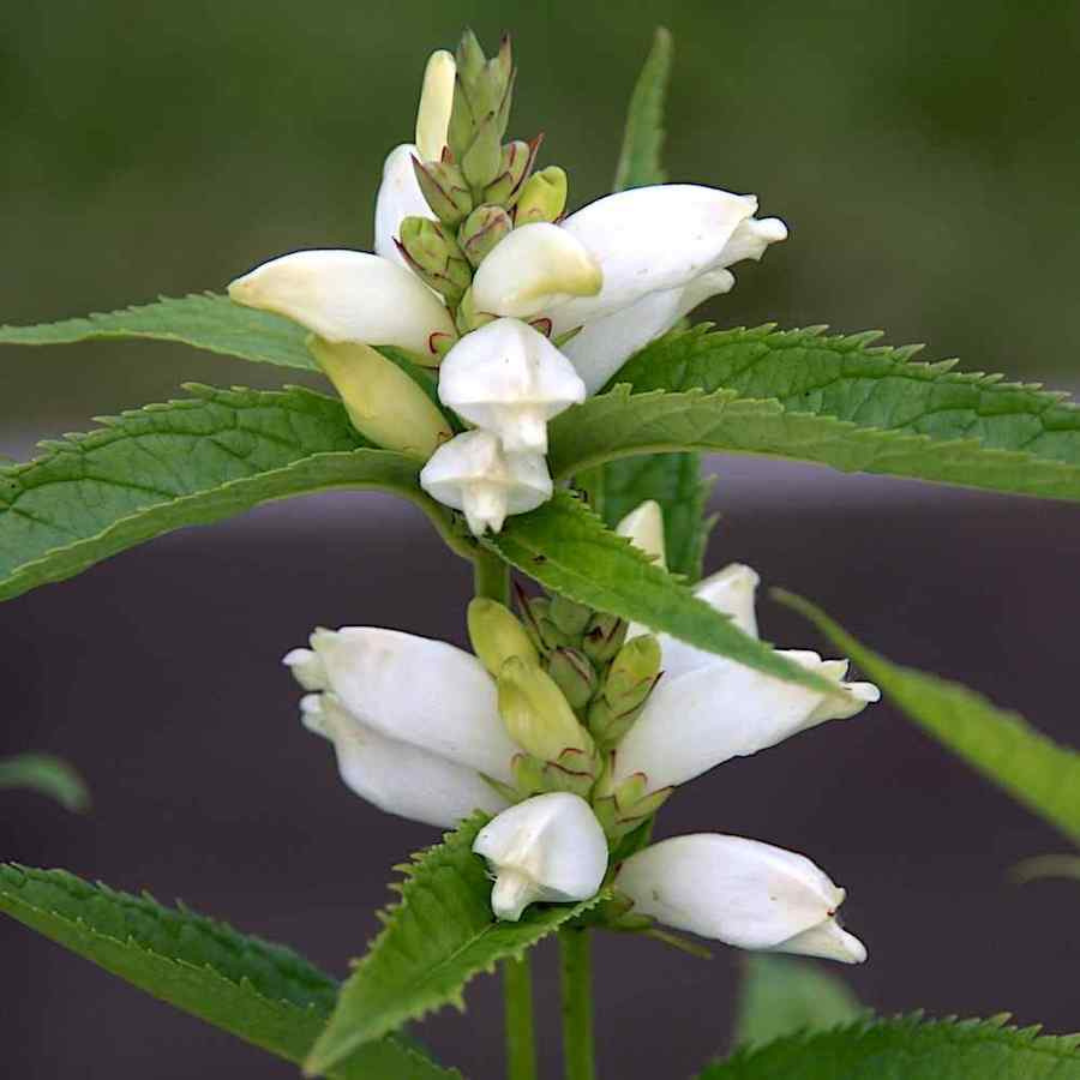
Chelone obliqua 'Alba'
- In stock, ready to ship
Chelone obliqua 'Alba': White Turtleheads Happy in the Muck
Big white hooded flowers in dense spikes, like a choir of turtles in matching robes. 'Alba' is the crisp, clean take on a classic, and it plans on sticking around a long time. LONG-LIVED AND WELL DRESSED.
Plant Characteristics:
- Botanical Name: Chelone obliqua 'Alba'
- Common Name: White Turtlehead
- Height: 60–90 cm (2–3 ft)
- Spread: 45–60 cm (18–24 in)
- Flowers: Large, hooded white flowers in dense spikes at the stem tips
- Bloom Time: Late summer to early fall (August to September)
- Foliage: Glossy, dark green, toothed leaves on an upright, bushy clump
- Features: Long-lived, tolerates wet and clay soils
Where to Plant: Turtlehead is perfect for rain gardens, pond and stream edges, and low spots that stay moist, and it also does fine in a regular border with decent moisture. The white flowers brighten a part-shade bed in late summer, when many perennials have finished.
Companion Plants: Filipendula 'Venusta' towers behind at 180 to 240 cm with pink plumes from June to August. Platycodon 'Astra Blue' sits at the front with blue balloon flowers through summer. Sanguisorba 'Little Angel' adds burgundy buttons from June to September. These moisture-tolerant plants keep the bed busy until the white turtleheads open.
Plant Care: Plant in rich, moist to wet soil. It tolerates clay and a wide range of pH. In full sun, keep the soil consistently moist; in part shade it is more forgiving. Mulch helps hold in moisture in summer. Pinch the stem tips in late spring if you want a shorter, bushier plant. Cut the stems back in late fall or early spring. It's long-lived and slowly forms a wider clump. Divide in spring if you want more plants.
History: Rose turtlehead is native to moist woods, swamps and streambanks of the eastern and midwestern United States, and its usual colour is rosy pink, so 'Alba' is the white-flowered form. Chelone comes from the Greek word for tortoise, for the turtle-head shape of the flowers.
Final Thoughts: Wet soil and clay are welcome. Bumblebees and butterflies too. ONE PLANT, MANY TENANTS, ZERO EVICTIONS.



