

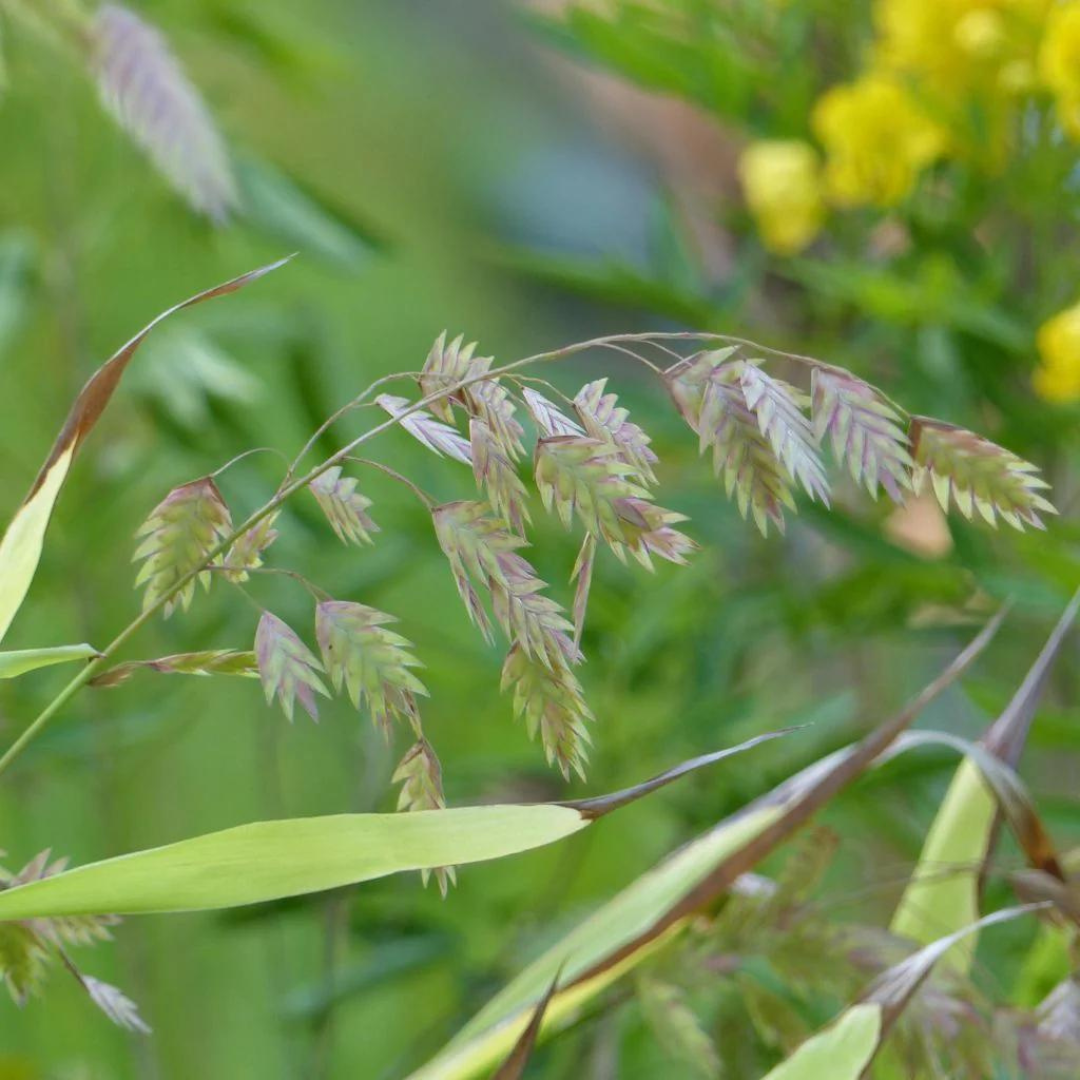
Chasmanthium latifolium
- In stock, ready to ship
Chasmanthium latifolium: Flat Seed Heads Made for Rustling
Flat little oat-like spikelets dangle from every stem like the plant is wearing earrings it got on sale. Northern Sea Oats sways in the slightest breeze and keeps its seed heads well into winter. THE BREEZE IS ITS PERSONAL STYLIST.
Plant Characteristics:
- Botanical Name: Chasmanthium latifolium (formerly Uniola latifolia)
- Common Name: Northern Sea Oats, Wood Oats
- Height: 60–120 cm (2–4 ft)
- Spread: 45–75 cm (1.5–2.5 ft)
- Flowers: Flat, nodding, oat-like spikelets that age from green to bronze and tan
- Bloom Time: Mid to late summer (July to August), with seed heads lasting into winter
- Foliage: Broad, bright green, bamboo-like leaves turning golden to coppery in fall
- Features: Tolerates clay, black walnut and road salt
Where to Plant: Northern sea oats bring movement to shady borders, woodland edges and dappled spots. Plant it in groups for a soft, rustling mass, or along a path where you can watch the seed heads move. It tolerates clay, juglone and some road salt, and in full sun it needs steady moisture.
Companion Plants: Aquilegia Earlybird™ Purple Yellow blooms from May to July, giving colour before the grass sends up its flat seed heads. Dicentra 'Luxuriant' adds red hearts from May to August in part shade. Kalimeris 'Blue Star' brings small blue daisies from June to September. Sea oats grow in sun or shade, so this trio works at the edge of a woodland bed.
Plant Care: Plant in moist, well-drained soil in part shade. It grows in full sun if the soil stays moist, though the leaves turn paler green. Once settled, it handles short dry spells. Leave the stems and seed heads standing for winter interest, then cut the clump to the ground in early spring before new growth starts. Fair warning: it self-seeds generously, especially in rich, moist soil. If you don't want seedlings, cut off the seed heads in fall before they drop and use them indoors. Divide clumps in spring.
History: French botanist André Michaux first described this grass in 1803 as Uniola latifolia, which is why that name still turns up on some nursery labels. It grows wild along streams, woodland slopes and river bottoms in the eastern and central United States, and latifolium means broad-leaved.
Final Thoughts: Clay, black walnut and road salt don't faze it one bit. Plant a drift and cut a few for a vase. HATERS GONNA SWAY.



