

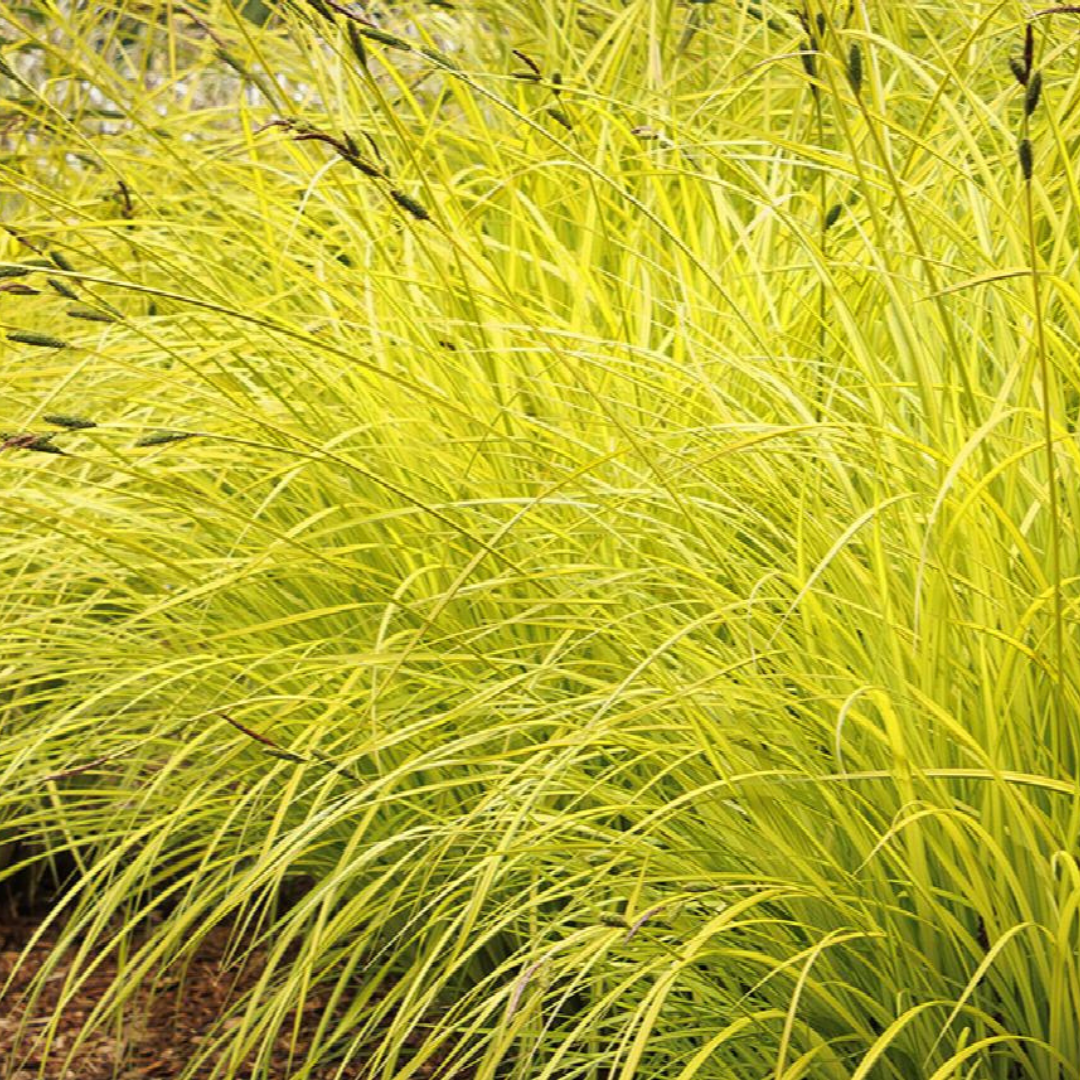
Carex 'Bowles Golden'
- In stock, ready to ship
Carex 'Bowles Golden': Golden Blades That Wade Right In
Bright gold blades with thin green edges, glowing in the shade like somebody left the porch light on. 'Bowles Golden' even likes wet feet, so that soggy corner finally has a tenant. RENT PAID IN SUNSHINE.
Plant Characteristics:
- Botanical Name: Carex elata 'Bowles Golden' (also sold as 'Aurea')
- Common Name: Gold Sedge (also called Bowles' Golden Sedge)
- Height: 60–90 cm (2–3 ft)
- Spread: 60–90 cm (2–3 ft)
- Flowers: Small, blackish flower spikes; grown for its foliage
- Bloom Time: Late spring to early summer (May to June)
- Foliage: Bright gold with thin green margins, narrow and arching; semi-evergreen
- Features: Grows in wet soil or shallow water
Where to Plant: Plant it at the edge of a pond or stream, in a rain garden, or in a damp border that other plants find too wet. It also works as a bright filler in large containers that are watered often. About half a day of sun brings out the best colour.
Companion Plants: Astilbe 'Fanal' brings red plumes in June and July that glow against the golden blades. Pulmonaria 'Dark Vader' adds purple flowers in April and May at the front. Behind, Cimicifuga 'Atropurpurea' rises to 150 to 180 cm with white wands from August to October. All three enjoy moist soil and part shade.
Plant Care: Plant it in fertile soil that stays consistently moist to wet. It is happy in shallow water about 5–8 cm (2–3 in) deep. Never let it dry out. About half a day of sun gives the brightest gold. In deep shade it turns greener and tends to weaken. In zone 5, a sheltered spot and a winter mulch help it through. If the leaves look tattered in early spring, cut the whole plant back to the ground and fresh foliage will fill in. Divide in spring.
History: This golden form of the European tufted sedge is named after English plantsman E. A. Bowles, who found it in Norfolk, England. Sold as 'Aurea', it holds the Royal Horticultural Society's Award of Garden Merit.
Final Thoughts: Deer resistant, low maintenance and happy at the pond's edge. Give it a half day of sun. GOLD STAR, NO HOMEWORK.



