



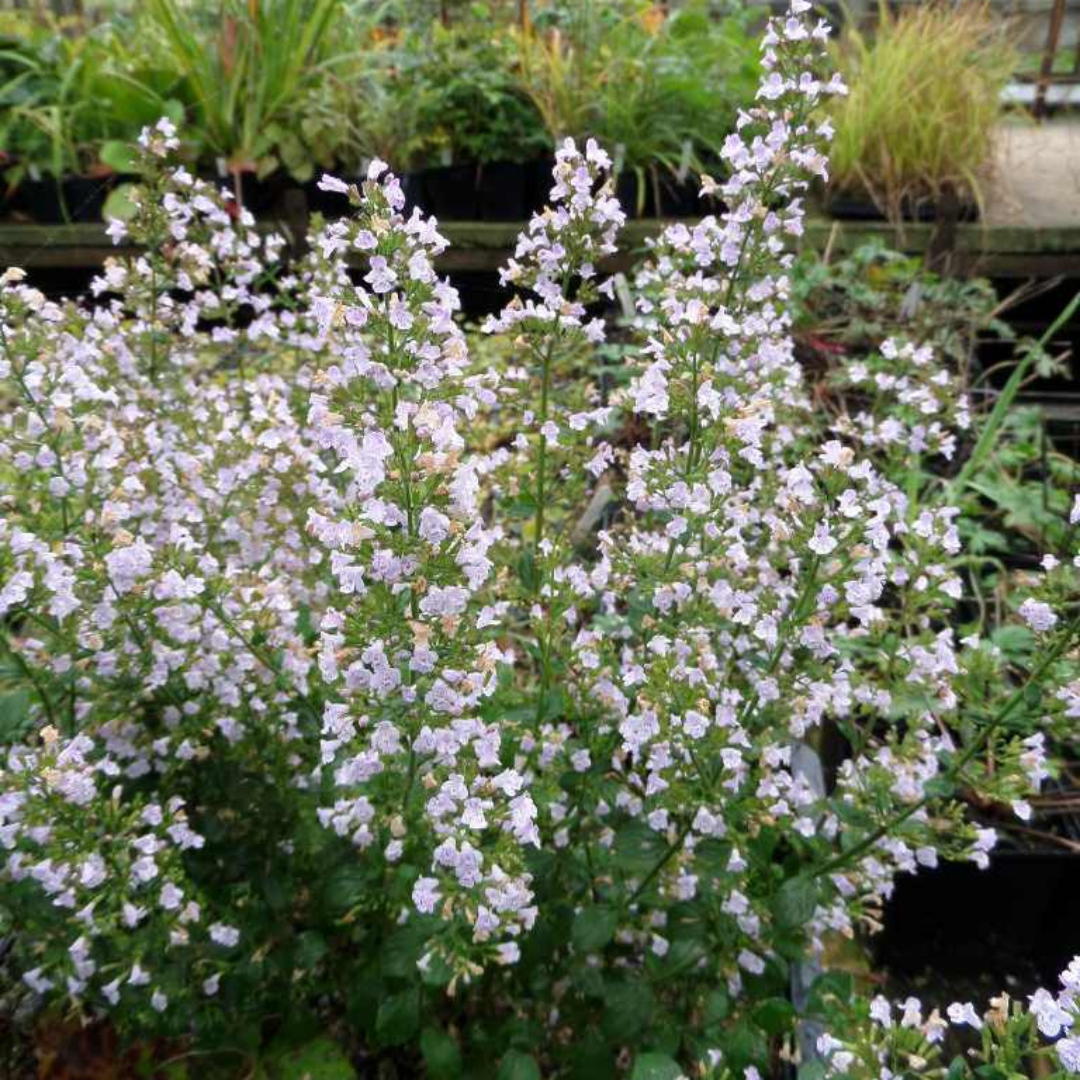
Calamintha nepeta subsp. nepeta
Add to Wishlist Full Sun
 Partial Sun
 Drought Tolerant
 Deer Resistant
 Pollinator Friendly
- In stock, ready to ship
Calamintha nepeta subsp. nepeta: White Haze, Nonstop Buzz
This calamint smells like toothpaste and acts like a bee magnet. Clouds of tiny white flowers, sometimes washed pale blue, hover over grey-green leaves for months. FRESH BREATH FOR THE WHOLE GARDEN.
Plant Characteristics:
- Botanical Name: Calamintha nepeta subsp. nepeta
- Common Name: Lesser Calamint
- Height: 30–40 cm (12–16 in)
- Spread: 30–60 cm (12–24 in)
- Flowers: Clouds of tiny white flowers, sometimes tinted pale blue
- Bloom Time: Early summer to fall (June to September)
- Foliage: Small, grey-green, strongly mint-scented leaves on a bushy, mounded plant
- Features: Perennial Plant of the Year 2021
Where to Plant: Plant it at the front of a sunny border, along a path where you'll brush the fragrant leaves, in a rock garden or gravel bed, or in containers. It's a great filler at the feet of taller, leggy perennials. Put it near a patio if you enjoy watching bees at work.
Companion Plants: Aconitum carmichaelii 'Arendsii' stands tall behind the calamint, with deep blue hoods from August to October. Geranium 'Cambridge' makes a low magenta mat from May to July. Phlox 'Fashionably Early Princess' brings pink flowers from June to August. The calamint's clouds of white tie the planting together all summer.
Plant Care: Give it full sun, or a little afternoon shade in the hottest spots. It needs well-drained soil and prefers lean to average ground over rich, wet soil. Heavy clay that stays wet over winter can be a problem, so improve drainage first. Water during the first season, then only in long dry spells. If it looks untidy in late summer, trim it back by about half to refresh it. Leave the stems over winter and cut them to the ground in early spring. It can self-seed a little in open ground.
History: Lesser calamint is native to dry, rocky sites in southern and western Europe, from the Mediterranean north to Britain, and its name comes from the Greek words for "beautiful" and "mint". The Perennial Plant Association named it the 2021 Perennial Plant of the Year.
Final Thoughts: Deer resistant, drought tolerant once settled and buzzing from morning till dusk. Plant it where you can brush past it. MINT CONDITION, GUARANTEED.



