

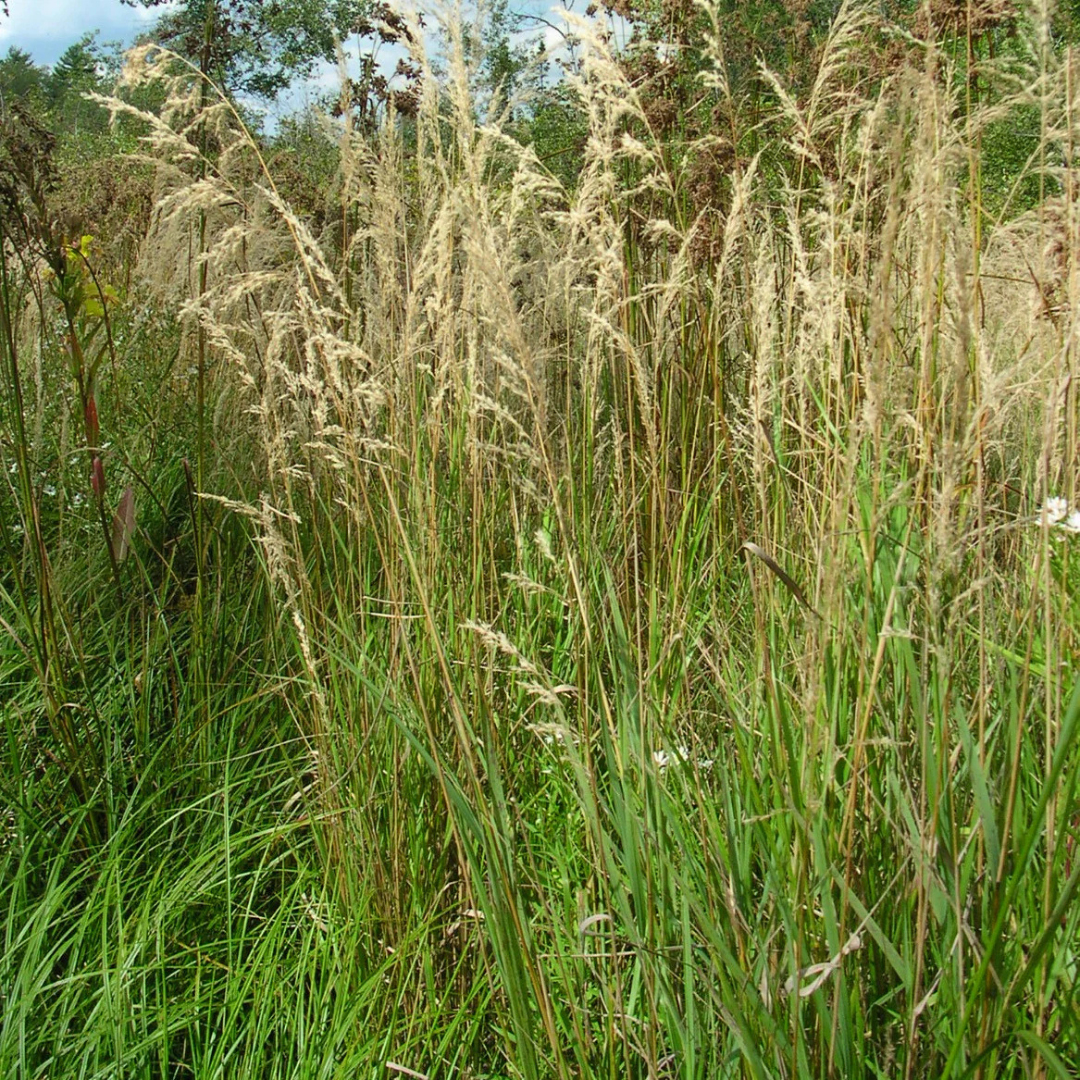
Calamagrostis canadensis
- In stock, ready to ship
Calamagrostis canadensis: Bluejoint Grass for Soggy Ground
Canada Bluejoint: yes, the name gets giggles. It's a native grass with bluish-purple joints on its stems, airy purplish plumes and a deep love for wet, cold, salty spots. NOT THAT KIND OF JOINT.
Plant Characteristics:
- Botanical Name: Calamagrostis canadensis
- Common Name: Canada Bluejoint
- Height: 90–150 cm (3–5 ft) in flower
- Spread: 60–80 cm (2–2.6 ft), slowly spreading by rhizomes
- Flowers: Loose, airy plumes with purplish spikelets that ripen to tan
- Bloom Time: Early to late summer (June to August)
- Foliage: Narrow green leaves on stems with bluish-purple joints, turning tan in fall
- Features: Very cold hardy, tolerates wet soil and some salinity, stabilizes soil
Where to Plant: This is a working grass for wet places: rain gardens, pond and stream edges, low spots that stay soggy in spring, and naturalized meadows. Its rhizomes form loose colonies that help hold soil on banks. It will wander, so give it a naturalistic spot rather than a tidy border.
Companion Plants: Lobelia 'Queen Victoria' adds bold red spikes from July to September and loves the same moist ground as this native grass. Eupatorium 'Atropurpureum' towers at 150 to 210 cm with pink heads from August to October. Iris 'Black Joker' brings purple flowers in May and June, along with upright leaves. This group suits a damp, sunny spot such as a rain garden.
Plant Care: Plant it in full sun to part sun in moist to wet soil. It adapts to clay, loam, sand and even peaty or acidic ground, and tolerates some salt. Keep it well watered during its first season. In consistently moist soil it needs little else. Leave the stems and seedheads standing for winter interest and wildlife cover. Cut back in early spring before new growth starts. If it spreads further than you'd like, slice off the edges with a spade in spring.
History: Canada bluejoint is the most widespread Calamagrostis species in North America, growing from the subarctic and tundra south through much of the United States, including across Ontario and Quebec. The name comes from the bluish tint at the stem joints, and it has long been an important forage grass for moose, elk, deer and caribou.
Final Thoughts: Soggy ditch, salty roadside, frosty low spot: it handles them all and holds the soil while it's at it. NATIVE, TOUGH AND TOTALLY LEGAL.



